
The Deepest Fear
Imagine a world without modern medicine. No EKGs, no brain scans, no clear definitions of death. In the 18th and 19th centuries, the line between unconsciousness and actual death was often blurry.
People sometimes fell into deep comas. They stopped breathing, their hearts seemed still. Doctors, with limited tools, sometimes made a terrible mistake: declaring someone dead who was merely in a profound sleep.
This led to a widespread, bone-chilling fear: premature burial. The thought of waking up in a dark, confined coffin, six feet under, was a horror that haunted countless minds. It was not just a grim fantasy; it was a genuine, terrifying possibility.
Stories, sometimes true, sometimes exaggerated, spread through communities. Tales of scratch marks on coffin lids, of bodies found twisted in their shrouds. These tales only intensified the dread.
Ingenious, Macabre Inventions
To combat this pervasive fear, inventors stepped forward. They designed what became known as 'safety coffins.' These were not luxury items; they were a desperate attempt to offer peace of mind, both to the living and the supposedly dead.
Various designs emerged. Some coffins had air tubes leading to the surface. Others featured windows, allowing a final check days after burial. There were even proposals for elaborate systems with food and drink.
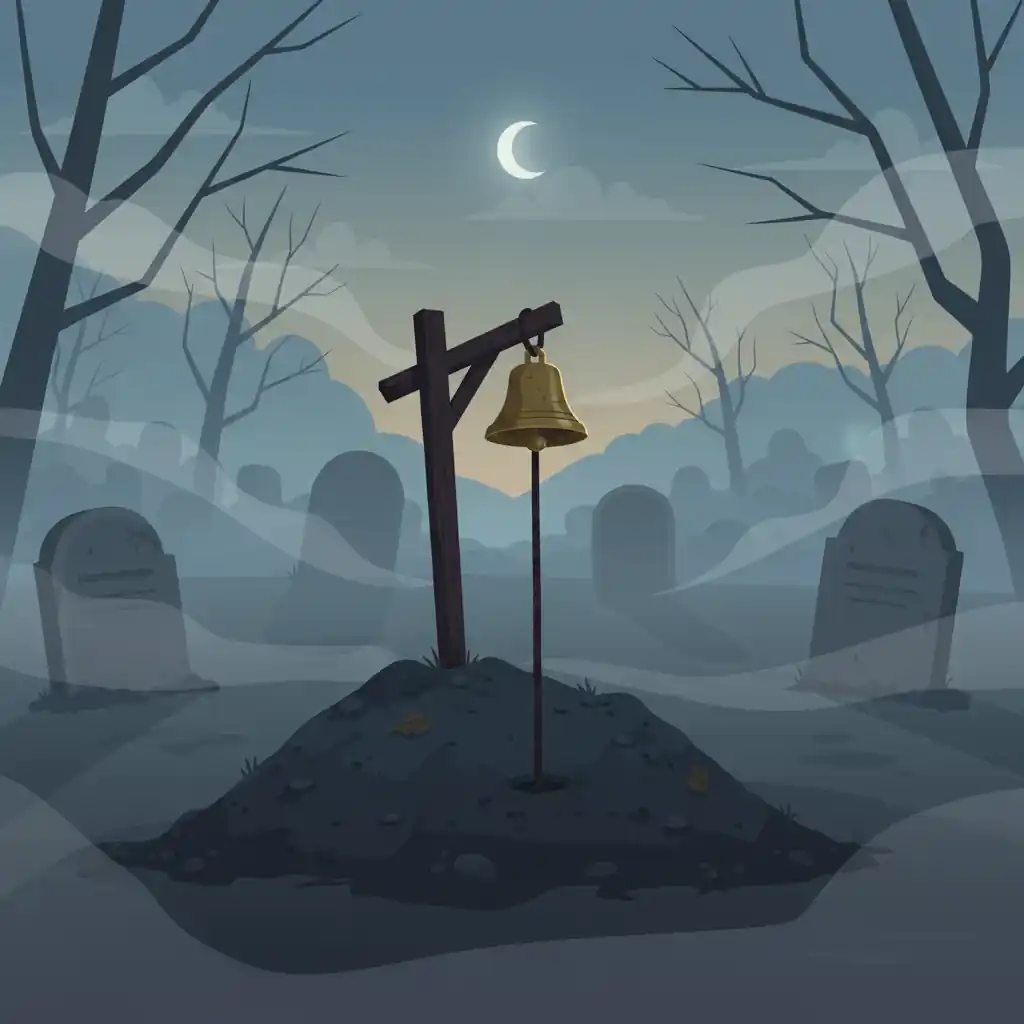
But the most famous, and perhaps the simplest, invention involved a bell. A string was tied to the finger or wrist of the deceased. This string ran through a small hole in the coffin lid, up a long pole, and connected to a small bell perched above the grave.
A cemetery watchman, sometimes paid specifically for this morbid duty, would keep an ear out. Their job was to listen for the faint, desperate ring that could mean a life was still clinging on, buried alive.
A Ring in the Dark
Imagine a cold, misty night in a Victorian cemetery. The air is still, save for the rustle of leaves. A lone watchman, perhaps Mr. Abernathy, shuffles between the graves, lamp in hand. He’s tired, mostly expecting nothing but silence.
Then, a tiny, almost imperceptible sound cuts through the quiet: a faint, metallic ding. He stops. Listens. His heart begins to pound.