
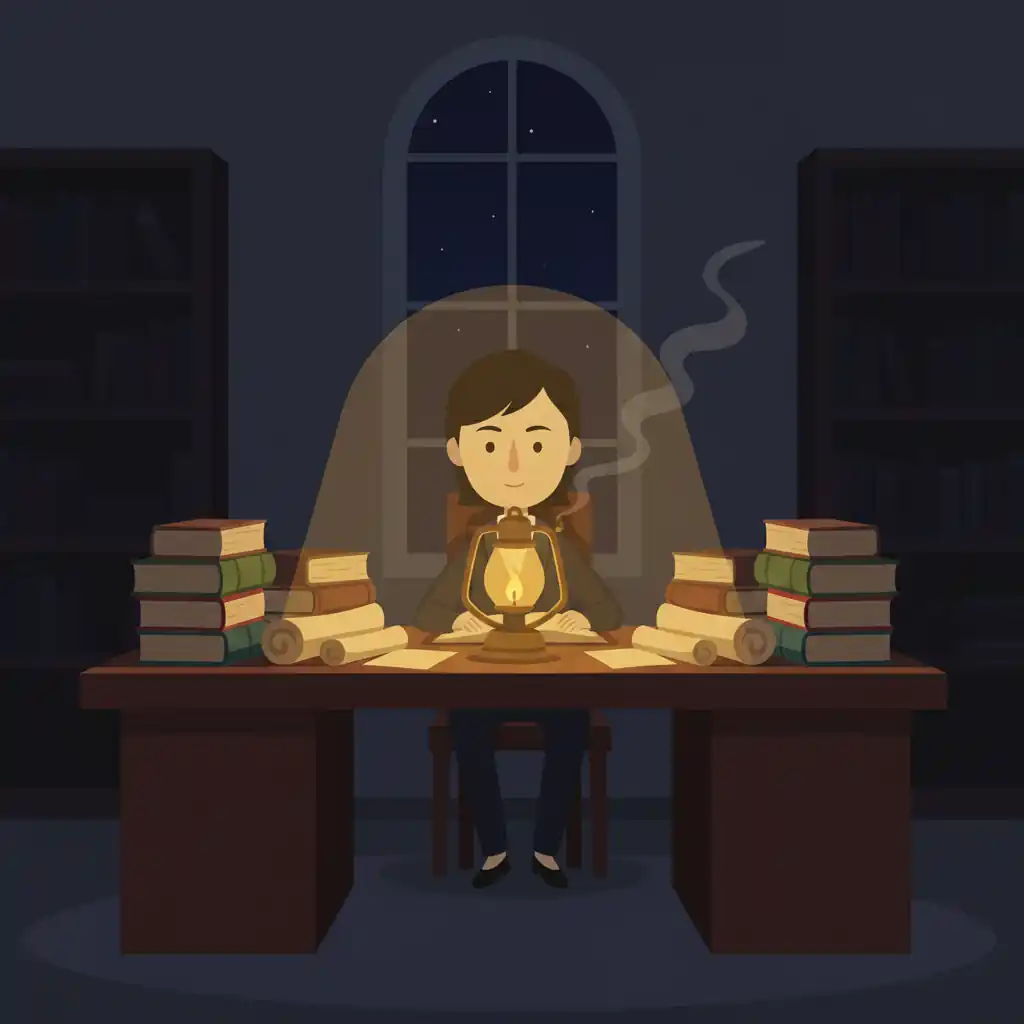
A World Without Light Switches
Imagine a world where the day truly ended when the sun went down. No light switches. No glowing screens. No streetlights to banish the shadows.
For thousands of years, once dusk settled, towns and villages plunged into deep, often frightening, darkness. People relied on the sun's rhythm. Day was for work, night was for rest.
To extend their day, to push back against the absolute black, humanity developed simple, ingenious tools. The most common among them was the humble oil lamp.
The Humble Oil Lamp
An oil lamp was a basic device: a small vessel, often made of clay, stone, or metal, filled with animal fat or vegetable oil. A twisted fiber, called a wick, dipped into the oil.
Light the wick, and a tiny flame would flicker. It cast a warm, soft glow, enough to read by, to mend clothes, or to share a quiet conversation at a table.
This flame, though small, was precious. It was a defiant spark against the overwhelming darkness. But there was a catch: the lamp needed fuel. Every minute it burned, it consumed oil, drop by slow drop.
Oil was a valuable resource. It had to be collected, processed, or bought. It wasn't endless. Keeping a lamp burning meant literally burning up a tangible, sometimes expensive, part of one's supplies.
The Scholars of the Night
Most people, tired from a day of physical labor, would extinguish their lamps soon after dinner and retreat to bed. Sleep was essential, and conserving precious oil was smart.
But a certain kind of person often chose differently. The scholar, the scribe, the writer, the student – those driven by knowledge, discovery, or artistic creation.