
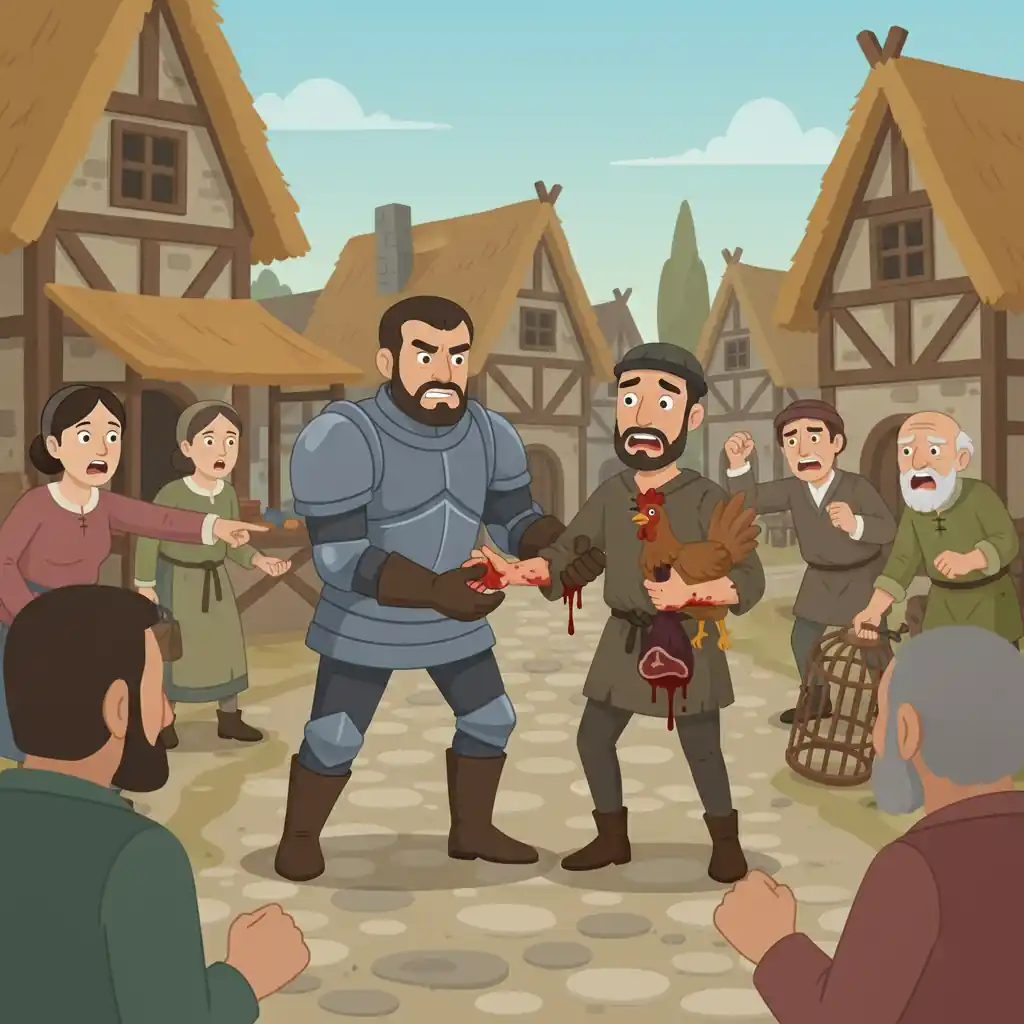
The Harsh Realities of Medieval Life
Life in medieval villages was a constant struggle. Winters were long, harvests could fail, and hunger was a shadow that never truly left.
For families scraping by, their livestock – a sheep, a goat, a precious pig – was more than property. It was survival. It was food for the table, wool for clothes, and a means to pay taxes or trade for other necessities.
To lose an animal to theft wasn't just a financial setback. It could mean starvation, sickness, or even death for an entire family. This made livestock theft one of the most serious crimes in the countryside.
The problem was proving it. Without modern forensics, a clever thief could easily vanish into the night, leaving behind only suspicion and an empty pen. Justice was often slow, and sometimes, it never came at all.
The Midnight Raid on Farmer Giles
Picture a typical night in the village of Oakhaven. The moon was thin, hidden behind clouds, casting little light. Farmer Giles, a hardworking man with a small flock, slept soundly, unaware of the lurking danger.
A shadowy figure, desperate and famished, crept towards Giles's sheep pen. This thief, let's call him Finn, had watched the flock for days. He knew which animal was fattest, ready for slaughter.
Finn moved with practiced stealth, but the act itself was messy, brutal. A swift knife, a desperate struggle from the animal. The ground grew dark and slick. Blood splashed onto Finn's hands, his rough tunic, even his face in the frantic haste.
He bundled the carcass quickly, trying to wipe his hands on the grass, but the dark liquid clung stubbornly. He fled into the blackness, leaving a trail only a keen eye might spot, believing he had escaped detection.
The Red Stain of Guilt
Dawn arrived with Giles's angry shouts. His prize sheep was gone. The torn fence, the dark stains on the earth – the evidence was clear. Rage and fear spread through the village like wildfire.
The villagers, led by the local watchman, old Master Elms, formed a search party. They knew the routes thieves often took, the hiding spots in the nearby woods.