
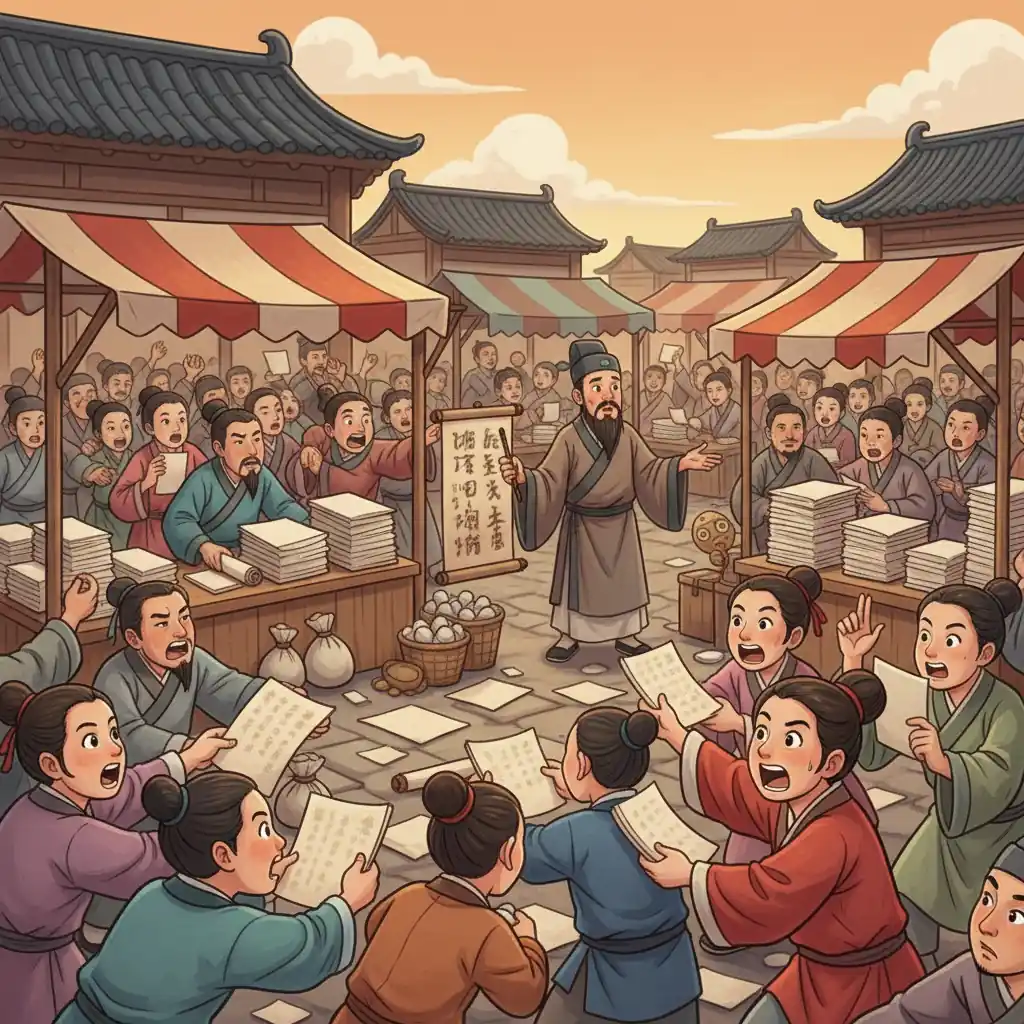
The Unsung Scholar
Picture ancient China, specifically the Western Jin Dynasty. Scholars were a dime a dozen. Poets filled every teahouse. But few stood out, especially if they weren't born into prestige. This is where Zuo Si entered the scene.
Zuo Si wasn't from a noble family. He wasn't a child prodigy. He was just a diligent, earnest man with a burning ambition: to write a literary masterpiece. Something grand. Something that would echo through the ages.
His grand idea was to write a 'fu' – a type of descriptive poem – about the three great capitals of the recently ended Three Kingdoms period: Wei's capital of Ye, Shu's Chengdu, and Wu's Jianye. He called it the 'San Du Fu' (Rhapsody on the Three Capitals).
Many scoffed. 'Zuo Si? Him? A common scholar wants to tackle such an epic subject?' Most established literati dismissed him. They believed such a monumental work could only come from someone with superior connections and inherent genius. Zuo Si, they thought, was out of his league.
Years of Obsession
But Zuo Si was not deterred by their snickers. He didn't care for their opinions. He cared for his craft. He knew this wasn't a task to be rushed. This was his life's work. He dedicated himself completely.
For ten long years, Zuo Si lived and breathed his 'San Du Fu.' He wasn't just writing; he was researching. He traveled to the ancient sites, soaking in the history. He read countless books, ancient maps, and historical records. He interviewed old soldiers and officials, collecting every anecdote and detail he could find.
His house became a library, then a chaos of scrolls and notes. He ate, slept, and woke with the Three Kingdoms on his mind. He revised endlessly, polishing every line, every character. Legend says he even asked a simple gatekeeper for feedback, showing his humility and dedication to perfection. Finally, after a decade, his masterpiece was complete.
From Scorn to Sensation
Zuo Si proudly presented his completed 'San Du Fu' to the literary circles of Luoyang, the capital. The initial reaction was… lukewarm. Some prominent scholars, still prejudiced by his humble background, found it too long, too dense. They claimed it lacked the 'spirit' of earlier, more revered works.
However, a few sharp minds saw its true genius. Zhang Hua, a highly respected official and literary critic of the time, was one of them. He read 'San Du Fu' and was deeply impressed. He declared it a masterpiece, comparing it favorably to the works of Ban Gu and Zhang Heng, two giants of Han Dynasty literature.