
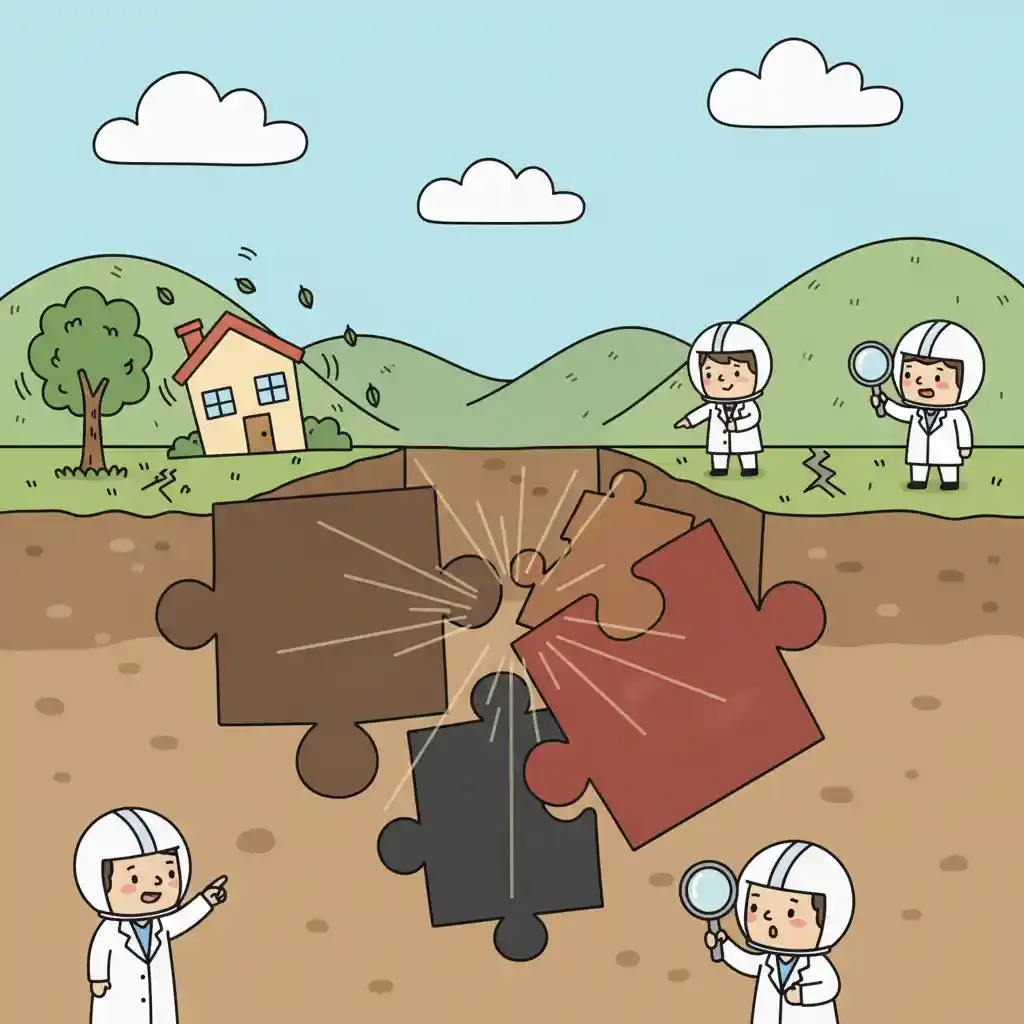
When the Earth Sneezes!
Have you ever felt the ground shake? Maybe your toys rattled, or a glass of water wiggled on the table? That' spooky, rumbling feeling is called an earthquake! It's like the Earth is doing a giant sneeze, and sometimes it can be a really powerful one.
But why does our big, solid planet shake? It's not because a giant is stomping around (though that would be quite a story!). Earthquakes happen deep beneath our feet, where enormous pieces of our planet's skin are constantly moving and bumping into each other. Let's dig in and solve this rumbling mystery!
Earth's Giant Puzzle Pieces
Imagine our Earth isn't just one big, solid ball. Instead, picture it like a giant, cracked eggshell, or maybe a super-sized jigsaw puzzle! These puzzle pieces are called 'tectonic plates.' They're not stuck in one place; oh no, they're always on the move, floating slowly on a layer of hot, gooey rock deep inside the Earth, called the mantle.
These plates are HUGE—some are bigger than entire continents! They move just a few centimeters a year, about as fast as your fingernails grow. You can't feel them moving day-to-day, but over millions of years, this slow dance dramatically changes our planet's surface, creating mountains, volcanoes, and, you guessed it, earthquakes!
Where the Plates Play Bumper Cars
So, what happens when these colossal puzzle pieces meet? Well, they can do a few things. Sometimes they slide past each other, like two cars trying to squeeze through a narrow lane. Other times, they push directly into each other, like a head-on collision. And sometimes, one plate might even dive underneath another, like a submarine going under a ship.
The places where these plates meet are called 'fault lines.' Think of them as the 'seams' or 'cracks' in our Earth's puzzle. These fault lines are where all the action happens when it comes to earthquakes. They are the spots where the stress and pressure build up as the plates try to move.
The Big Slip and the Shakes!
Even though the tectonic plates are always moving, they don't always slide smoothly past each other. Sometimes, they get stuck! Imagine trying to push two giant, rough pieces of rock past each other. They'd snag and grind. As the plates keep trying to move, an incredible amount of pressure and energy builds up along the fault line. It's like stretching a giant rubber band tighter and tighter!