
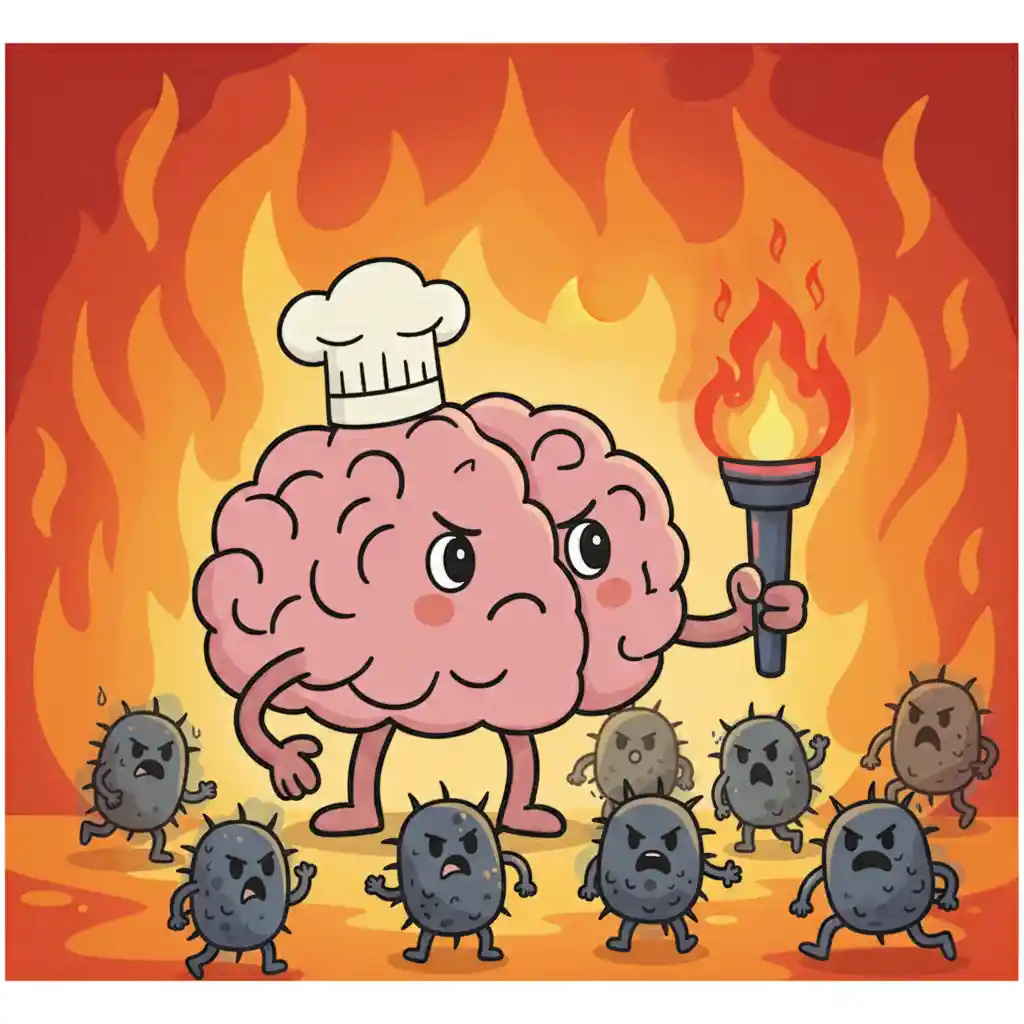
The Brain’s Thermostat
Deep inside your brain is a small area called the Hypothalamus. This acts as your body's thermostat, keeping your internal temperature at a steady 98.6°F (37°C).
When your body detects an infection, it sends chemical signals called Pyrogens to the hypothalamus, telling it to 'turn up the heat.'
Slowing Down the Enemy
Most bacteria and viruses are very picky about temperature. They thrive at your normal body temperature, but they struggle to grow and multiply when it gets just a few degrees hotter.
By creating a fever, your body is effectively 'cooking' the germs, making it much harder for them to take over your system.
Boosting the Soldiers
Heat doesn't just hurt the germs; it helps your White Blood Cells. These cells are the 'soldiers' of your immune system, and they actually work faster and more efficiently at higher temperatures.
A fever acts like a turbo-boost for your defense system, helping your cells reach the infection site and destroy the invaders more quickly.
The Shiver Paradox
Have you ever felt freezing cold and started shivering when you have a fever? This happens because your brain has set the thermostat to 102°F, but your body is still at 99°F.