
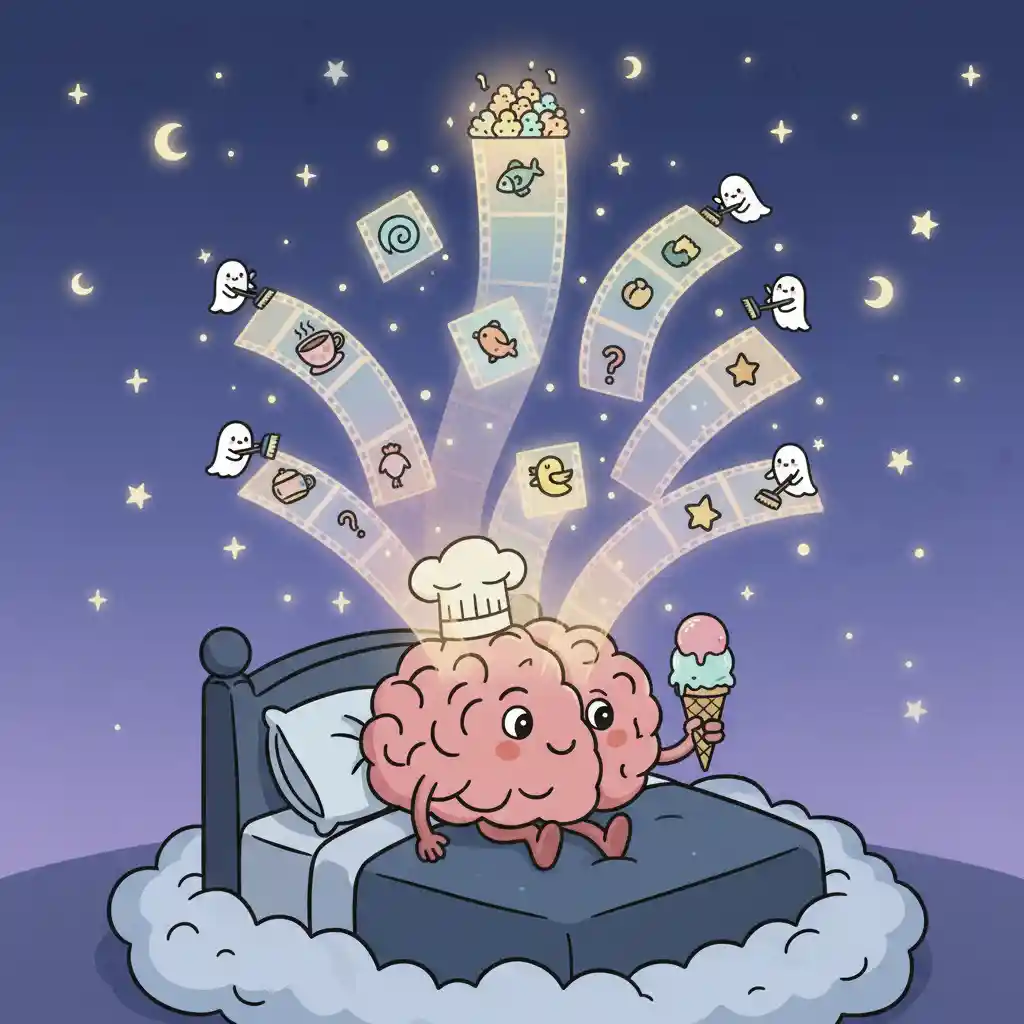
The Active Sleep State
Dreams primarily happen during a stage of sleep called REM (Rapid Eye Movement). During REM, your brain is almost as active as it is when you are wide awake.
While your muscles are 'paralyzed' to keep you from acting out your dreams, your brain is firing off signals at high speed, creating the vivid stories you experience.
The Information Sorter
Think of your brain as a librarian. During the day, you collect thousands of 'books' of information. At night, your brain needs to decide what to keep in long-term memory and what to throw away.
Dreams are often a side effect of this sorting process. As the brain 'replays' the day's events to file them, your conscious mind sees these fragments as a strange, mixed-up movie.
The Threat Simulator
Some scientists believe dreams are a 'safe space' to practice survival. This is why we often have dreams about being chased or being unprepared for a test.
By 'simulating' these threats in a dream, your brain is rehearsing how to handle stress and fear, making you better prepared for real-life challenges.
Emotional Processing
Dreams help us process complex emotions. If you had a hard day or felt sad, your brain uses the dream state to work through those feelings without the distractions of the outside world.