
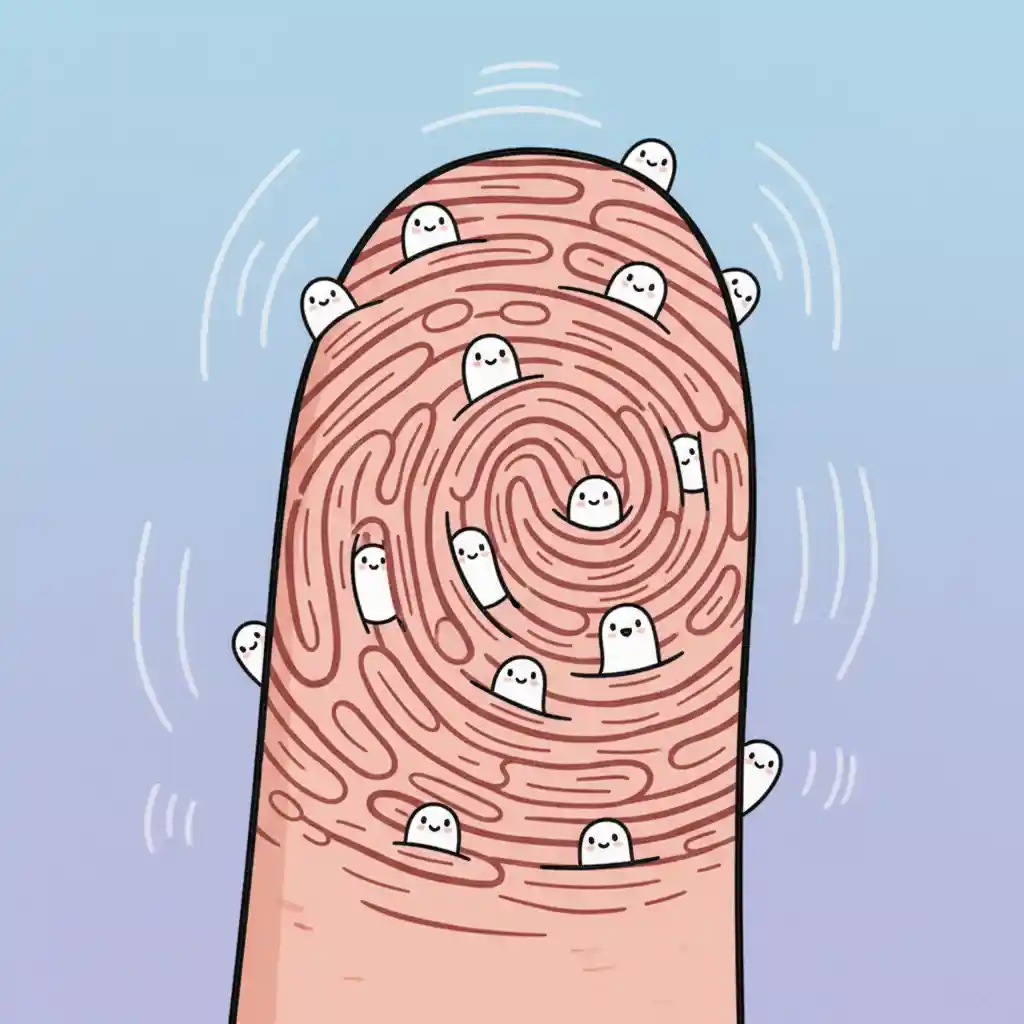
The Friction Ridges
The tiny lines on your fingers are scientifically known as Friction Ridges. If your skin was perfectly smooth, your hands would be as slippery as a wet bar of soap.
These ridges create texture that allows you to grab and hold onto objects like pens, balls, or climbing frames without them sliding right out of your grip.
The Moisture Channels
Just like the 'pruney fingers' we studied, fingerprints act as tiny drainage ditches. When your hands are slightly sweaty or wet, the valleys between the ridges allow moisture to escape.
This ensures that the high points of the ridges can always make solid contact with a surface, maintaining your grip even in damp conditions.
A Map from the Womb
Your fingerprints were formed before you were even born, around the 10th week of pregnancy. They are created in a layer of skin called the basal layer.
As this layer grows faster than the layers above and below it, it buckles and folds, creating the unique patterns of loops, arches, and whorls that you see today.
The Chaos Factor
Why is every print unique? While your DNA gives the general instructions, the final pattern is decided by 'chaos.' The way you touched the walls of your mother's womb and the pressure of the fluid around you shaped your ridges.