
A Question of Blood and Words
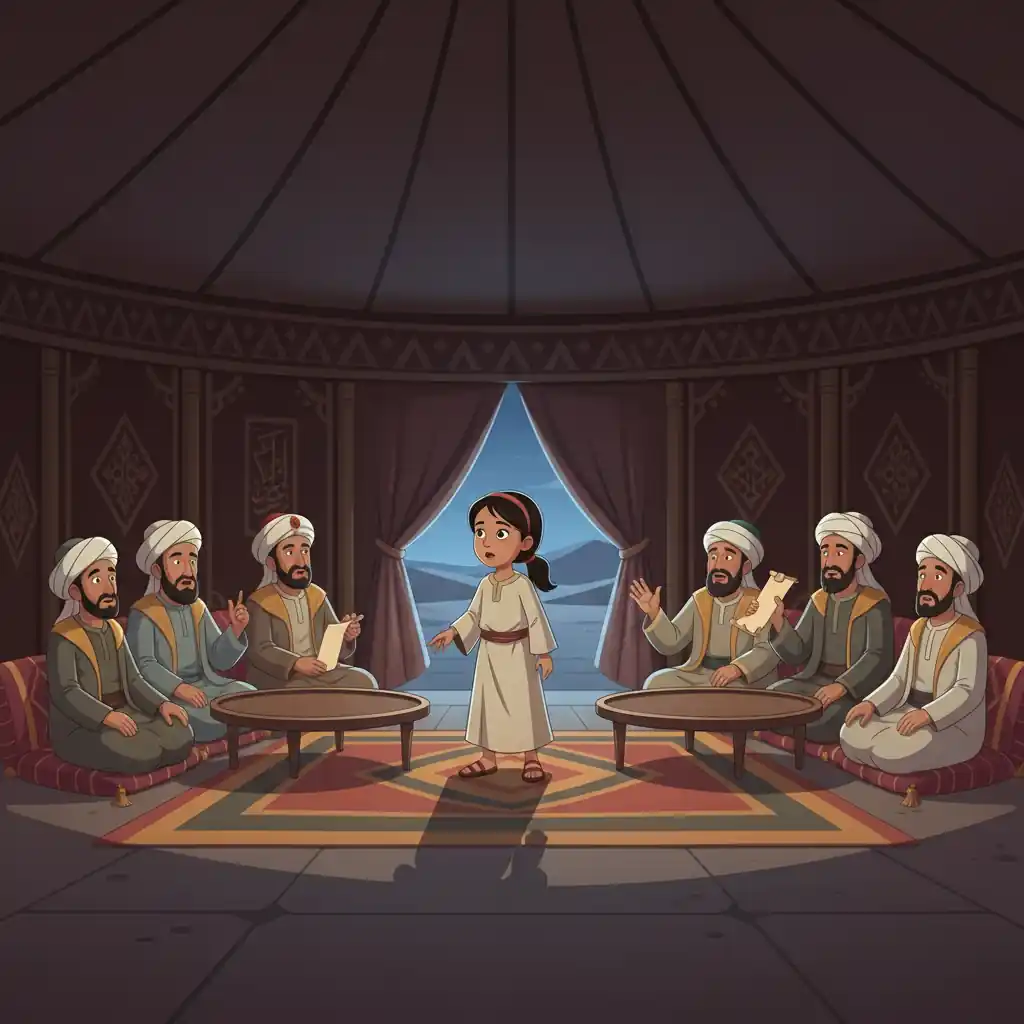
The desert sun beat down without mercy. Heat rose visibly from the sand dunes. But inside the sprawling, richly decorated tent, a different kind of heat was brewing. Two powerful tribes, the Bani Hilal and the Bani Tamim, had come together.
This was no friendly gathering. A young warrior from Bani Hilal lay dead, his life cut short by a man from Bani Tamim. Blood had stained the sand. Now, the weight of revenge hung heavy, threatening to ignite a tribal war that could last generations.
To prevent this, the elders had convened a majlis, a council. They would negotiate blood money – diyya – a payment meant to compensate the victim's family and restore peace. It was a delicate dance, full of pride and peril.
Seated on plush cushions, the tribal leaders projected calm, but their eyes were sharp, missing nothing. Each man carried the honor of his entire lineage on his shoulders. The air crackled with unspoken tension.
One by one, renowned orators, masters of the spoken word, stepped forward. Their voices were their weapons. They would argue for peace, for justice, for a price. They would use poetry, proverbs, and ancient lore to sway the hearts of men.
The first orator, an older man with a booming voice, began. He painted vivid pictures of loss and sorrow, of a young life tragically ended. He spoke of the sacred duty of vengeance, but also of the greater wisdom found in forgiveness and reconciliation.
He threaded his speech with intricate metaphors, comparing the tribes to strong trees whose roots intertwined, despite the storms. He subtly pushed for a high compensation, a sum worthy of the spilled blood, yet always with an appeal to brotherhood and shared heritage.
Then, a younger, fiery orator from the Bani Tamim rose. He met the challenge with equal skill. His words flowed like a desert spring, cool and clear. He spoke of accidental misdeeds, of the rashness of youth, of the need for temperance in judgment.
He argued for mercy, for a balanced retribution, for a sum that would not cripple his tribe. Each speaker was a performer, captivating the assembly with their eloquence, pushing their side's agenda without overtly stating it.
The Echo of Eloquence
The debate stretched. Hours melted into an afternoon. The sun, once high, now dipped lower, casting long shadows across the desert floor outside the tent. Inside, the orators showed no signs of fatigue. Their passion was a fire, their words the fuel.
They moved from poetic verse to sharp legalistic arguments, then back to heartfelt appeals. Each sought to outmaneuver the other, not with force, but with the sheer beauty and logic of their language. They cited generations of tribal law and custom.
The price of peace, the actual figure of the blood money, seemed to grow more distant with every soaring phrase. The central issue – a life lost – became almost secondary to the grand display of verbal artistry. The orators reveled in their skill.
Some elders leaned forward, captivated by the rhetoric. Others began to shift, a subtle weariness settling in their bones. They yearned for a resolution, a clear path forward, but the path was obscured by a forest of eloquent words.
The argument spiraled into increasingly complex philosophical discussions about justice, honor, and the nature of consequence. The victim's name, the killer's deed – these concrete facts seemed to vanish under layers of abstract thought and historical precedent.
No orator wanted to be the one to yield first. To concede. To show weakness. So, the words continued to flow, a river of sound, beautiful but seemingly endless. The delicate balance between tribal pride and the avoidance of war hung by a thread, held by words alone.
The air grew heavier, not just with the heat, but with the sheer weight of expectation and the unfulfilled promise of a conclusion. The assembly waited, listened, and wondered if this dance of words would ever truly end.
A Small Voice, A Great Truth
Just as another orator began a new, intricate stanza on the value of a noble life, a sudden stir at the tent’s entrance broke the spell. All heads turned, annoyed by the interruption to such a grand display.
A small figure stood silhouetted against the bright afternoon light. It was a girl, barely twelve years old. Her name was Juhayza. Her clothes were plain, covered in a fine layer of dust from her hurried journey.
Her face was flushed. Her chest rose and fell rapidly, showing her urgency. She was not a messenger of state. She was not an elder’s aide. She was just a child. A child who dared to disturb such an important council.
The orator, caught mid-declaration, faltered. A look of sharp displeasure crossed his face. How dare this child interrupt the gravity of their proceedings? He opened his mouth, no doubt to scold her or dismiss her.
But Juhayza did not wait for his permission. Her small voice, surprisingly clear and resolute, cut through the tent’s hush. It was a stark contrast to the sonorous pronouncements that had filled the air for hours.
"My lords!" she cried, her voice trembling slightly but holding firm. "There is no more need for discussion!"