
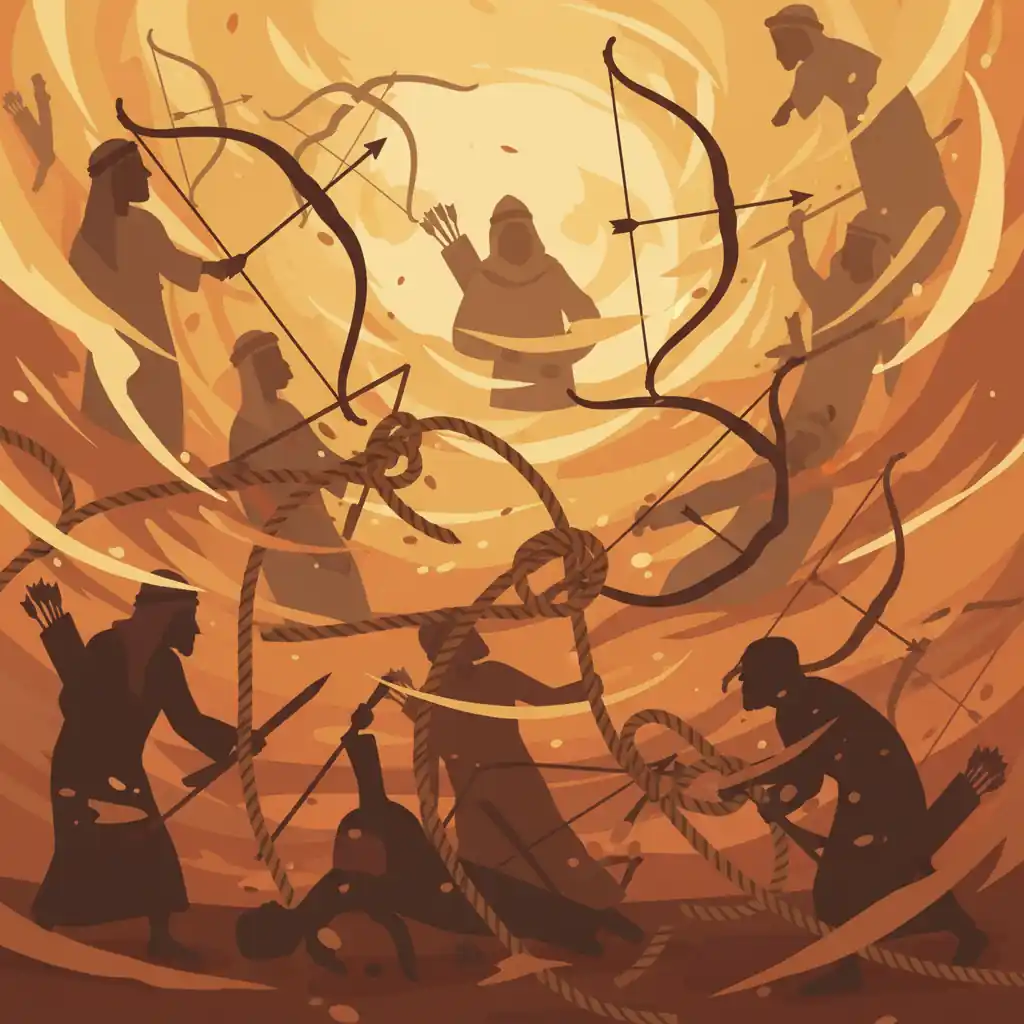
The Desert Battalion
Ancient Arab armies were not just a mass of men. They were intricate machines. Each soldier had a specific role. Each role was vital.
Among the most crucial units were two distinct groups: the Habil and the Nabil.
The Habil were the rope-holders. Strong, agile men. Their hands were rough from years of handling camel ropes. They managed the pack animals, ensuring supplies moved with the army.
But they were more than logistics. In battle, they laid traps. Tripwires for enemy cavalry. Snaring ropes for advancing infantry. They were masters of close-quarter disruption.
Then there were the Nabil. These were the archers. Elite marksmen with sharp eyes. They trained from childhood to shoot with deadly accuracy. Their arrows flew like deadly rain, striking from a distance.
The Nabil were often positioned on flanks or elevated ground. They needed clear lines of sight. They needed space to operate. Their precision was the army's long-range punch.
Each unit knew its place. Each knew its task. They worked in tandem. A well-oiled, desert fighting force. Separation and coordination were key to their success.
The Sandstorm Strikes
One day, two rival armies met in a vast, open desert. The air was thick with the dust of marching feet. The clash began with a roar. Swords met shields. Arrows filled the sky.
Commander Rashid led his men. He watched the battle unfold. His Habil were ready to spring their traps. His Nabil were raining arrows on the enemy's vanguard.
Then, the sky changed. A distant, dark line grew on the horizon. It moved fast. Too fast.
It was a shamal. A brutal desert sandstorm. It hit with the force of a solid wall. Wind howled like a hungry beast.
Visibility dropped to nothing. One moment, men saw their comrades. The next, only swirling grit. Sand blasted faces. It choked lungs. It stung eyes.
The battle turned from organized conflict into pure, blinding chaos. Shouts were lost in the wind. Orders became meaningless. Survival was the only command.
The Unraveling Ranks
The sandstorm tore through the battle lines. The Habil, skilled with ropes, found them useless. The wind whipped the lines around. Pack animals bolted, disappearing into the dust.
These men, meant to ensnare and manage, were now fighting to simply keep their footing. They couldn't see. They couldn't set traps. Their specialized skill was nullified.
The Nabil fared no better. Their bows became heavy wood. How could they aim when their targets were invisible? How could they shoot with sand filling their eyes?
Their precision was gone. Their long-range advantage vanished. They dropped their bows. They drew daggers. They huddled, hoping the storm would pass.
The front lines shattered. Soldiers from all units were shoved together. The wind was a cruel shepherd, herding men into an indistinguishable mass. Friend and foe alike stumbled in the dark.