
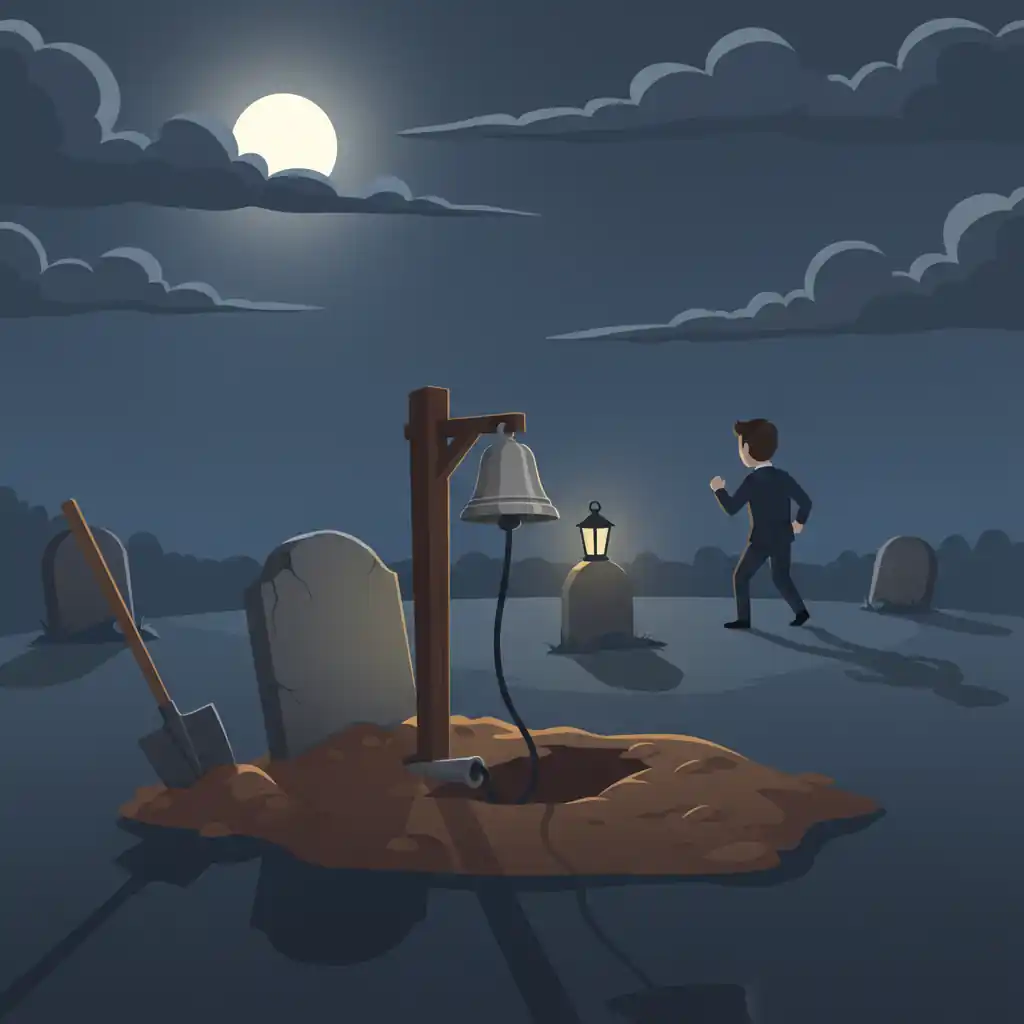
The Great Fear
The 17th century was a time of shadows. Life was fragile. Medical science, rudimentary at best. Diagnosis was often more art than exact science.
One fear, however, was universally understood and dreaded: taphophobia. The chilling dread of being buried alive. Not just a phobia, but a real possibility.
Stories fueled this terror. Tales circulated of people waking at their own wakes, hours after being declared lifeless. Of desperate scratch marks found inside old, exhumed coffins. These weren't mere whispers. They were terrifying accounts, passed from village to village, leaving a trail of dread.
Families, desperate for a final peace of mind, sought drastic solutions. They began commissioning custom-made boxes. 'Safety coffins,' they called them. A final, desperate safeguard against the ultimate nightmare.
The Design
The design was grimly ingenious. A standard coffin, yes, but with a critical addition. A silent alarm system, of sorts. A desperate communication link from the grave.
A length of fine silk cord was tied securely to the wrist of the supposedly deceased. Delicate, yet strong. Unobtrusive against the skin, but always there.
This cord then threaded up a narrow, hollow tube. The tube ran straight through the thick wooden coffin lid. It continued upward, through the layers of packed earth above.
At the surface, the tube terminated. Attached to the cord's end was a small, polished silver bell. The bell sat on a delicate metal stand, positioned directly over the headstone.
A faint jingle. That's all it would take. A slight movement, a twitch of the wrist, a desperate struggle. A desperate message from the crushing darkness below. A clear, unmistakable call for immediate rescue. A slender, last chance at life.
The Night Shift
Paco was the night guard at the city's vast, ancient cemetery. Young, often bored, and harboring a healthy dose of cynicism. He’d taken the job for the quiet, not the drama.
He'd heard all the stories about these new 'safety coffins.' He considered them a morbid indulgence for the wealthy. A waste of good silver and silk for a fear he believed was mostly superstition.
One particularly wild autumn night, a fierce storm rolled in from the sea. Rain lashed down, a relentless torrent hammering against the ancient gravestones. Wind howled through the gnarled cypress trees, a mournful, almost human sound.
Paco huddled deeper into his threadbare coat within his small, damp watchman's shack. His solitary lantern flickered precariously. He yearned for the first hint of dawn, for the storm to break, for the silence of his usual shift to return.
Then, above the din of the gale, he heard it. Faint at first. A tiny, metallic tinkle. A whisper of sound, barely audible over the storm’s violent symphony. He thought it was the wind, perhaps a branch scraping metal.
He strained his ears. Listened harder, every nerve alert. It came again. This time, clearer. More insistent. A rhythmic, almost frantic ringing. Not wind. Not a branch. It was a bell.
His blood ran cold. The sound was coming from plot 37. The freshly dug grave of Señor Alonso, the city’s wealthiest and most recently deceased merchant. Buried just that very afternoon.
The Exhumation
Paco grabbed his shovel, its cold iron heavy in his hands. His earlier cynicism vanished instantly. Replaced by a cold, sharp dread that twisted his gut.
He burst from the shack, running headlong through the treacherous downpour. The bell on Señor Alonso’s grave was now ringing violently. A desperate, continuous peal, a sound of pure terror slicing through the storm.