
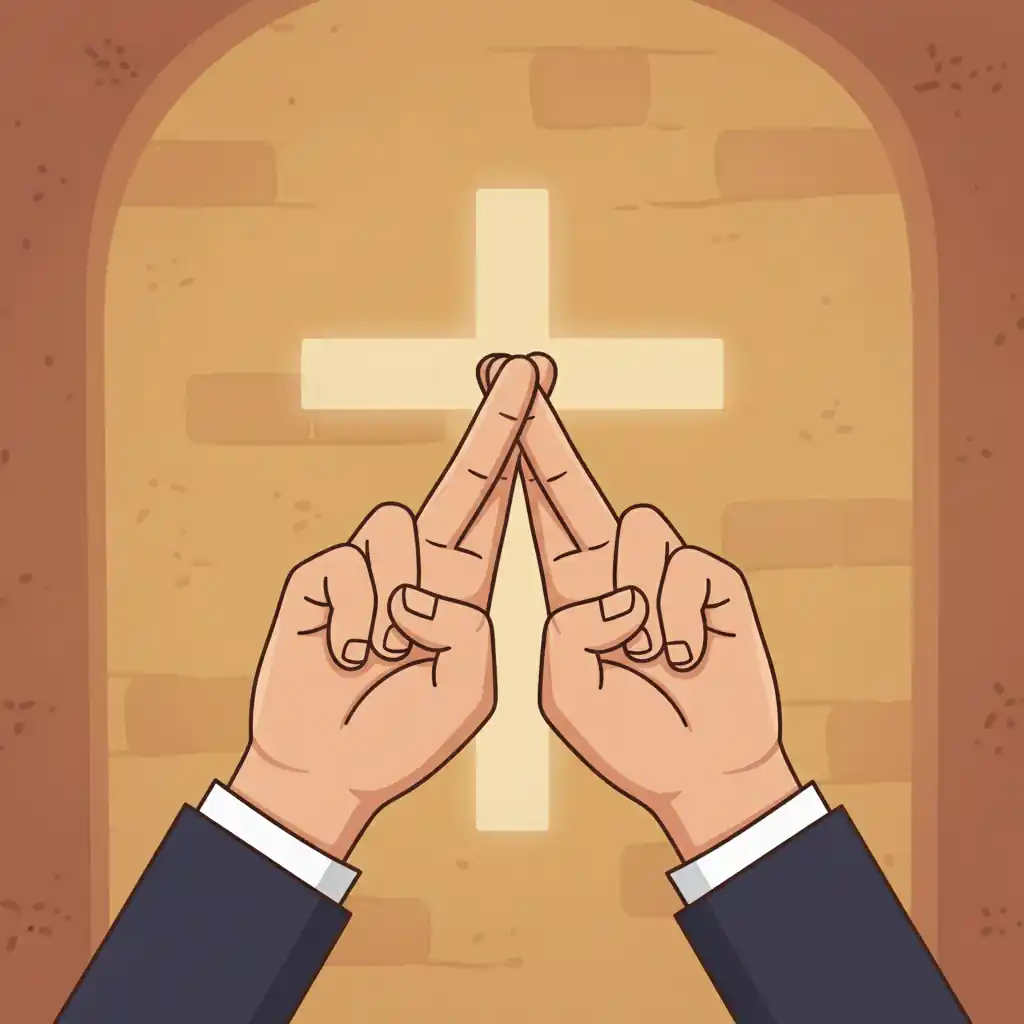
The Forbidden Symbol
The Roman Empire was vast. It was powerful. But it was not always tolerant. Especially not of new ideas, and certainly not of new religions that challenged its authority.
For early Christians, life was often dangerous. Their beliefs were considered a threat. Public worship was out of the question. Displaying symbols of their faith, like the cross, could lead to severe punishment, even death.
They needed a way to recognize each other. They needed a sign of solidarity. Most importantly, they needed a way to silently invoke their faith, to ask for protection without uttering a single word or displaying an obvious emblem.
Out of this need, a simple, yet ingenious gesture was born. A secret symbol, quickly made and easily hidden. A temporary cross, formed not from wood or metal, but from human flesh and bone.
They would cross their fingers. It was subtle. It was fleeting. But to those who knew its meaning, it was a powerful statement of faith and a plea for divine favor in a world that sought to crush them.
The Lucky Charm
This secret cross wasn't just a sign of recognition. It became a silent prayer. A hopeful charm. Believers started to associate the act of crossing their fingers with invoking good luck and protection.
They felt that the cross shape itself could 'trap' good fortune. It could ward off evil. It could protect them from the dangers lurking around every corner. A silent shield in a time of fear.
If you wished for something important—safety, a favorable outcome, a miracle—you would cross your fingers. It was a private promise, a quiet appeal to a higher power, hoping that the wish would be held secure within the invisible cross until it came true.
This wasn't just superstition. It was psychological comfort. In a world with little control, the gesture offered a small, personal ritual of hope. It was a way to manifest their desire for a positive outcome, even if only to themselves.
The Support of a Friend
Interestingly, the original form of 'cruzar los dedos' wasn't a solo act. It was a shared moment. A bond between two people.
Early Christians often performed this gesture with a fellow believer. Each person would extend their index finger, and they would cross them together, forming a perfect 'X'—a clear symbol of the cross.
This communal act amplified the meaning. It wasn't just one person hoping; it was two people, standing together, sharing their hope, their prayer, and their need for protection. It symbolized mutual support and shared faith.