
The Whispering Oaks of Iberia
Long before Roman legions marched across the peninsula, ancient tribes lived in what is now Spain. They were the Celts. They were the Iberians. They lived close to the land. They lived close to its ancient secrets.
For these people, the world was alive. Rivers had voices. Mountains held power. And trees? Trees were not just plants. They were living temples. They were silent guardians.
Among all trees, the oak held a special place. Its roots went deep. Its branches reached high. It stood for strength. It stood for wisdom. Most importantly, it stood for life itself.
The tribes believed that spirits lived within the massive trunks of these oaks. Good spirits. Powerful spirits. Spirits that could listen. Spirits that could protect.
They would gather under the vast canopy of these sacred oaks. They brought their hopes. They brought their fears. They spoke of battles. They spoke of harvests. They spoke of the future.
But they did so with caution. Because the spirits were always listening. And while they could protect, they could also be offended. Especially by arrogance.
A Ritual Against Hubris
Imagine a young hunter. He just returned from a successful chase. He’s telling his friends about tomorrow’s hunt. “I will catch the biggest stag,” he boasts. “It’s already mine!”
An elder, listening nearby, would shake his head. Not in anger. In concern. Such words were dangerous. They tempted fate. They might anger the spirits.
To speak too confidently of future success was to invite misfortune. It was to challenge the natural order. It was to forget that the world always had its own plans.
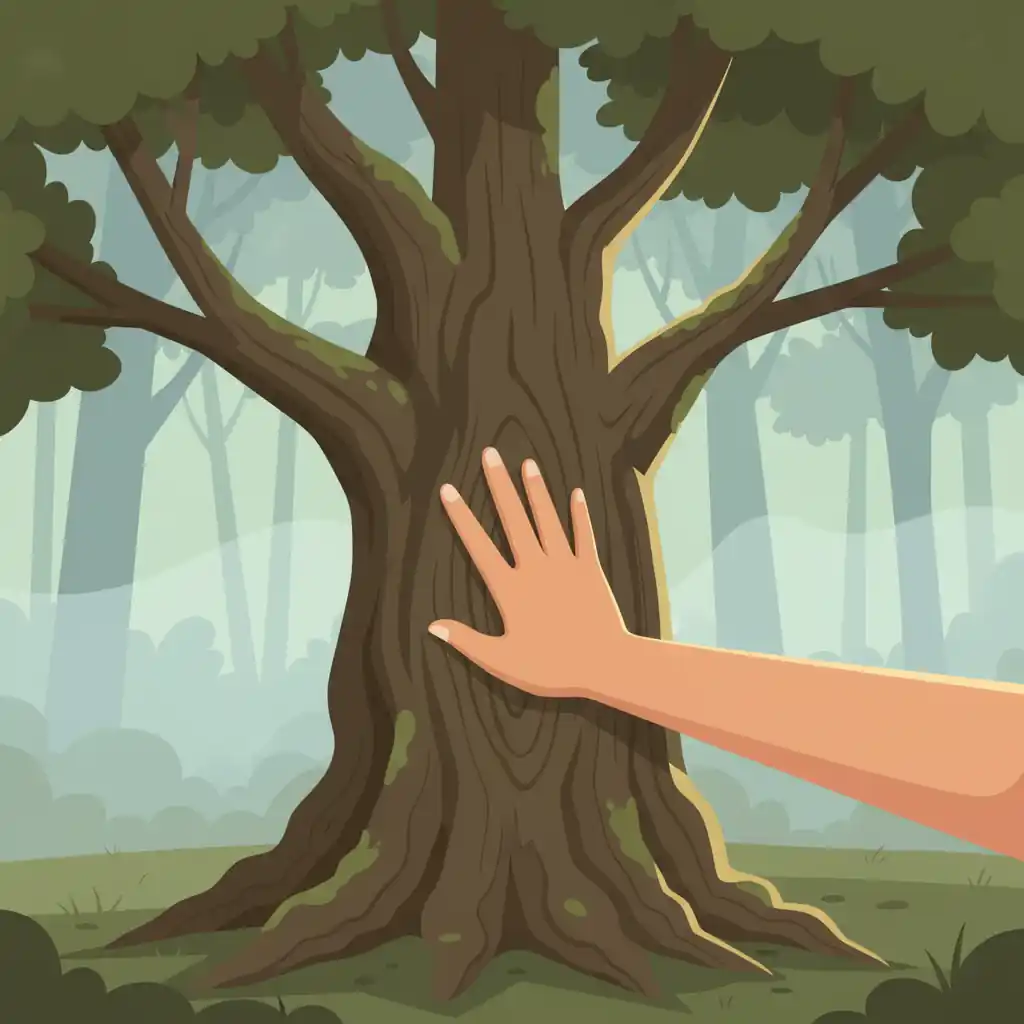
So, the elder would gently guide the young hunter. He would take the hunter’s hand. He would lead him to the nearest oak tree. Or perhaps to a wooden tool, a spear with an oak shaft.
Then, they would touch the wood. A simple gesture. A silent prayer. It was an acknowledgment. An apology. A request for the spirits to avert any ill fortune. To keep the words from jinxing the future.
This wasn't about bringing good luck. It was about preventing bad luck. It was a way to ground a bold prediction. To say: 'Yes, I hope for this, but I know it's not guaranteed. Please, spirits, don't let my words attract misfortune.'
The wood was the conduit. The direct link to the protective power of the spirits. A physical anchor against the invisible forces of fate.
The Cross and the Custom
Centuries passed. Rome came and went. Then came Christianity. New beliefs spread across the Iberian Peninsula. New symbols arrived. But old habits died hard.
The sacred oak trees remained. But now, another piece of wood gained immense significance: the Cross. The ultimate symbol of sacrifice and salvation.