
The Fabric Market of Toledo
Centuries ago, the city of Toledo was a hub of artistry and commerce. Its steel was legendary, its architecture grand. But in the bustling squares, another craft held sway: textiles.
The Zocodover square was a riot of sound and scent. Spices mingled with wool. The air buzzed with shouts of merchants and the rustle of fabrics.
Here, textile merchants were fiercely competitive. Their wealth hinged on the quality of their cloths. And the quality was often judged by one thing: color.
Everyone chased the perfect hue. A crimson as deep as royal blood. An indigo as dark as the midnight sky. A green as fresh as spring leaves. These colors were not just pretty; they were symbols of status and skill.
Dyeing was a complex art. A secret formula could make a fortune. A bad batch could ruin a reputation. Colors were temperamental. They faded in the sun. They bled in the wash. Achieving lasting vibrancy was a constant battle.
Merchants guarded their dyeing recipes like state secrets. They spent lifetimes perfecting their craft, striving for that elusive, perfect pigment.
Maestro Esteban’s Masterpiece
Among these artisans was Maestro Esteban. An older man, quiet and unassuming. His hands were always stained, a permanent mark of his dedication.
His workshop, tucked away from the main square, smelled of exotic roots and simmering pots. Esteban rarely spoke. He just worked, meticulously, patiently.
For decades, he had perfected his dyeing techniques. Some whispered he used ancient Moorish methods. Others claimed he had a touch of magic. He merely smiled, a knowing glint in his eye.
One day, a rumor spread through Toledo. Maestro Esteban was preparing a grand unveiling. A fabric unlike any seen before.
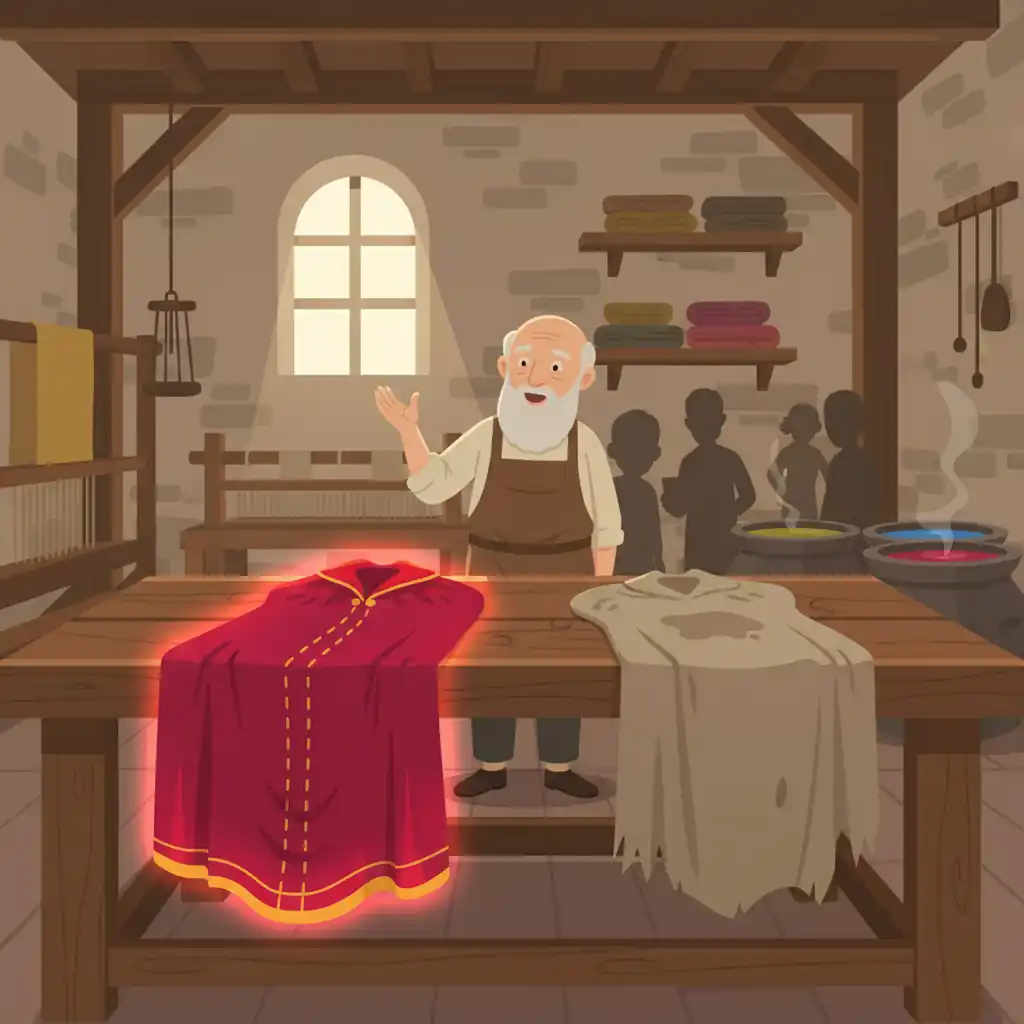
When the day arrived, a crowd gathered. Esteban, with solemn reverence, presented his creation: a cloak of fine wool, dyed a deep, impossible scarlet.
It wasn't merely red. It vibrated with an inner fire. The color seemed to pulse, to hold light within its very threads. It was a living, breathing hue, unlike any mundane pigment.
The market fell silent. Rivals, usually quick with a sneer, could only gasp. This was artistry elevated to an almost divine level. It was a color that defied belief.
The Unfair Comparison
Just moments before Esteban’s reveal, a dyer named Pedro had proudly displayed his latest work. Pedro was competent, his fabrics respectable. He specialized in solid, dependable colors.
His finest offering was a wool tunic, dyed a deep, standard red. It was a good red, by normal standards. Pedro had preened, accepting the polite nods of the onlookers.
Then Maestro Esteban’s cloak was brought out. Doña Clara, the sharp-eyed market master, took a moment to admire it. She then picked up Pedro’s tunic and laid it carefully beside Esteban’s masterpiece.
The contrast was immediate and brutal. Esteban’s scarlet blazed like a captured sunset. It was pure, distilled passion, radiating warmth and depth.
Pedro’s red, next to it, simply vanished. It looked dull. Faded. Almost brown, or a dusty, dried bloodstain. It was as if all life had been drained from it.
The crowd gasped again, this time at the sheer, undeniable difference. Pedro himself stared, his face falling. His pride turned to ashes.
Doña Clara, a woman of few but precise words, looked from one fabric to the other. She shook her head slowly, a grim assessment on her face.