
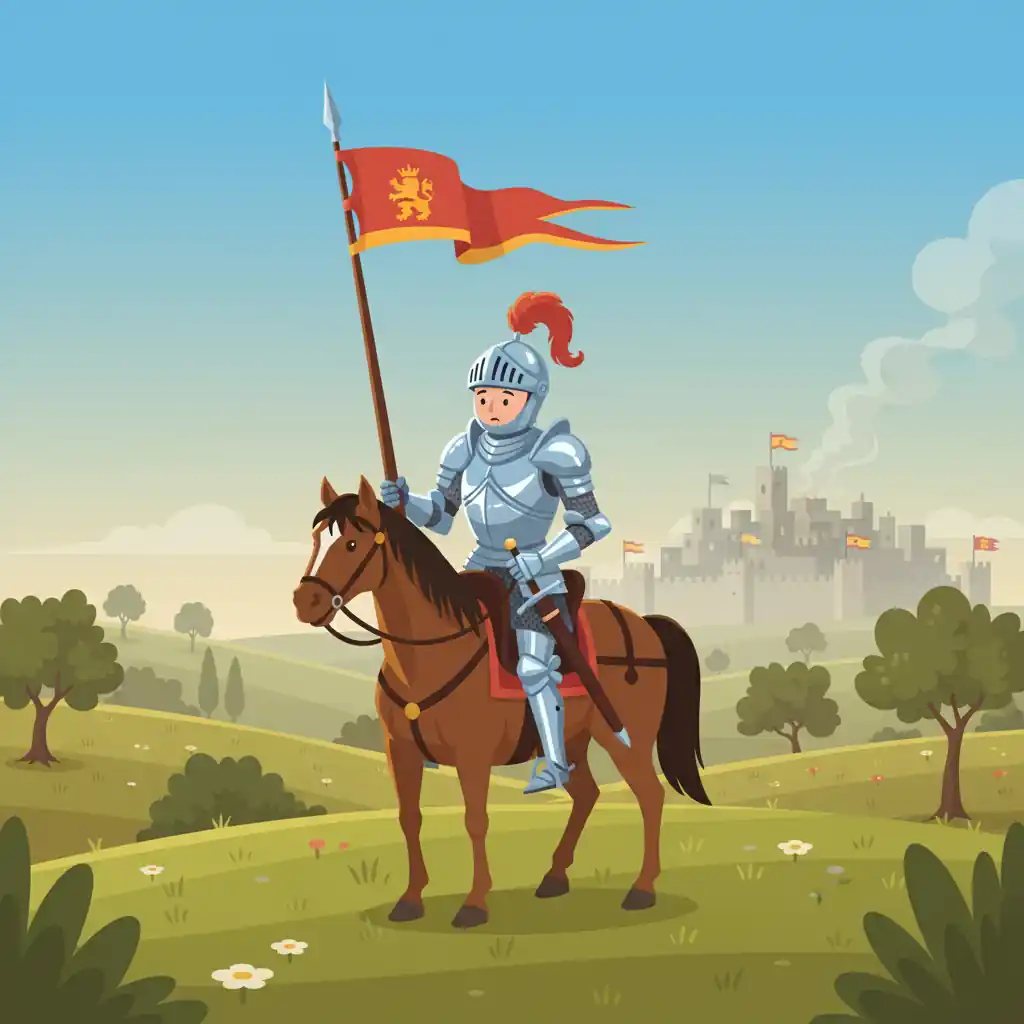
The Siege of 1233
The year was 1233. King Ferdinand III of Castile stood before the formidable walls of Úbeda. This was a crucial moment in the Reconquista, the long campaign to reclaim Spain from Moorish rule.
Úbeda, a city in Andalusia, was a strategic prize. Its fall would open new territories. The King’s army was vast, disciplined, and eager for victory.
Among his many captains was Álvar Fáñez. He came from a noble family. He had a fine uniform, polished armor, and a commanding presence. But beneath the impressive exterior, some doubted his true mettle.
Fáñez was good at parades. He was less proven in the chaos of battle. Yet, his rank demanded respect. He was responsible for a significant battalion, positioned for a key assault.
The final attack was set for dawn. Orders were clear. Each unit knew its role. The air buzzed with nervous energy and anticipation. Ferdinand expected every man to be at his post.
The Vanishing Captain
As the first light touched the eastern sky, trumpets blared. Drums beat a furious rhythm. The signal for the assault had come.
Thousands of soldiers surged forward. Arrows rained down. Catapults hurled stones. The roar of battle filled the valley.
But something was wrong. Captain Fáñez’s battalion stood idle. Their commander was nowhere to be seen. His lieutenants looked around, then at each other. Panic began to spread.
Where was the captain? No one knew. He was not with the vanguard. He was not in the command tent. He had simply vanished.
The battle raged all day. Lives were lost. Walls were breached. Úbeda’s defenders fought fiercely. Fáñez’s men, leaderless and confused, struggled to find their place. Their impact on the battle was minimal.
King Ferdinand, leading from the front, saw the gaps. He saw the confusion in that sector. But in the heat of battle, he could only push forward. The fight continued without Álvar Fáñez.
The Clean Armor
By late afternoon, the city’s defenses crumbled. The Castilian army poured through the gates. The Moorish flag was pulled down, replaced by the banners of Ferdinand III. Úbeda had fallen.
Soldiers, covered in dust, sweat, and blood, celebrated. They were exhausted but triumphant. They had faced death and won. The air was thick with the smell of smoke and victory.
As the sun began to set, a lone rider approached the newly conquered city. His horse was well-rested, its coat clean. The rider sat tall, his armor gleaming. No dust, no dirt, no dents. No blood.
It was Captain Álvar Fáñez. His sword hung clean and unused at his hip. He rode through the gates as if returning from a pleasant morning ride, not a bloody siege.
The victorious soldiers stopped their celebrations. They stared. Their expressions were a mixture of disbelief and open contempt. Fáñez offered a weak smile. No one returned it.
The King’s Scrutiny
King Ferdinand III was a shrewd man. He had noticed Fáñez’s absence during the fighting. He had seen the leaderless battalion. Now, he saw the captain’s pristine appearance.
He summoned Fáñez immediately. The captain stood before his king, trembling. The royal tent was quiet, save for the crackling of torches.
“Captain Fáñez,” the King’s voice was calm, but sharp. “Where were you during the assault? Your men waited. The battle raged. And you, it seems, were nowhere to be found.”
Fáñez stammered, sweat beading on his forehead. “My King… I… I lost my way. I went… through the hills. Yes, through the hills of Úbeda.”
The King looked at him, then around at his generals. A dry smile touched his lips. “Lost in the hills of Úbeda, were you, Captain?” he repeated slowly, his voice dripping with sarcasm. “It seems you found them quite peaceful. Perhaps a bit too peaceful, compared to the city walls.”
A ripple of suppressed laughter went through the tent. The King's words were a public, humiliating dismissal. Fáñez's excuse was so weak, so transparent, it became an instant joke.
A Lingering Legacy
The King’s witty remark spread like wildfire through the army. Soon, everyone was talking about Captain Fáñez, who had gone “through the hills of Úbeda” instead of fighting.
Initially, the phrase, “irse por los cerros de Úbeda,” was a direct insult. It meant to be a coward, to shirk duty, or to disappear when things got tough.
Over the centuries, its meaning softened and broadened. It kept its essence of evasion, but it applied to more everyday situations. It became a way to describe someone who rambles, goes off-topic, or avoids the main point of a conversation or argument.
If someone starts telling a long, irrelevant story instead of answering a simple question, you might say they’re “going through the hills of Úbeda.” If a politician sidesteps an issue, they too are navigating those famous hills.
So, next time you hear someone talking in circles, remember Captain Álvar Fáñez. Remember his clean armor, his fresh horse, and his incredibly flimsy excuse. And remember King Ferdinand III’s sharp wit, which turned a military embarrassment into a timeless Spanish idiom.
- Irse: To go away, to leave.
- por: Through, by.
- los: The (plural masculine definite article).
- cerros: Hills, mounds.
- de: Of.
- Úbeda: The name of the city.
Literally, the phrase means: “To go through the hills of Úbeda.”
Evasion often creates a bigger problem than the one being avoided, and a poorly crafted excuse can live on in infamy.