
PROLOGUE: THE WHISPER OF THE NEW AGE
Mid-19th century America was a nation caught between the rigid structures of Victorian society and the dizzying pace of modern progress. It was a time of invention—the telegraph was knitting the continent together with invisible wires, photography was capturing fleeting moments for eternity, and new technologies promised to conquer distance and time. Yet, beneath this veneer of advancement lay a profound yearning, a spiritual hunger exacerbated by immense loss. Epidemics swept through towns, the horrors of the coming Civil War were casting their long shadows, and death was a frequent, unwelcome guest in every home. People sought meaning, solace, and, most desperately, connection with those they had lost.
This fertile ground of grief and technological wonder created a unique space for a new belief system to take root. If copper wires could carry messages across continents, why couldn’t the invisible fabric of the universe carry voices from beyond the grave? It was into this charged atmosphere that an unlikely phenomenon emerged, not from the hallowed halls of academia or the pulpits of powerful churches, but from a small, unremarkable farmhouse in rural New York. There, a peculiar knocking in the walls would transform a family’s humble dwelling into the epicenter of a global spiritual revolution, birthing a movement that promised to bridge the chasm between the living and the dead.
The story of Spiritualism begins not with seers or prophets, but with two young girls, a humble cottage, and an audacious challenge to an unseen force. It’s a tale woven with genuine terror, naive curiosity, fervent belief, and, ultimately, the harsh realities of human fallibility. This is the story of how the mundane became miraculous, and how a family’s private haunting blossomed into a religion that captivated millions, forever changing how Western society grappled with death, communication, and the very nature of reality.
Before the grand seances, the celebrity endorsements, and the dramatic confessions, there was only a persistent, unsettling sound in the quiet dark of a Hydesville bedroom. A sound that, in a world yearning for answers, would be interpreted as the direct voice of the departed, opening a gateway to a realm previously reserved for faith and folklore. This wasn't merely a ghost story; it was the genesis of a global cultural movement, fueled by hope, grief, and an insatiable desire to believe.
ACT I: THE HAUNTING OF HYDESVILLE
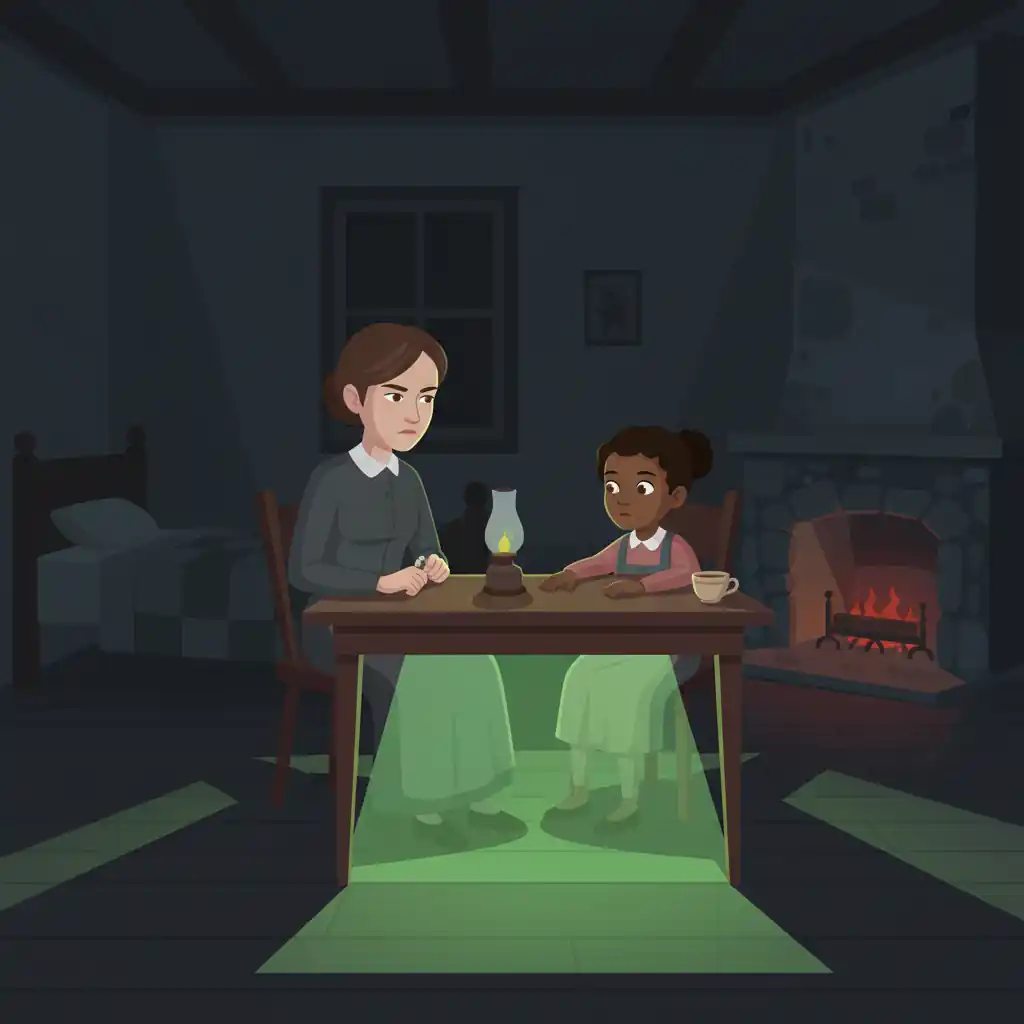
The year was 1847 when John and Margaret Fox, along with their youngest daughters, ten-year-old Catherine (Kate) and twelve-year-old Margaret (Maggie), moved into a modest, rented farmhouse in Hydesville, New York. The cottage itself was unremarkable—a simple, sparsely furnished dwelling—but within its walls, something began to stir, something that would irrevocably alter the course of their lives and send ripples across the spiritual landscape of the world. Initially, the noises were attributed to natural causes: rats in the walls, gusting winds, the creaking of an old house settling.
However, as winter gave way to spring, the disturbances escalated. Furniture would seemingly shift on its own, apples would roll from shelves, and, most unnervingly, a persistent rapping sound began to emanate from the walls and floorboards, particularly in the girls’ bedroom. This wasn't the predictable groan of an old house; it was distinct, rhythmic, and, to the increasingly terrified Fox family, undeniably intelligent. Night after night, the raps would begin, often in response to household activities, leading to sleepless nights and a palpable sense of dread.
The pivotal moment arrived on the evening of March 31, 1848. Tired and frayed from the incessant knocking, Margaret Fox Sr. tried to ignore the sounds. But Kate, known for her spirited and playful nature, decided to challenge the unseen tormentor. She clapped her hands and playfully demanded, “Mr. Splitfoot, do as I do!” The invisible entity immediately obliged, mimicking her claps precisely. Then Kate asked, “Now count ten!” And ten distinct raps echoed through the room. It was a terrifying, yet exhilarating, breakthrough. This wasn't just noise; it was communication.
Her mother, sensing something profound, intervened. “If you are a spirit,” she asked the unseen presence, “rap twice for 'yes.'” Two distinct raps. The conversation continued, developing into a simple code: one rap for 'yes', two for 'no'. Mrs. Fox then painstakingly went through the alphabet, asking the spirit to rap when she reached the correct letter, slowly spelling out a message. The revelation was chilling: the spirit claimed to be Charles B. Rosna, a peddler who had been murdered in that very house five years prior and buried in the cellar by a former occupant.
Word spread quickly among neighbors. One, named Lucretia Pulver, arrived and was astonished when the spirit responded to her own silent questions. Another, Isaac Post, became convinced and helped formalize the communication method. People flocked to the cottage, curious and desperate, hoping to speak with their own deceased loved ones. The cellar was eventually excavated, and while no body was immediately found, later reports claimed that fragments of human bones and teeth were discovered years later, lending a macabre authenticity to the spirit's tale. Whether genuine or not, the 'Hydesville Rappings' were no longer just a family haunting; they were a public phenomenon, igniting a spark that would soon become a wildfire of belief across America.
Fun Fact: The name 'Mr. Splitfoot' that Kate initially used to address the spirit was a common colloquialism for the Devil or a malevolent entity, reflecting the deeply superstitious roots from which their 'communication' initially sprang. The playful challenge, however, transformed it from a demonic presence into a communicative, albeit unseen, entity.
ACT II: FROM FARMHOUSE TO FAME
The news of the Hydesville Rappings spread like wildfire, carried by gossip, local newspapers, and the sheer human desire for the miraculous. In an age before instant media, the story traveled from mouth to ear, growing in embellishment with each retelling. The Fox sisters, particularly Kate and Maggie, became overnight sensations. Yet, their initial fame was largely confined to local circles until their eldest sister, Leah Fox Fish (later Underhill), recognized the immense potential—and marketability—of their unique 'gift.' A shrewd and ambitious woman, Leah moved Maggie and Kate to her home in Rochester, New York, transforming them from frightened children into the unwitting pioneers of a new spiritual movement.
Rochester became the crucible for public Spiritualism. On November 14, 1849, the sisters conducted their first public demonstration at Corinthian Hall. Tickets were sold out, and skepticism and awe filled the auditorium. The audience witnessed what appeared to be direct communication with the dead. Tables tipped and levitated, raps answered complex questions, and some claimed to hear disembodied voices or feel unseen hands. The performances were chaotic, thrilling, and deeply convincing to many. The sisters, especially Kate, seemed to have an uncanny ability to produce loud, distinct raps on command, even without visible movement.
This wasn't just entertainment; it quickly became a burgeoning religion. Spiritualism, as it came to be known, offered a radical departure from traditional Christian doctrines, promising direct evidence of an afterlife and a more personal connection with the divine. It resonated deeply with a society grappling with immense grief and a general dissatisfaction with established churches. The idea that loved ones weren't truly gone, but merely in another dimension, capable of communicating, offered profound comfort.
Spiritualism's Unexpected Allies
What's often overlooked is Spiritualism's deep entanglement with the progressive social movements of the era. It wasn't merely a spiritual curiosity; it became a platform for radical change:
- Abolitionism: Many prominent Spiritualists were fervent abolitionists, believing that all souls, regardless of earthly color, were equal in the spirit world.
- Women's Rights: Spiritualism empowered women in an unprecedented way. Mediums were overwhelmingly female, granting them a voice, authority, and financial independence rarely afforded in Victorian society. Leah Fox herself became a powerful figure, managing her sisters and promoting the movement.
- Temperance: The movement often advocated for social reforms, including abstinence from alcohol, although this would later become a painful irony for the Fox sisters themselves.
As the sisters toured, demonstrating their abilities to ever-larger crowds, countless other individuals across America began to report similar phenomena. Soon, hundreds, then thousands, of mediums emerged, all claiming to communicate with spirits. The Fox sisters were not just performers; they were catalysts, igniting a global movement that would count millions among its adherents, including literary giants, scientists, and politicians. From a humble knocking in a farmhouse wall, a new age of spiritual belief had been born, forever intertwining the mundane with the miraculous in the American psyche.
Fun Fact: The rise of Spiritualism coincided directly with the widespread adoption of the telegraph. Many drew parallels between the invisible electrical impulses carrying messages across vast distances and the unseen 'spirit messages' traveling from the afterlife. The telegraph normalized the idea of 'instant communication' with unseen forces, making the concept of spirit communication seem less fantastical and more like an extension of new technology.
ACT III: THE HIGH PRIESTESSES OF THE PARANORMAL
By the 1850s, the Fox sisters—now under the savvy management of their older sister, Leah—had transcended mere local curiosity to become international celebrities. They moved from Rochester to the bustling metropolis of New York City, where their seances attracted an astonishing array of society's elite. Horace Greeley, the influential editor of the New York Tribune, was an early and prominent supporter, even taking Kate into his home. Other attendees included poet William Cullen Bryant, abolitionist William Lloyd Garrison, and even members of European royalty who sought private audiences during their American tours.
A typical seance with the Fox sisters was a carefully orchestrated affair, often conducted in a dimly lit parlor, designed to heighten the senses and suspend disbelief. Sitters would gather around a mahogany table, hands often joined, creating a 'chain' to supposedly enhance the spiritual energy. After a period of quiet anticipation, the signature raps would begin—first faint, then growing louder, seemingly emanating from the table, the floor, or even the ceiling. Questions would be posed, either aloud or silently, and answered with the familiar 'yes' or 'no' code. Sometimes, the table itself would begin to vibrate, tilt, or even levitate, seemingly defying gravity.
As their fame grew, so did the repertoire of phenomena attributed to the sisters' mediumship. Beyond raps and table tipping, observers claimed to witness furniture moving across rooms, musical instruments playing themselves (especially accordions and guitars), 'spirit hands' touching sitters, and even the appearance of disembodied voices known as 'direct voice.' These more elaborate displays added to the mystique, pushing the boundaries of what was considered possible and captivating both fervent believers and fascinated skeptics.
The Commercialization of the Afterlife
The sisters, or more accurately, Leah, quickly understood the commercial value of their unique talent. They charged significant fees for private sittings, embarked on lucrative tours across America and Europe, and even licensed other mediums to operate under the umbrella of 'Fox-style' mediumship. Spiritualism became a veritable industry, generating wealth for the mediums and hope for the grieving. This era saw the creation of a vast network of Spiritualist churches, publications, and conventions, all stemming from the Hydesville raps.