
First Contacts at Cambridge
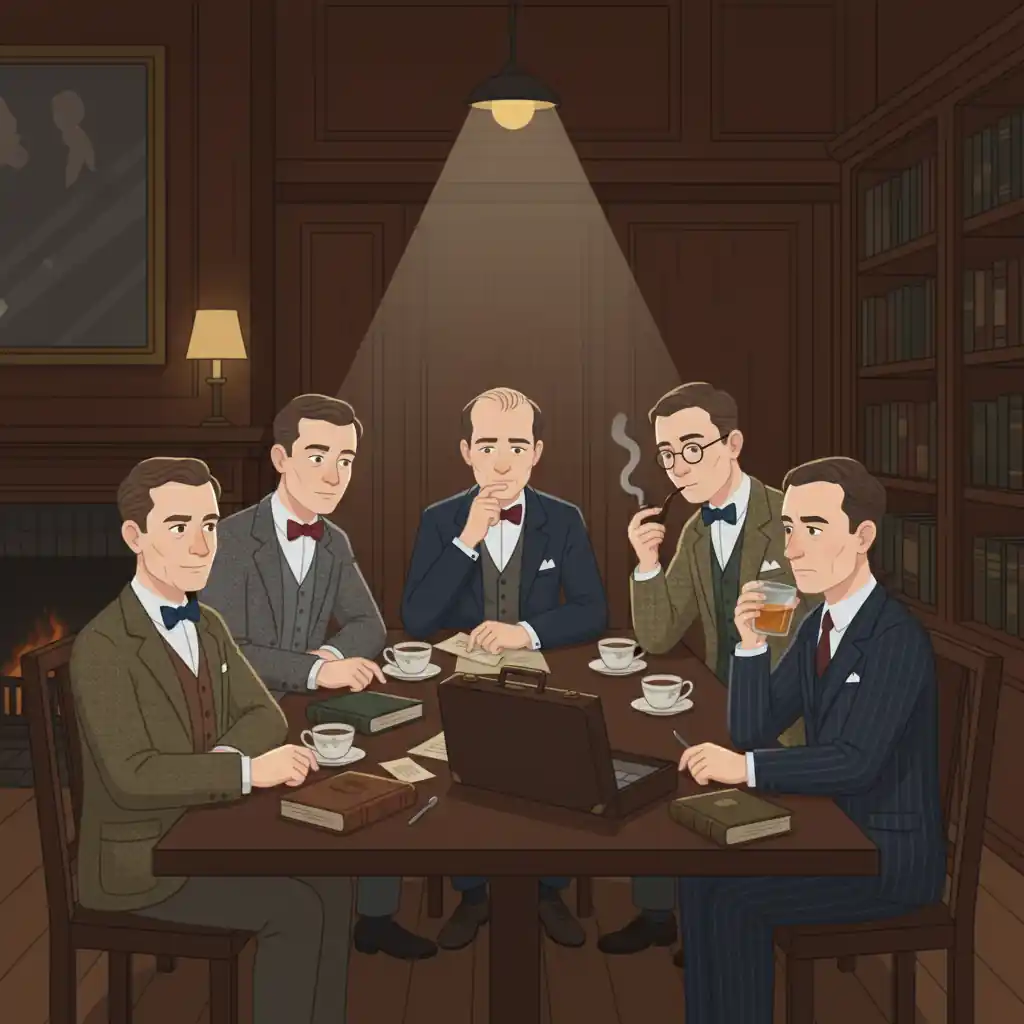
Guy Burgess, Donald Maclean, Kim Philby, and Anthony Blunt are reportedly recruited by Soviet intelligence during their time as students at Cambridge University, drawn by communist ideology amidst the rise of fascism.
Infiltration of Government
Donald Maclean begins his career in the Foreign Office, marking the start of the ring's strategic placement within key British government departments.
Philby Joins MI6
Kim Philby joins the Secret Intelligence Service (MI6), securing a position that would eventually grant him access to highly sensitive intelligence, including Anglo-American cooperation.
Cairncross at Bletchley Park
John Cairncross joins Bletchley Park, the wartime code-breaking center, providing the Soviets with invaluable intelligence from decrypted German communications.
Blunt Joins MI5
Anthony Blunt joins MI5, the Security Service, gaining access to counter-intelligence operations and internal security assessments.
Burgess and Maclean Defect
Alerted to imminent exposure by Philby, Guy Burgess and Donald Maclean defect to the Soviet Union, triggering a major scandal and intense investigation in Britain.
Philby's Public Denial
Kim Philby is publicly accused of being the 'Third Man' but is cleared by Foreign Secretary Harold Macmillan due to insufficient evidence at the time.
Philby's Defection
After renewed suspicion and interrogation, Kim Philby defects to the Soviet Union from Beirut, confirming his role as a Soviet agent.
Blunt Confesses and Gains Immunity
Anthony Blunt privately confesses his role as a Soviet spy to MI5 investigators, receiving immunity from prosecution in exchange for full disclosure.
Blunt Publicly Exposed
Margaret Thatcher publicly reveals Anthony Blunt's identity as a Soviet agent to Parliament, revoking his knighthood and sparking widespread public outrage.
PROLOGUE: THE UNDETECTED VIRUS
This story draws on historical investigations, journalism, and academic research. Some events described were the subject of public controversy or legal investigation. Allegations and interpretations are presented as reported claims rather than definitive conclusions. The narrative explores one of the most significant intelligence failures in British history, a tale of ideological conviction, ruthless espionage, and the profound breach of trust that reverberated through the Cold War.
Imagine a silent, undetectable virus. It infects the deepest organs of the host, slowly redirecting its functions, feeding information to a foreign entity, and remaining dormant for decades. This is not a biological thriller, but the chilling reality of the Cambridge Five, a spy ring that burrowed into the very heart of the British establishment. Their story is a labyrinth of privilege, ideology, and betrayal that exposed the vulnerabilities of a nation and forever stained the gilded reputation of its most elite institutions.
From the hallowed halls of Cambridge University, five young men — bright, charismatic, and seemingly destined for greatness — were drawn into a secret pact that would lead them to become some of the most damaging double agents of the 20th century. Their names: Kim Philby, Guy Burgess, Donald Maclean, Anthony Blunt, and John Cairncross. These men, products of Britain's most prestigious schools and universities, would ascend to positions of immense power and access, feeding classified information to the Soviet Union for over three decades.
Their tale is one of clandestine meetings, coded messages, daring escapes, and the slow, agonizing process of exposure that left the British and American intelligence communities reeling. It’s a narrative not just of espionage, but of the intoxicating appeal of ideology in a tumultuous era, and the enduring question of how such a monumental act of betrayal could remain undetected for so long.
ACT I: THE HOTHOUSE OF IDEAS
The 1930s were a crucible of global change. The Great Depression had shattered economic certainties, fascism was on the march across Europe, and the Soviet Union, despite its own brutal realities, presented an alternative vision to disillusioned intellectuals. For many bright young minds at elite universities like Cambridge, communism offered a compelling solution, a grand narrative of social justice and a bulwark against the rising tide of Nazism.
Cambridge University, with its ancient colleges and fervent intellectual debates, became a fertile recruiting ground. Historians widely report that it was here, amidst late-night discussions in dimly lit rooms, that the seeds of the spy ring were sown. The young men who would become the Cambridge Five were not working-class revolutionaries, but rather the privileged scions of the British establishment, making their ideological turn all the more striking to later observers.
The Architects of Betrayal
Guy Burgess, flamboyant and notoriously indiscreet, was a brilliant but chaotic character. He was known for his sharp wit and extensive network of contacts, spanning politics, media, and intelligence. He was reportedly instrumental in drawing others into the Soviet orbit. Donald Maclean, outwardly reserved and intellectual, harbored deep psychological vulnerabilities. He was a gifted diplomat with access to sensitive foreign policy documents.
Kim Philby, arguably the most damaging of the group, cultivated an aura of understated charm and intellect. He came from a family with a distinguished colonial background and was destined for a career in the foreign service or intelligence. Anthony Blunt, an art historian and a cousin to the Royal Family, was known for his refined tastes and academic prowess. He would later become the Surveyor of the Queen's Pictures, providing an additional layer of almost theatrical irony to his secret life. John Cairncross, perhaps the least publicly known, was a talented linguist and civil servant, whose quiet demeanor belied his significant access to classified information.
According to historians, their recruitment was largely overseen by Soviet handlers, who recognized the potential of these young, ideologically committed men with impeccable connections. The motivations for their initial allegiance are complex and debated: genuine anti-fascist convictions, a belief in Soviet communism as the future, thrill-seeking, or perhaps a blend of all three. What is clear, as reported by intelligence agencies, is that they were convinced they were working for a greater cause, often seeing themselves as moral agents rather than traitors.
The recruitment process was reportedly a slow burn, cultivating trust and ideological alignment rather than brute coercion. They were asked to commit not to specific acts of espionage immediately, but to a long-term strategy of infiltration, preparing them for roles where they could be most valuable. Their youthful idealism would eventually be forged into a tool for geopolitical espionage, with consequences far beyond their initial understanding.
Anthony Blunt, one of the Cambridge Five, was related to the Queen Mother, Elizabeth Bowes-Lyon, through his mother, a fact that later added a layer of profound embarrassment and security concern when his treachery was exposed. He even worked within Buckingham Palace as the Surveyor of the Queen's Pictures, gaining close proximity to the Royal Family while secretly serving Soviet interests.
ACT II: INFILTRATION AND ASCENT
With their ideological foundations laid at Cambridge, the members of the spy ring began their quiet ascent into the corridors of British power. Their carefully cultivated backgrounds and intellectual brilliance made them ideal candidates for the most sensitive government departments and intelligence agencies. Their infiltration was systematic, leveraging their social connections and academic achievements to gain access to a trove of classified information.
Deep Cover in High Places
Kim Philby joined the Secret Intelligence Service (MI6) in 1940, rising steadily through the ranks. His career path was remarkable: by the late 1940s, he was MI6's station chief in Washington D.C., serving as the chief liaison with the CIA and FBI. This position, as extensively detailed in historical investigations, gave him unparalleled access to Anglo-American intelligence cooperation, including details of the highly secret Venona project aimed at decrypting Soviet communications.
Donald Maclean began his career in the Foreign Office in 1937. His postings took him to Paris and then to Washington D.C. as First Secretary, where he became privy to top-secret diplomatic and atomic energy discussions between the US and UK. Investigators later claimed that Maclean passed critical information about Western nuclear capabilities and strategies, potentially accelerating the Soviet Union's atomic program.
Guy Burgess, known for his mercurial personality, moved between roles in the BBC, MI6, and the Foreign Office. His role was often more as a conduit and networker, using his charm and social connections to gather intelligence and facilitate contacts. Though less of a direct 'spymaster,' his influence and proximity to powerful figures made him a valuable asset, as later investigations confirmed.
Anthony Blunt joined MI5, the Security Service, in 1940. His position gave him insights into British counter-intelligence operations and the identities of MI5 agents. After the war, he returned to his academic career, eventually becoming the Surveyor of the King's Pictures (later the Queen's), a role that granted him a unique position of proximity to the Royal Family, though official reports indicate his espionage activities were largely in his earlier MI5 tenure.
John Cairncross, a less glamorous but equally effective agent, served in various government departments, including the Foreign Office and Treasury. Critically, during World War II, he worked at Bletchley Park, the highly secretive British code-breaking center. It was alleged by historians and former intelligence officials that Cairncross passed vital intelligence from decrypted German Enigma messages to the Soviets, providing crucial strategic advantages to the Eastern Front.
For years, these men operated with impunity, their impeccable credentials shielding them from suspicion. They lived double lives, navigating the highest echelons of British society by day and clandestine rendezvous by night, passing sensitive documents, strategic plans, and the identities of other agents to their Soviet handlers. The sheer volume and strategic importance of the information they transmitted, as later revealed in intelligence reports, represented a profound compromise of Western security during the formative years of the Cold War.
While at Bletchley Park, John Cairncross reportedly sent decrypted German signals, including details about German military movements on the Eastern Front, directly to the Soviet Union. This information, if confirmed, would have been invaluable to Soviet forces during critical phases of World War II.
ACT III: THE SHADOW OF SUSPICION
The seemingly impenetrable façade of the Cambridge Five began to crack in the early 1950s, a period defined by intense Cold War paranoia and a fervent anti-communist sentiment, particularly in the United States. The hunt for Soviet moles intensified, fueled by technological breakthroughs and growing suspicion within Western intelligence agencies.