
The Frozen Giants
Imagine the early days of sea travel. Vast, unknown oceans stretched out before brave sailors. Their wooden ships were fragile things, powered by wind and courage. But some parts of the world held a special, silent terror: ice.
When ships sailed into the colder latitudes, massive formations of ice became a constant threat. These weren't just small chunks floating by. These were icebergs, some as tall as mountains, others vast and flat like frozen plains.
They drifted, slow and quiet, through the fog and storms. A ship hitting one of these giants meant instant disaster, a splintering of wood and a quick descent into the icy depths. Survival was rare.
A Deceptive Sight
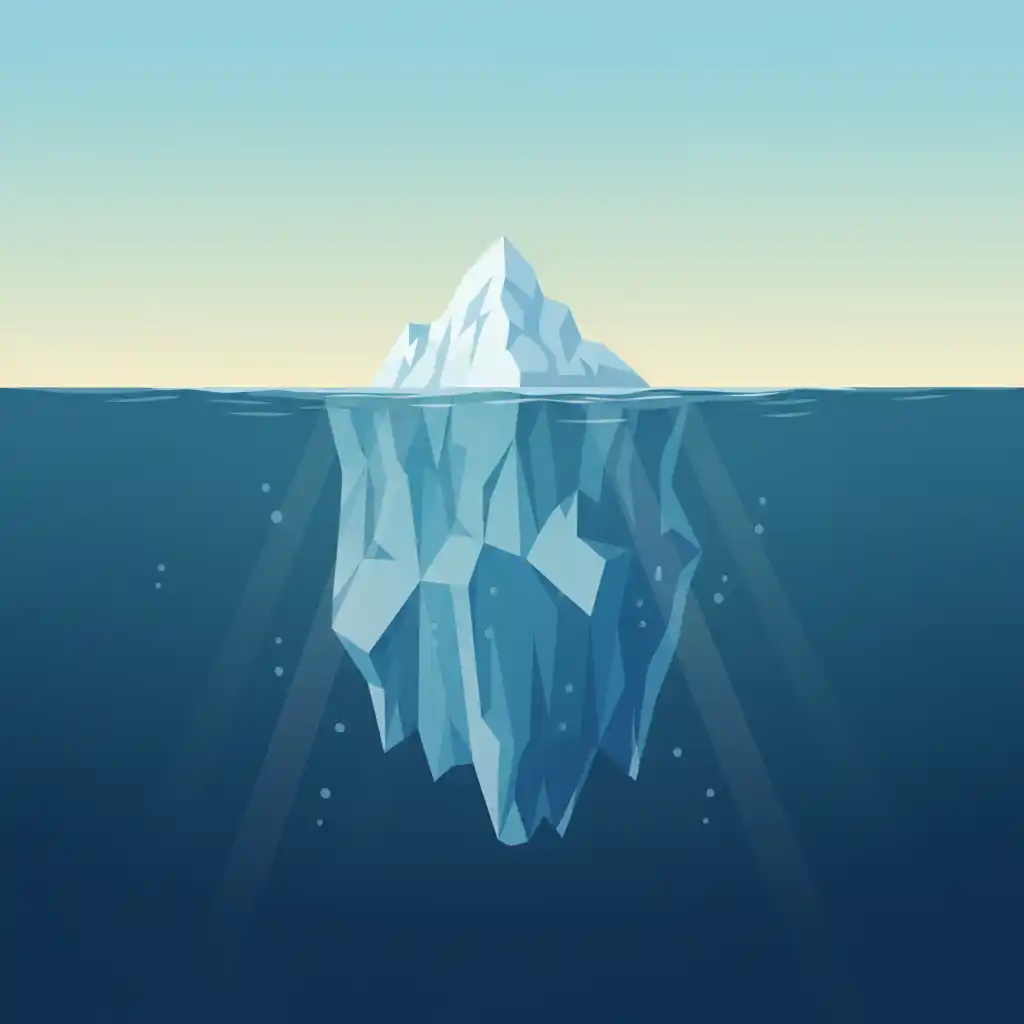
Sailors quickly learned that icebergs were tricky. What you saw above the water was almost never the whole story.
A small, jagged piece of ice might poke just a few feet out of the waves. It looked manageable, even harmless. A ship could potentially navigate around it, or so it seemed.
But the true danger lay hidden. Beneath the churning surface, a colossal mass of ice stretched down into the dark ocean. It was a silent, underwater mountain, often many times larger than the visible portion.
What appeared as a minor obstacle was, in reality, a submerged monster. The ocean water disguised its true scale, creating a deadly illusion.
The Hidden Danger
Many ships, and countless lives, were lost because of this deception. A captain might spot what looked like a small ice floe and feel a moment of relief. 'Just a little bit of ice,' he might think.