
The Medieval Hunt
Picture medieval England. Life was often hard, and every bit of food counted. Hunting wasn't just a sport for the rich; it was a necessary skill. While noblemen chased deer on horseback, common folk often set their sights on smaller game, especially birds.
Forests were vast and untamed. They were full of life, but also full of tricky hiding spots. Birds like pheasants, partridges, and quail were delicious. But they were also incredibly clever. They knew how to disappear into the dense undergrowth.
Imagine a thicket: a dense cluster of bushes, thorny branches, and low-hanging leaves. A perfect fortress for a bird. A hunter couldn't just walk in and expect an easy shot. The birds would simply fly deeper into the tangle.
The Role of the 'Beaters'
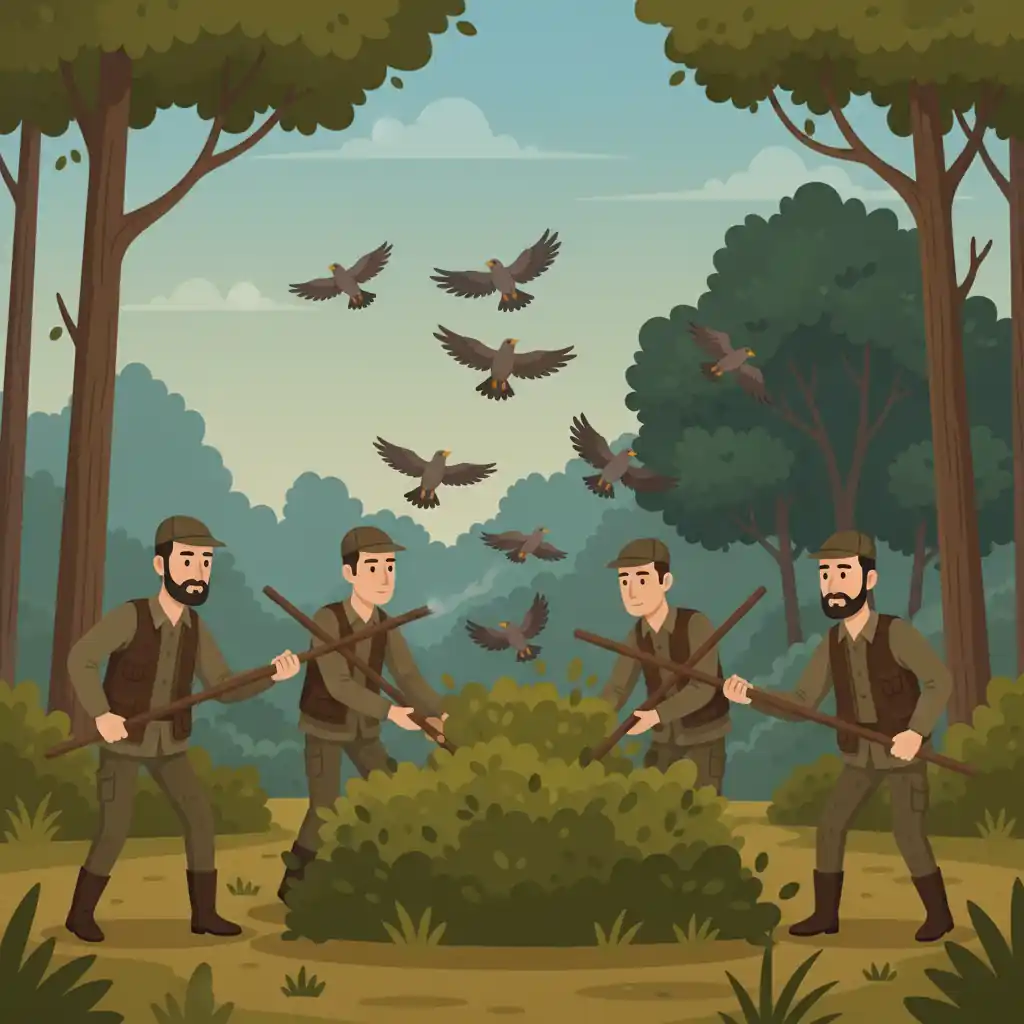
To catch these elusive birds, hunters developed a strategy. They employed people known as 'beaters.' These weren't the main hunters with bows or early firearms. They were often villagers, farmhands, or servants. Their job was less glamorous but crucial.
Armed with long sticks, the beaters would form a line. They would then methodically advance through the forest. Not directly towards the open field where the actual shooting would happen, but around the edges of the dense bushes.
Their task was simple: make noise. They'd whack their sticks against branches. They'd rustle through the leaves. They'd stomp their feet. This wasn't about catching the birds themselves, but about startling them.
The goal was to scare the birds out of their hiding spots. To 'flush' them into the open. Away from the protective cover of the bushes. Into a clearing where the actual hunters waited, ready to take their shot.
The beaters were essential. They ensured the birds didn't just stay hidden. But their work was indirect. They didn't aim for the kill. They just created the conditions for it.