
Oakhaven's Thirst
The sun beat down on Oakhaven village. Day after day, it scorched the earth. The sky was a cruel, relentless blue. No clouds. No rain.
The village well, once a lively hub, had become a silent, gaping hole. Its stone walls were dry and dusty. The stream that fed the village had slowed to a trickle, then stopped altogether. Panic began to settle over Oakhaven like a suffocating blanket.
Crops withered in the fields. Animals grew weak. The once vibrant village square was quiet, filled with worried whispers. The mayor, a man named Thomas, knew they needed a plan. Fast.
He called a meeting. The idea was simple, but desperate: a communal water barrel. Every household would bring whatever water they could spare, every single day. They would pool their resources to ensure everyone had at least a small ration.
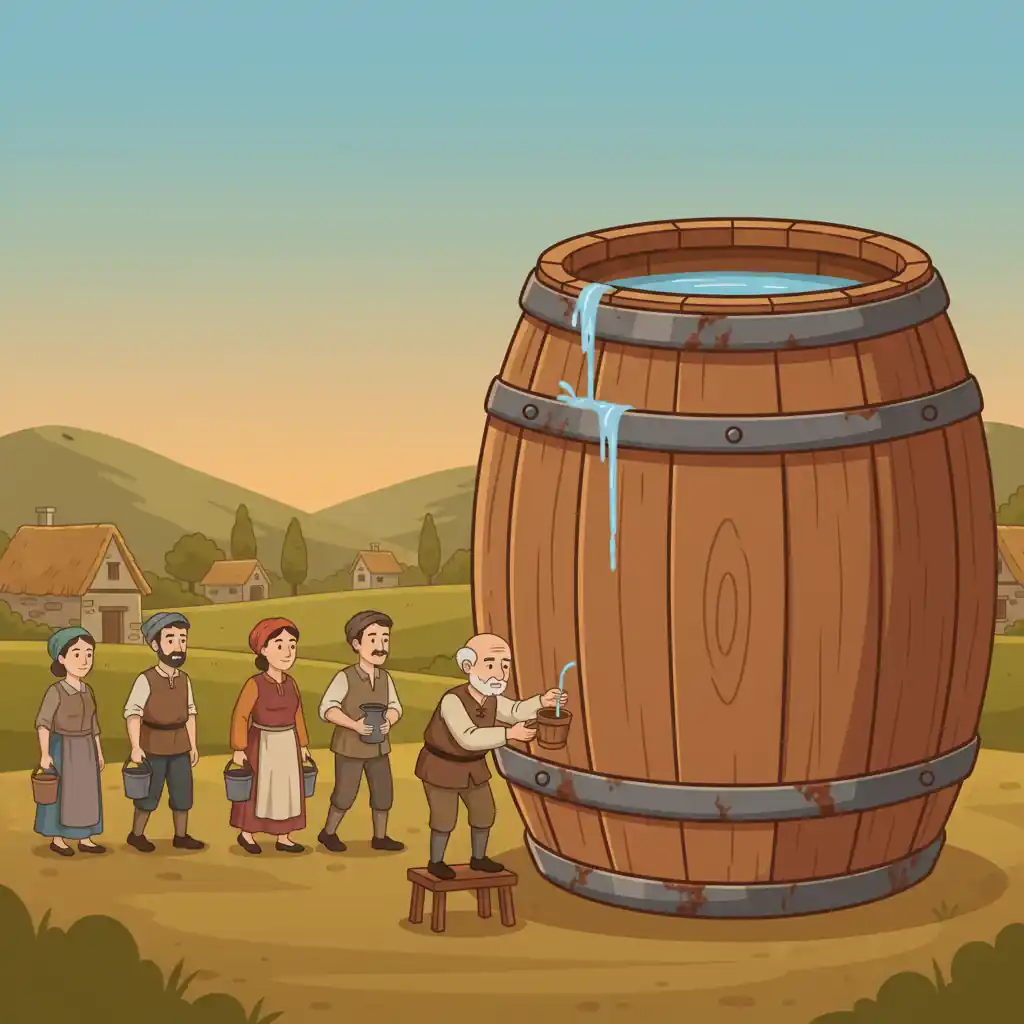
A massive oak barrel, usually reserved for winter wine, was rolled into the square. It stood taller than any man, its sturdy wood gleaming even in the harsh sunlight. It was a symbol of hope, but mostly, it was a symbol of their immense need.
The Grand Barrel
The first few days were a flurry of activity. Villagers, grim-faced, hauled buckets and pots. Children helped carry smaller jugs. Even the elderly, with trembling hands, brought what little they could manage.
The barrel, slowly but surely, began to fill. The water inside glimmered. Each contribution, no matter how small, felt significant. Every splash was a small victory against the encroaching thirst.
But as the drought dragged on, people’s own supplies dwindled. The well was dry. The stream was gone. What little they had saved was quickly used up. The contributions to the Grand Barrel became smaller, less frequent.
The barrel, though impressive in size, was nowhere near full. It was still mostly empty, a dark, echoing chasm that seemed to mock their efforts. The weight of its emptiness pressed down on the village.
Hope, like the water, was starting to run out. The collective efforts, while noble, felt increasingly insufficient against the overwhelming scale of their problem.
Elara's Offering
On the seventh day of the communal effort, an old woman named Elara made her way to the square. She was frail, her back bent with age, but her eyes were still sharp.
In her hand, she held not a bucket, not even a small jug. She carried a single, chipped ceramic cup. It held barely a few sips of water. It was all she had left. She had nursed it carefully, saving it for this moment.