
PROLOGUE: THE SILENT ASSAULT
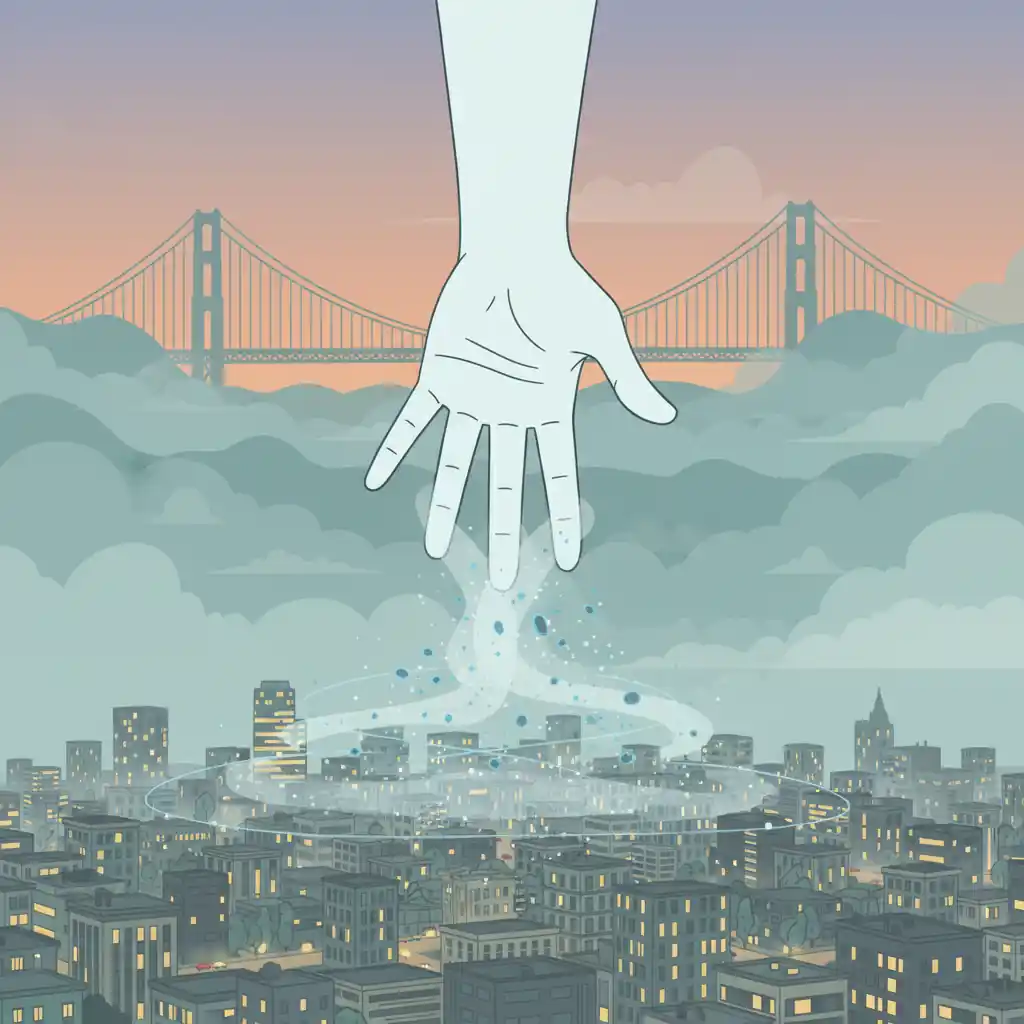
Imagine a typical September morning in San Francisco, 1950. The fog rolls in, as it always does, blanketing the city in a cool, damp embrace. Residents go about their routines, sipping coffee, heading to work, children playing in parks. They breathe in the crisp, cool air, unaware that with every inhalation, they are participating in a covert military experiment, a silent assault on their very lungs. The enemy was not a foreign power, but their own government. The weapon was invisible, biological, and purportedly 'harmless'.
This was the premise of Operation Sea-Spray, a U.S. Navy biological warfare test that intentionally released millions of bacterial spores over the unsuspecting city of San Francisco. The goal was chillingly pragmatic: to understand how a biological weapon would disperse and impact a densely populated urban area, simulating a Soviet attack. The chosen targets were the civilians themselves, guinea pigs in a grand, secret Cold War gamble.
What makes this story so unsettling is not just the audacity of the experiment, but the ethical quagmire it exposed. For days, an unseen cloud drifted, settled, and infiltrated every corner of the city. Thousands were exposed to bacteria the military believed to be benign. But in the hushed wards of hospitals, a different narrative began to unfold: a sudden, mysterious spike in unusual infections, including a rare form of pneumonia, that would claim at least one life. The scientific consensus of 'harmless' was about to be tragically, and secretly, undermined.
This is a tale of Cold War paranoia, scientific hubris, and the deeply troubling line between national security and the rights of a citizenry. It's a dark chapter in American history, reminding us that sometimes, the greatest threats can come from within, shrouded in secrecy and justified by fear.
ACT I: THE COLD WAR'S BIOLOGICAL SHADOW
The year is 1950. The Cold War is escalating, casting a long, chilling shadow across the globe. The Soviet Union, now a nuclear power, looms large, and fears of a surprise attack—conventional, nuclear, or biological—are rampant in the West. In this climate of existential dread, the United States poured immense resources into developing its own biological warfare capabilities, convinced that if they didn't, the enemy certainly would.
The Race for the Invisible Weapon
While Hiroshima and Nagasaki showcased the terrifying power of atomic weapons, biological agents presented a different, equally insidious threat. They were cheaper, easier to produce, and could be delivered with devastating stealth. The U.S. biological weapons program, headquartered at Fort Detrick, Maryland, was a hive of intense, often secretive, research. Scientists explored everything from anthrax to botulinum toxin, seeking to understand dispersal methods, lethality, and defense.
Crucial to this research was understanding how biological agents would behave in real-world urban environments. Laboratory simulations could only go so far. To genuinely assess vulnerability and dispersal patterns, actual outdoor tests were deemed necessary. But who would be the test subjects? The answer, disturbingly, became the American public itself.
The Justification: 'National Security'
The prevailing mindset was one of grim necessity. 'For the greater good,' 'to protect the nation,' 'to prepare for the inevitable'—these were the justifications whispered in the sterile halls of power. The idea was that by understanding how a biological attack might unfold, the U.S. could better defend itself, or retaliate more effectively. It was a dangerous logic, one that prioritized theoretical preparedness over the immediate safety and informed consent of its citizens.
This era saw a disturbing trend of human experimentation, often without consent, driven by national security imperatives. From radiation experiments on hospital patients to hallucinogen tests on unwitting soldiers, the lines of ethical conduct were blurred, often erased, in the name of scientific advancement and Cold War readiness. Operation Sea-Spray was one of the most audacious of these experiments, taking place not in a remote desert, but over a bustling metropolis.
The stage was set for a real-world demonstration of biological weapon dispersal. The target: a major American city. The weapon: a bacteria deemed 'safe' by the very scientists unleashing it. The unseen enemy was about to launch its first 'attack' on its own people.
ACT II: THE PLOT TO SPRAY SAN FRANCISCO
Choosing San Francisco for Operation Sea-Spray was no accident. The city's unique geography—its hills, its bay, and its prevailing ocean winds—made it an ideal 'laboratory' for studying how airborne particles might spread. The dense population provided a ready-made sample of human subjects. The U.S. Navy's Chemical Corps and Biological Warfare Division meticulously planned the operation, which ran from September 20th to 27th, 1950.
The Chosen Agents: 'Harmless' Microbes?
The scientists selected two primary bacterial simulants for the test: Serratia marcescens and Bacillus globigii (now known as Bacillus atrophaeus). These were chosen because they were considered non-pathogenic or low-pathogenicity to healthy humans, meaning they weren't supposed to cause serious illness. They were also easy to detect and differentiate from naturally occurring microbes, making it simple to track their dispersal.
- Serratia marcescens: This bacterium is often characterized by its distinctive red pigment, which makes it easy to spot in petri dishes. At the time, it was generally believed to be harmless, often found in soil and water. However, it was known to be an opportunistic pathogen, especially in hospital settings or among immunocompromised individuals.
- Bacillus globigii: These are spore-forming bacteria, visually similar in size and shape to anthrax spores, making them an excellent simulant for more dangerous biological agents. They are commonly found in soil and were also believed to be non-pathogenic to humans.
The Delivery System: Covert Dispersal
The method of dispersal was ingenious and covert. A U.S. Navy minesweeper, the USS Handy (AGR-1), was fitted with a spray apparatus. Cruising just offshore, in the early hours of the morning, it would release massive plumes of the bacterial agents into the air. The prevailing winds from the Pacific Ocean would then carry these microscopic clouds inland, directly over San Francisco and the surrounding Bay Area. Over several days, millions of microorganisms were released into the urban atmosphere.
For Sea-Spray, researchers dispersed over 20 pounds of Serratia marcescens and 8 pounds of Bacillus globigii (in spore form) each day of the operation. That's trillions upon trillions of individual bacteria and spores. To collect samples and monitor spread, agents were stationed throughout the city with air samplers, disguised as civilian weather equipment, gathering data on how far and wide the 'invisible rain' had fallen. The results were astounding: the bacteria spread for over 400 square miles, impacting densely populated areas from San Jose to Sausalito.
Fun Fact: The Red Stains
Serratia marcescens produces a vivid red pigment (prodigiosin). In the days following the Sea-Spray releases, many San Franciscans reported unusual red stains appearing in their bathrooms, sinks, and even food. These were often attributed to mold or spoiled food, completely unaware that they were witnessing the very evidence of the military's experiment. This colorful, yet sinister, calling card was a silent testament to the efficacy of the dispersal.
ACT III: THE UNSEEN FALLOUT AND THE ODD EPIDEMIC
While the Navy declared Operation Sea-Spray a resounding success in terms of dispersal, the real-world consequences began to unfold, quietly and tragically, in the city's hospitals. The bacterial agents, particularly Serratia marcescens, were not as benign as the military believed, especially for the vulnerable.