
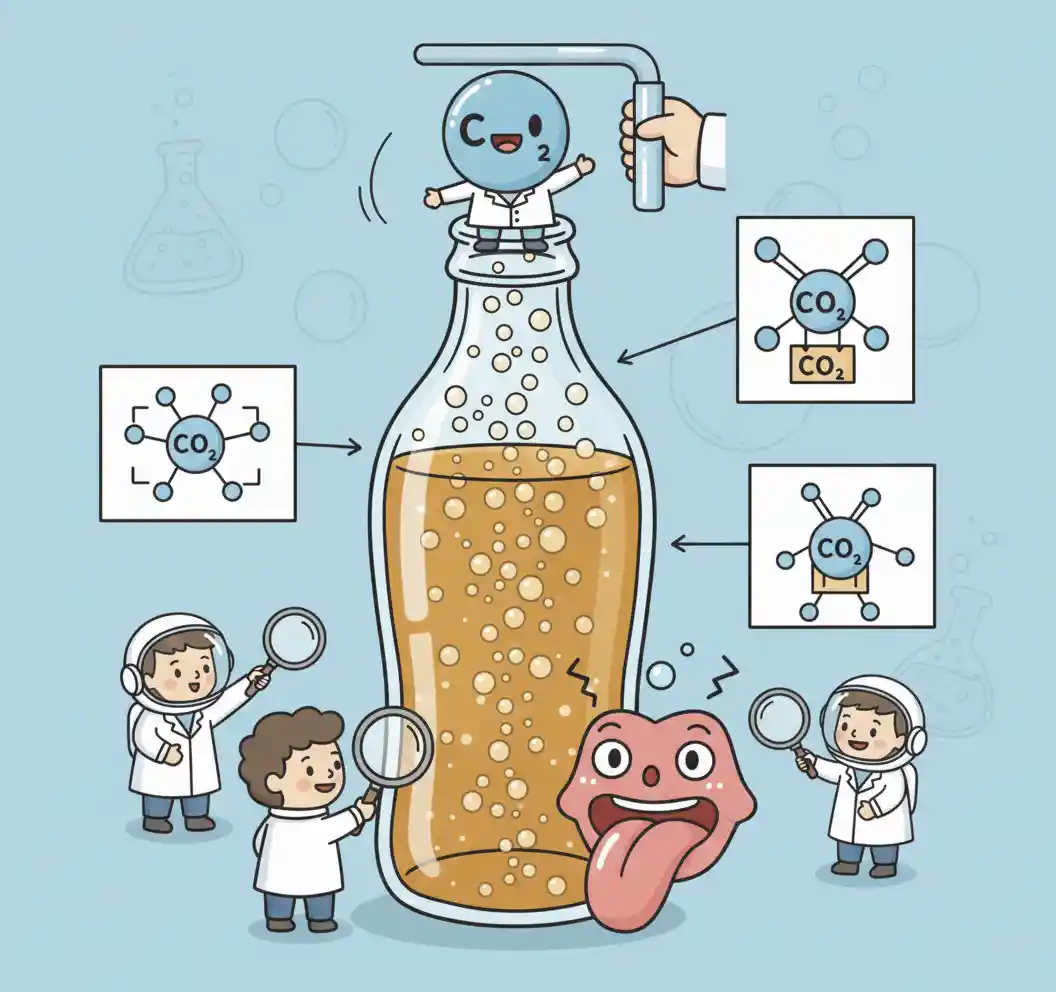
The Secret of the Sizzle!
Have you ever wondered what makes your favorite soda fizz and bubble? It’s not magic, it’s science! That wonderful tingling sensation on your tongue and the tiny dancing bubbles you see rising to the top are all thanks to a special, invisible gas. This gas is carefully added to the liquid to make your drink extra exciting. Without it, your soda would just be sugary water—not nearly as fun!
Imagine a tiny party happening in your glass, with millions of little bubbles wanting to burst free! These bubbles aren't just for show; they actually change how the drink tastes and feels. So, let’s go on an adventure to discover the secret life of bubbles and the amazing gas that creates them.
Meet Carbon Dioxide: The Bubble Maker
The star of our fizzy story is a gas called Carbon Dioxide, or CO2 for short. You can't see it, smell it, or taste it when it's just floating in the air, but it's all around us! When you breathe out, you release CO2. Trees and plants actually use CO2 to grow, which is pretty neat.
In its normal state, CO2 is a gas, like the air in a balloon. But scientists and soda makers have figured out a clever way to 'squash' this gas into liquid, making it dissolve into your drink. Think of it like a secret agent hiding inside a watery disguise, waiting for its moment to pop out!
Squishing Gas into Liquid!
So, how do they get the gas into the drink? It’s all about pressure! Imagine you have a sponge, and you want to fit a lot of water into it. You might squeeze it, right? With soda, they take the CO2 gas and pump it into the liquid under very high pressure. This pressure forces the gas molecules to dissolve and mix with the water molecules, even though they usually don't like to be so close.
The colder the liquid, the easier it is for the gas to dissolve. That's why sodas are usually stored and served cold! The cold temperature helps the CO2 stay 'hidden' in the liquid, waiting patiently in the bottle or can for its big moment.
This whole process is called 'carbonation.' It's like putting a lid on a pot of boiling water—the steam (gas) gets trapped inside. In a soda bottle, the lid and the strong container keep all that CO2 gas squashed inside the liquid.