
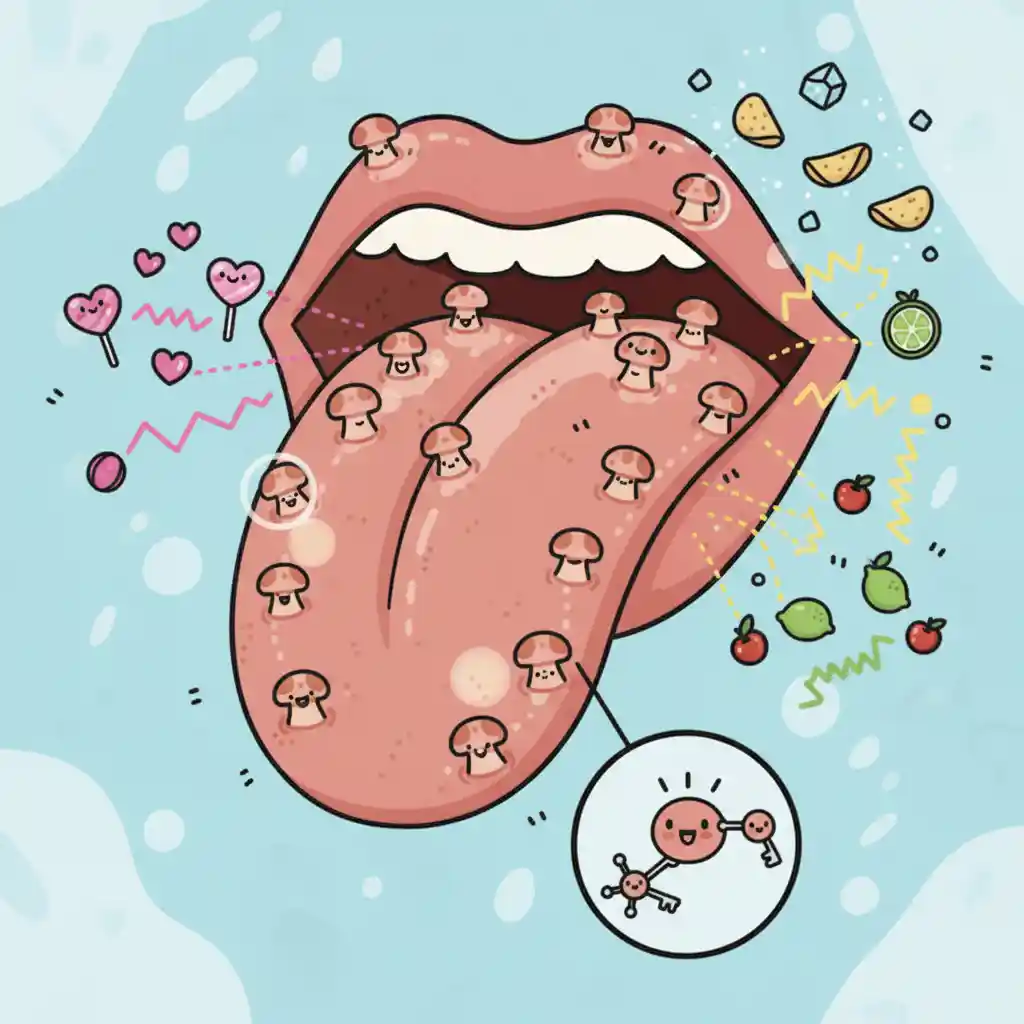
Your Tongue's Tiny Tasters!
Imagine your tongue is a super-special map, covered in tiny explorers always on the lookout for exciting flavors! These explorers are called 'taste buds.' Your tongue isn't smooth at all; it's covered in thousands of little bumps. These bumps aren't the taste buds themselves, but they're like cozy little houses where your taste buds live, tucked safely inside.
Each of these tiny taste buds is packed with even tinier cells that are like chemical detectives. Their job? To sniff out and identify all the different tastes in the food you eat, from a crunchy apple to a juicy piece of pizza! They are your first line of defense and your guide to a yummy meal.
The Five Flavor Fighters
For a long time, people thought our tongues had specific areas for sweet, sour, salty, and bitter. But guess what? Your taste buds are actually much smarter than that! They can detect all the basic tastes from almost anywhere on your tongue. We have five main taste superpowers: sweet, salty, sour, bitter, and a special one called 'umami' (pronounced 'oo-MAH-mee').
Each of these tastes tells your brain something important. Sweet often means energy (like fruit!), salty helps your body stay balanced (like chips!), sour can warn you about unripe food (like a lemon!), and bitter sometimes tells you if something might be spoiled or harmful (like medicine!). Umami is that rich, savory taste you find in things like cheese or mushrooms—it often means protein!
How Taste Buds Catch Chemicals
So, how do these chemical detectives actually work? When you put food in your mouth, your saliva (that's your spit!) helps break it down. As the food dissolves, tiny chemical pieces float into the little pores on your tongue, right where the taste buds are waiting.
Inside each taste bud, those special taste cells grab onto the chemicals. Once they've 'caught' a chemical, they send a secret message, like a quick text, straight to your brain. Your brain then quickly decodes these messages and says, 'Aha! That's sweet!' or 'Whoa, that's sour!'
Papillae: The Bumpy Houses
Remember those little bumps on your tongue? They're called 'papillae' (say 'pah-PILL-ee'). Not all papillae have taste buds, but many do! Think of them like different kinds of houses. Some papillae are spiky and help you grip food, while others are rounder and have little moats around them, perfect for holding taste buds.