
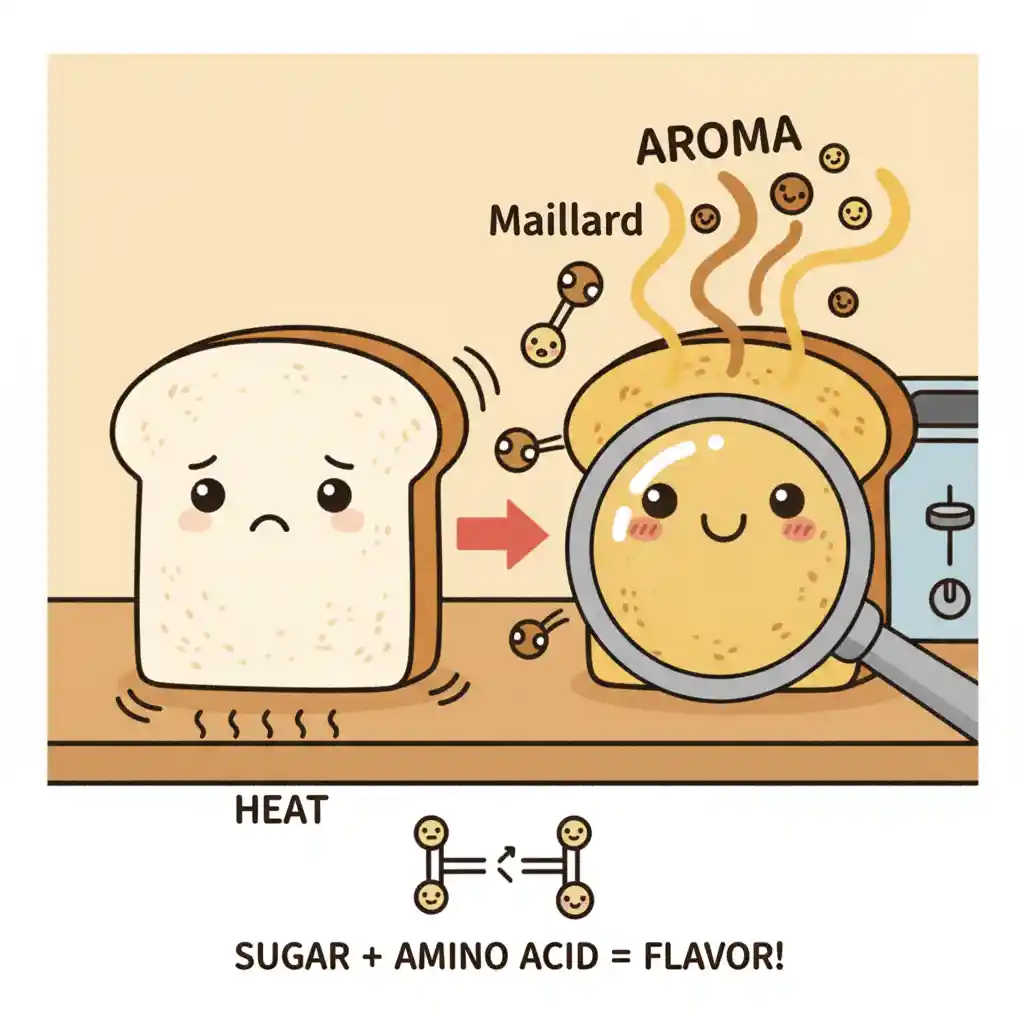
The Mystery of the Golden Crust
Have you ever wondered why plain bread is, well, plain, but a slice of toast smells and tastes so much more exciting? Or why a raw potato tastes totally different from a crispy, golden french fry? It's not magic, but it is a super cool chemical reaction that happens right in your kitchen! This amazing process is responsible for all those yummy brown crusts and delicious smells.
It's called the Maillard (pronounced 'my-YAR') Reaction, and it's like a secret 'browning button' for food. When certain foods get hot enough, tiny molecules inside them start to dance and rearrange themselves, creating brand new flavors, colors, and smells. It's happening all around us, turning bland into brilliant!
Sugars and Proteins: The Dynamic Duo
So, what exactly is this Maillard Reaction? Think of it like a special party where two very important guests meet: sugars and amino acids. Amino acids are the building blocks of proteins, which are found in almost all living things – like meat, cheese, and even grains in bread. When these sugars and amino acids get heated up together, they start to combine in all sorts of different ways.
This chemical 'dance' creates brand new molecules, and these new molecules are what give food that wonderful toasty, nutty, savory, or caramel-like flavor and that inviting golden-brown color. It's not just about getting hot; it's about the right ingredients meeting at the right temperature for a flavor explosion!
A French Chemist's Discovery
The amazing reaction we're talking about wasn't always understood. It was discovered over a hundred years ago by a clever French scientist named Louis-Camille Maillard. In 1912, he was studying how amino acids and sugars react when they're heated, especially in the human body. He noticed that when they combined, they turned brown and created new compounds.
While he was focused on biology, his discoveries had a huge impact on how we understand cooking. Thanks to him, we now know why our cookies turn golden, our steaks get a delicious crust, and our coffee beans become rich and dark when roasted. He unlocked one of the biggest secrets to delicious food!