
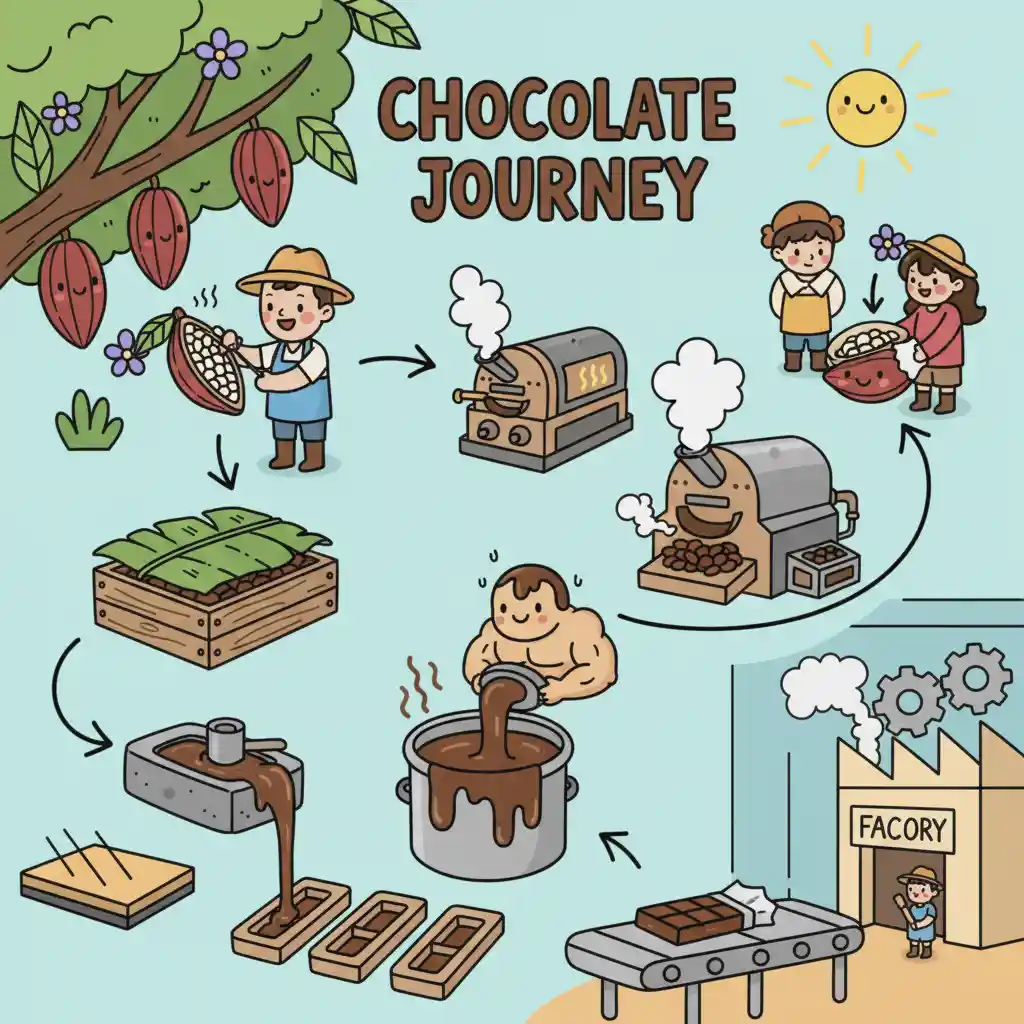
The Magical Cocoa Tree
Before chocolate bars, before yummy hot cocoa, there was just a bean! All chocolate starts its amazing life on a special tree called the cacao (say: kuh-KOW) tree. These trees love warm, rainy places, so you'll find them growing in tropical countries near the equator, like Ghana, Ivory Coast, and Ecuador.
What's super cool about cacao trees is that their fruit, called cocoa pods, don't just hang from branches like apples. Oh no! They can grow right out of the tree's trunk and big branches! These pods look like colorful, bumpy footballs—some are yellow, some are orange, and some are even purple or red. Inside each pod are about 20 to 60 cocoa beans, surrounded by a sweet, white, gooey pulp.
Pods Away! The Harvest
Since cocoa pods don't all ripen at the same time, farmers have to be very careful. They usually harvest the pods by hand, sometimes using special long poles with blades, so they don't hurt the delicate tree. It's like a treasure hunt, searching for the perfectly ripe pods!
Once harvested, the farmers crack open the tough pods, often with a machete (a big knife), to get to the beans. They scoop out the beans and the gooey white pulp, which is very sweet and tangy! These fresh beans don't taste anything like chocolate yet; they're actually quite bitter. The real magic is about to begin!
The Flavor Party: Fermentation
This next step is one of the most important for making chocolate taste like… well, chocolate! It’s called fermentation. The beans, still covered in their sticky pulp, are piled up. Sometimes they're covered in banana leaves, or placed in big wooden boxes with holes. For several days, tiny yeasts and bacteria in the air and on the beans start to work their magic.
It's like a science experiment! The pulp heats up and starts to melt away, and incredible chemical changes happen inside the beans. This is where the bitter, plain beans begin to develop their rich, complex chocolate flavors and colors. If the beans aren't fermented properly, they won't taste good no matter what happens next!
Sunbathing Beans: Drying & Shipping
After their 'flavor party,' the fermented beans are still very wet. To stop the fermentation process and prevent mold, they need a good sunbath! Farmers spread the beans out on large mats or trays to dry in the sun for several days. During this time, they are often raked and turned to ensure even drying.
Once dry, the beans are sorted, cleaned, and packed into huge sacks. These sacks are then loaded onto ships and begin their long journey across oceans to chocolate factories all around the world. Imagine all those little beans traveling so far to become your favorite treat!