
Earth's Hidden Worlds
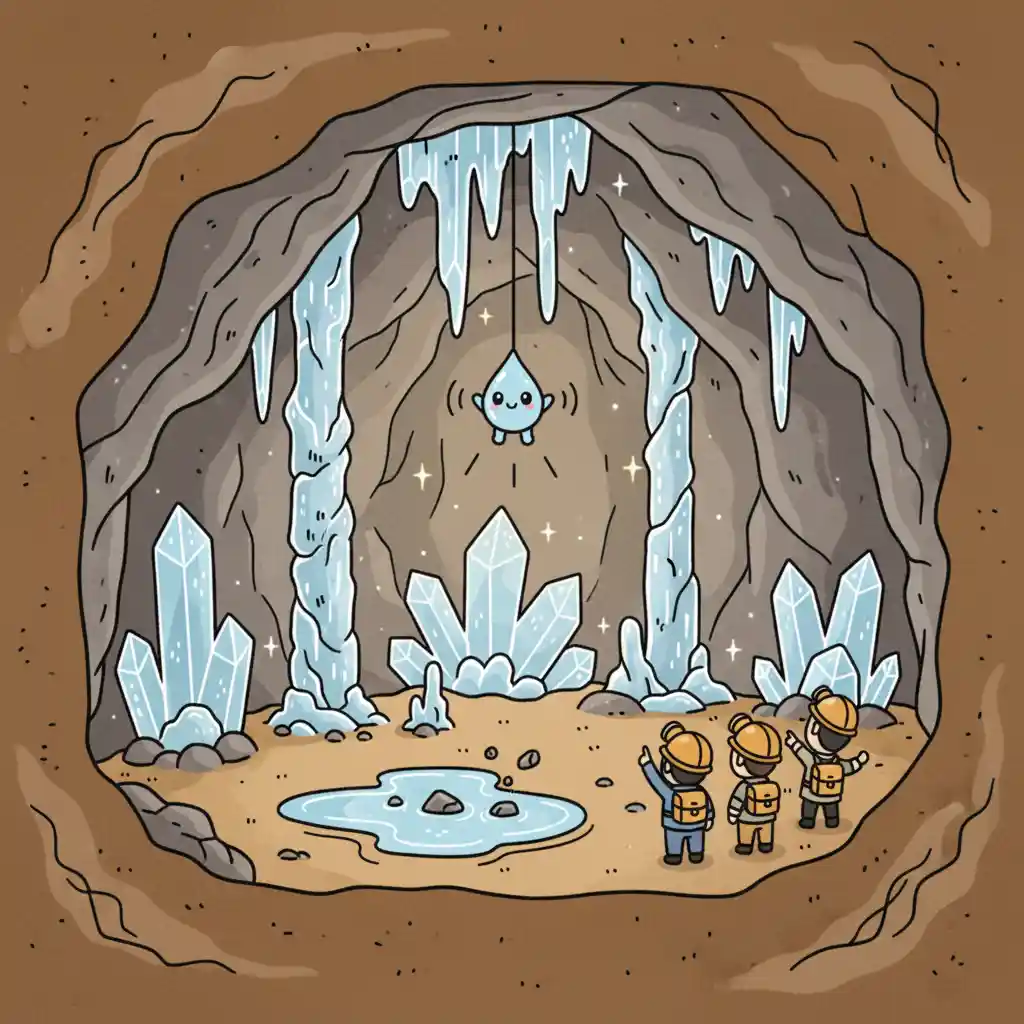
Imagine a secret world deep beneath your feet, a majestic palace carved from solid rock, sparkling with crystals and echoing with the sound of dripping water. These aren't fantasy castles; they're real places called caves! Some are small, barely big enough for you to squeeze through, while others are so vast they could fit entire cities inside. But how do these incredible underground cathedrals form? How can rock just... disappear?
For centuries, people wondered about these mysterious voids. Was it giants digging? Or perhaps ancient rivers carving their way through the Earth? The truth is even more amazing because it involves something we see every day, yet rarely think of as powerful: water. But not just any water – special, super-patient water with a secret ingredient!
The Rock-Eating Raindrop
Here's the big secret: water, specifically rainwater, isn't always just plain H₂O. As rain falls through the air, it picks up a tiny bit of carbon dioxide (CO₂), the same gas you breathe out. When CO₂ mixes with water, it creates a very weak acid, like a super-diluted fizzy drink. This is called carbonic acid.
Now, imagine this slightly acidic rainwater seeping into cracks in the ground. Many caves form in a type of rock called limestone. Limestone is made mostly of a mineral called calcium carbonate. And guess what? Calcium carbonate loves to dissolve in weak acids! It's like putting a sugar cube in your tea – it slowly disappears. So, over millions of years, these tiny, rock-eating raindrops slowly, silently, munch away at the limestone, bit by bit, grain by grain.
Cracks, Crevices, and Corridors
The water doesn't just dissolve rock randomly. It follows paths of least resistance, like tiny streams underground. It starts by finding natural cracks and fissures in the limestone. As more and more slightly acidic water flows through these tiny pathways, it widens them. These tiny cracks become small tunnels, and those tunnels grow into larger passages.
Imagine a giant underground plumbing system. Over thousands and even millions of years, these passages grow larger and larger, eventually forming vast rooms and long, winding corridors. Sometimes, underground rivers flow through these tunnels, helping to speed up the process by both dissolving the rock and carrying away the dissolved bits. This is how the immense size of some cave systems, like Mammoth Cave in Kentucky (the longest known cave system in the world!), came to be.