
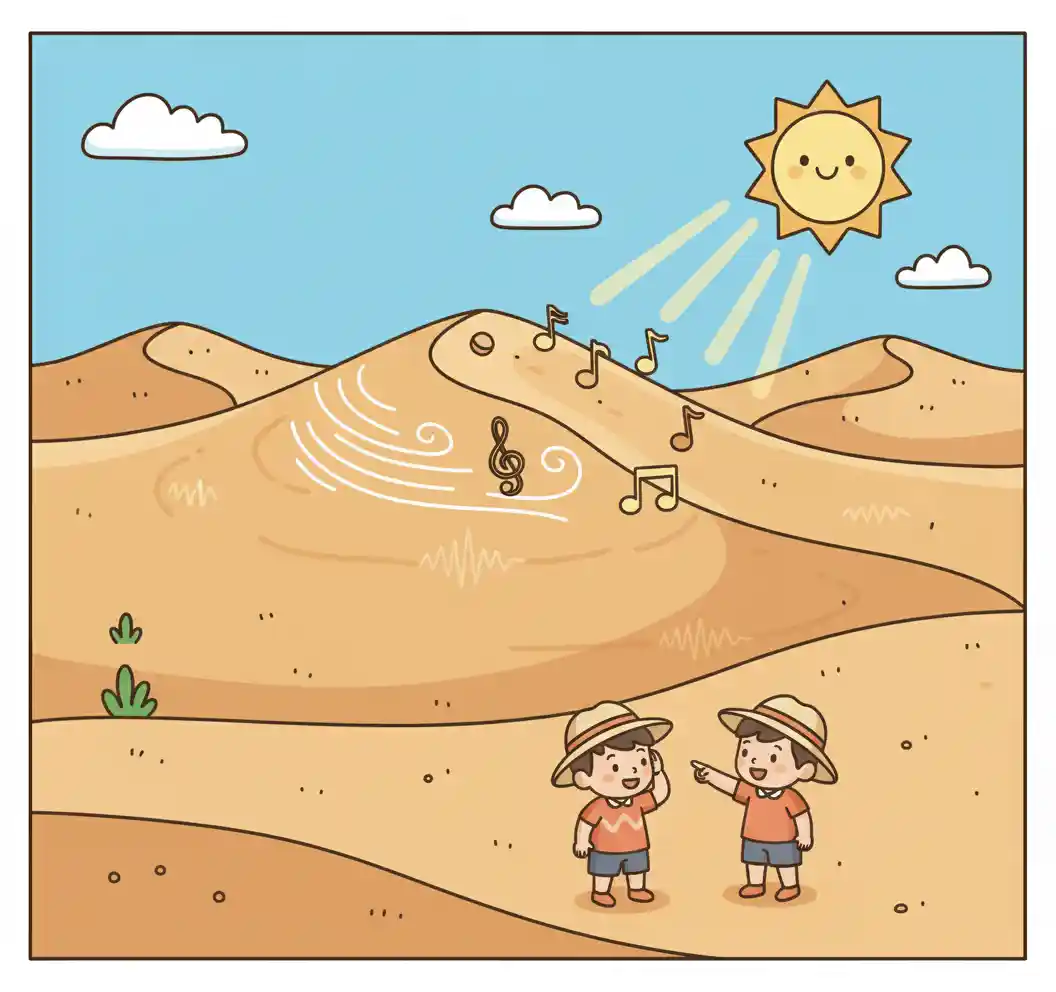
The Desert's Secret Song
Imagine standing in a vast, quiet desert. The air is still, and all you can hear is the gentle whisper of the wind. But then, something incredible happens! A deep, low rumble starts to echo, like a distant airplane or a giant bass drum. The very sand beneath your feet, and the towering dunes around you, begin to hum! These aren't regular noises; they are the 'singing sands,' a mysterious and wonderful natural phenomenon found in special deserts around the world. These dunes don't just sit there silently; they actually make their own unique desert music!
For centuries, travelers and desert dwellers have been amazed by these musical mountains of sand. Some ancient legends even blamed spirits, dragons, or buried giants for the mysterious melodies that seemed to rise from the ground. They couldn't explain how the silent desert could suddenly burst into song. But what's the real big why behind this incredible desert symphony? Let's dig into the scientific secrets of these incredible singing dunes and discover how tiny grains of sand create such mighty sounds!
What Makes Sand Sing? It's All About Vibration!
You might think sand is just tiny, lifeless grains, right? Something you build castles with or feel between your toes. But in singing dunes, these seemingly simple grains become tiny musicians! When millions of perfectly shaped, dry sand grains slide past each other, they don't just rub; they create friction that makes them vibrate. Think of it like plucking a guitar string, but instead of one string, you have millions of tiny strings, all vibrating together.
When enough of these vibrations happen at the same time, they create powerful sound waves that are strong enough for us to hear, sometimes for miles around! It's not just a little whisper; it can be a really loud, booming sound that fills the desert air, creating an unforgettable experience. The sound can range from a low hum to a powerful roar, sometimes lasting for several minutes as the sand continues to move.
The Special Recipe for a Musical Dune
Not just any sand dune can sing, even if it's very large! There's a very specific recipe involved, almost like baking a special desert cake. First, the sand grains need to be very, very round and smooth. Imagine tiny, polished marbles or perfect little ball bearings. This round shape allows them to roll and slide past each other easily without getting stuck, which is crucial for creating the vibrations.
Second, the sand must be extremely dry. Even a tiny bit of moisture can make the grains sticky, preventing them from slipping and singing. The dryer the sand, the better it can 'tune' its song. Third, the grains need to be a very similar size. When they are all uniform, they can vibrate together in harmony, like a well-practiced orchestra.
Finally, the dune itself often needs a steep slope, usually between 30 and 35 degrees. This allows the sand to cascade down the side, either by wind or by a person disturbing it, creating the necessary movement and friction for the sound to happen. It's a truly amazing combination of nature's elements!