
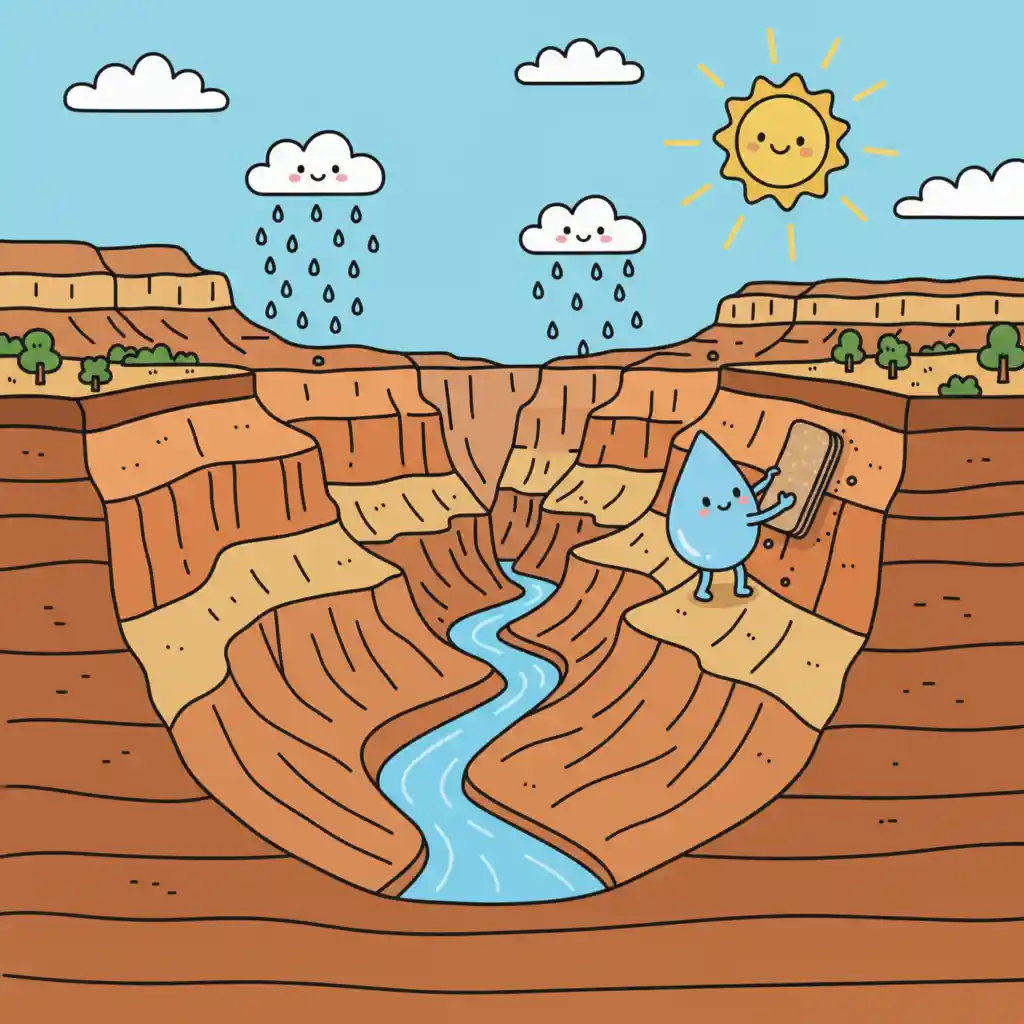
A Hole So Big You Can See Earth's Past!
Imagine a giant, colorful ditch stretching for almost 300 miles, deeper than a mile in some places, and so wide that looking across it feels like looking at another planet! This is the Grand Canyon, one of the most amazing natural wonders on Earth. When you stand on its edge, you might wonder: how in the world did this enormous hole get there? Did a giant meteor hit? Did a superhero dig it out?
The real answer is even more incredible because it involves something we see every day: water! Yes, a 'small river,' as our summary says, is the main artist behind this masterpiece. But how can water, which seems so gentle when it splashes in a puddle, carve something so massive? Get ready to uncover the secret of the Grand Canyon, where patience and power meet over millions of years.
Meet the Mighty Mover: The Colorado River
The star of our story is the Colorado River. It doesn't start as a giant, raging beast. High up in the Rocky Mountains, tiny trickles of snowmelt gather together, forming small streams. As these streams join, they create a river that begins a long, winding journey towards the ocean. It picks up speed and strength as it goes, collecting more water from other streams and rivers.
For hundreds of miles, the Colorado River flows, carrying not just water, but also billions of tiny bits of sand, silt, and rock. These aren't just passengers; they are the river's tools! Imagine the river as a giant conveyer belt, constantly moving its 'workshop supplies.' This seemingly gentle flow will become the world's most patient sculptor.
Water's Secret Weapon: Erosion!
So, how does water cut through solid rock? It uses a super-powerful process called erosion. Think of erosion as the Earth's natural way of recycling its surface. It's when natural forces like water, wind, and ice break down rocks and soil, then carry the pieces away to new places. For the Grand Canyon, water erosion was the ultimate sculptor.
When the Colorado River rushes through the landscape, it's not just splashing around. It's constantly rubbing, grinding, and picking up bits of the land it flows over. Over millions and millions of years, even the smallest rub or grind adds up to a huge change. It’s like using a tiny piece of sandpaper on a giant block of wood – if you keep rubbing for long enough, you can carve out something amazing!
The River's Sandpaper and Sledgehammers
Here's the trick: the water itself doesn't do all the cutting. The Colorado River acts like a giant, liquid sandpaper machine. As it speeds along, it picks up rocks, gravel, and sand. These bits crash and tumble against the riverbed and canyon walls. Each little crash chips away a tiny piece of rock, making the river's channel wider and deeper.
When the river speeds up, especially during floods or seasonal snowmelt, its power becomes incredible. It can even pick up huge boulders, rolling them along like marbles. These heavy rocks act like gigantic sledgehammers, smashing and grinding the bedrock. This constant, relentless grinding, year after year, century after century, is what slowly carved out the vast chasm we call the Grand Canyon.