
The Lake's Secret Whisper
Picture a beautiful, calm lake. The sun glitters on the water, birds sing, and everything seems peaceful. But what if some of these serene lakes held a terrifying secret deep beneath their surface? What if the water itself could become deadly, not from drowning, but from an invisible, silent enemy?
This isn't a fairy tale; it's a real and rare natural event called a 'limnic eruption,' sometimes called an 'exploding lake.' It’s not an explosion of fire, like a volcano, but an explosion of gas, so fast and so powerful that it can suffocate everything around the lake in moments. It’s a hidden danger, lurking silently until something triggers its release.
Invisible Breath of a Sleeping Volcano
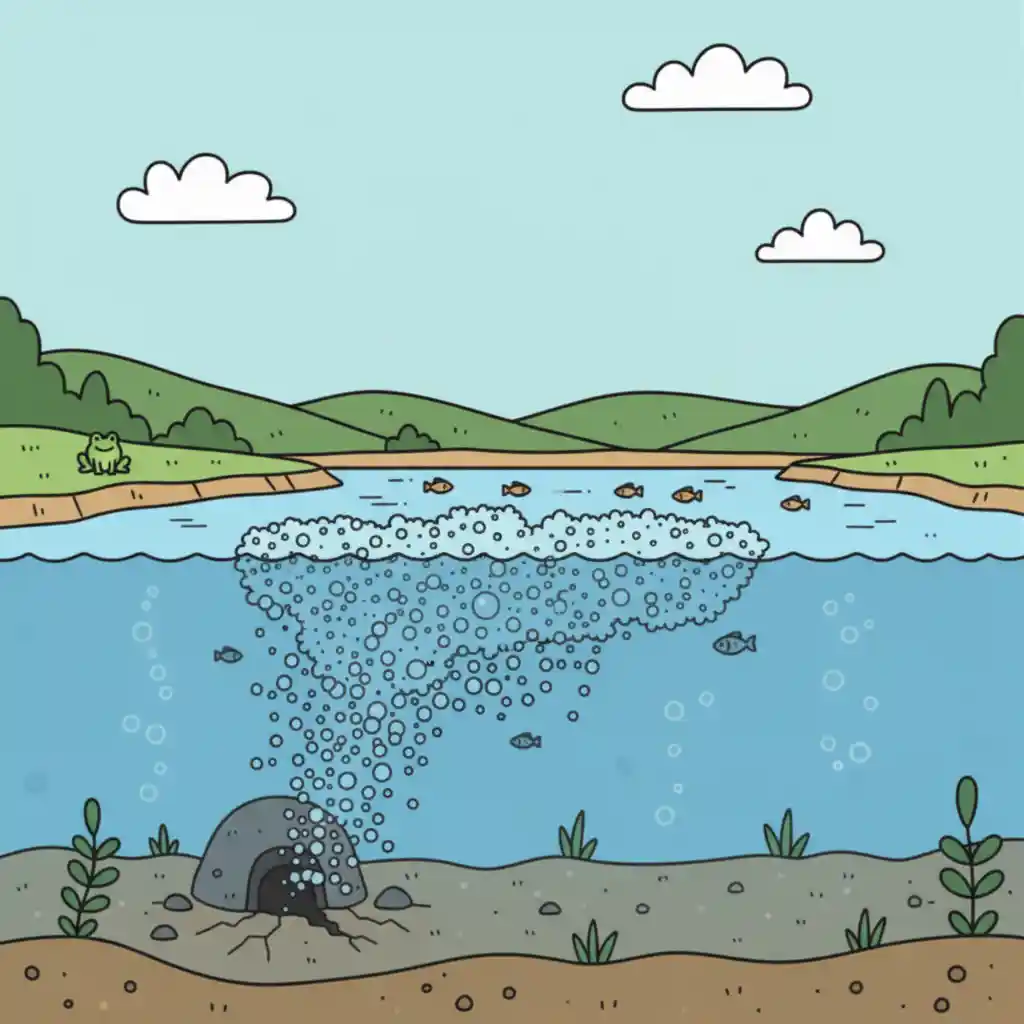
So, how does a peaceful lake become a potential killer? The secret lies deep below. In certain special places, often near areas where volcanoes used to be or still are, a lot of carbon dioxide (CO2) gas bubbles up from cracks in the Earth's crust. This isn't the harmless CO2 that plants breathe; it’s vast amounts of it.
When this gas rises into very deep, cold lake water, it gets trapped. Just like how you can dissolve more sugar in cold water than hot, cold, deep water under immense pressure can hold an astonishing amount of CO2. It’s like shaking a giant, invisible soda bottle, but instead of the gas fizzing out, it stays dissolved, building up pressure over many, many years.
When the Soda Bottle Shakes
The lake stays quiet and still, holding its breath for decades. But then, something small can trigger a massive release. This could be an earthquake shaking the ground, a landslide crashing into the water, or even very strong winds that churn the lake's surface and disturb the layers of water.
Once a little bit of the gas starts to escape from the deep, it’s like pulling the pin on a giant hand grenade. That small disturbance allows tiny bubbles to form, and these bubbles rush upwards. As they rise, the pressure lessens, and more and more dissolved CO2 turns into gas, creating a massive chain reaction. The lake begins to 'boil' not from heat, but from an eruption of cold, deadly gas.
The Night Lake Nyos Went Silent
The most famous and tragic example of an exploding lake happened at Lake Nyos in Cameroon, Africa, in 1986. One evening, without warning, the lake released a massive cloud of carbon dioxide. This invisible cloud rolled down the hills surrounding the lake, covering villages as it went.