
The Tiny Turbo-Jets of the Sky
Imagine a tiny, glittering jewel zipping past you faster than your eyes can follow. That's a hummingbird! These feathered marvels aren't just pretty faces; they're nature's own mini-helicopters, famous for a trick no other bird can truly master: hovering perfectly still in mid-air.
While most birds flap their wings to fly forward or glide on air currents, hummingbirds can stop on a dime, dart sideways, and even fly backward! This incredible agility is all thanks to their special wings and super-speedy muscles.
How do they do it? It's like they've got a secret superpower that lets them defy gravity right in front of your eyes. Let's dive into the amazing science behind 'The Hummingbird Hover' and discover what makes these little flyers so extraordinary.
Not Your Average Birdy Flap
Think about how a regular bird flies. They usually push down with their wings, creating 'lift' that makes them go up and forward, a bit like paddling a boat. Their downstroke is the powerful part, and the upstroke is often just resetting for the next big push.
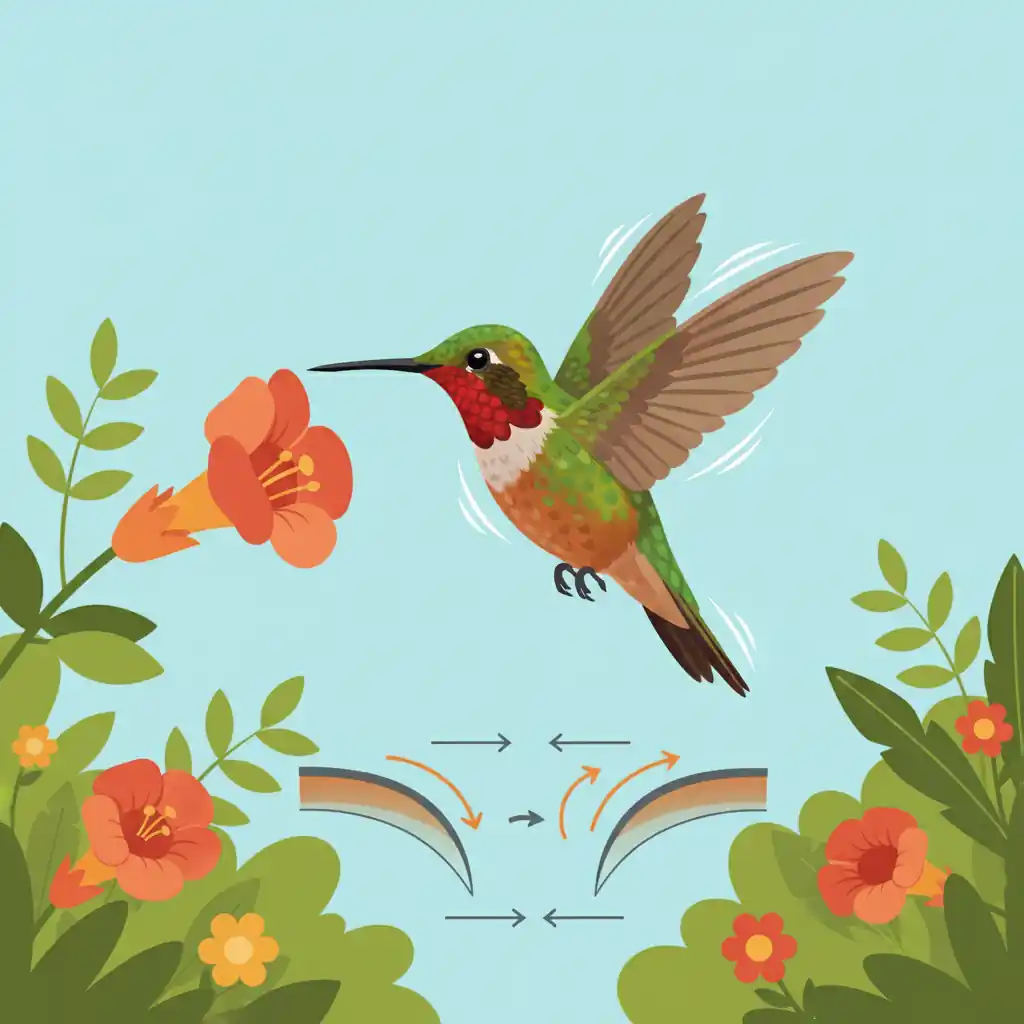
Hummingbirds, however, are rule-breakers! If you watch them very, very closely (maybe with a super slow-motion camera!), you'd see something totally different. Their wings don't just go up and down; they move in a dizzying figure-eight pattern, almost like drawing an infinity sign in the air.
This unique motion means their wings are always working hard, whether they're going down or coming up. It’s like having two engines running at full power all the time, allowing them to create lift and control their position with incredible precision.
The Incredible Figure-Eight Trick
The real magic of hummingbird hovering happens because their wings can twist and rotate at the shoulder joint in a way most other birds can't. When a hummingbird pushes its wing down, the wing is angled to scoop the air downward, creating lift, just like a regular bird.
But here’s the clever part: when the wing comes back up, it actually flips! Instead of just cutting through the air, the hummingbird rotates its wing so that the underside becomes the leading edge, still pushing air down. This creates lift on both the downstroke and the upstroke!
Imagine a tiny paddle spinning and pushing water equally efficiently in two directions. That's what a hummingbird's wing does with air, generating twice the amount of lift compared to a simple up-and-down flap. This continuous lift is the secret to their famous hover.
Built for Speed and Power
To make their wings beat so fast—up to 80 times per second for some species, and even more for others!—hummingbirds need super-strong muscles. In fact, their flight muscles make up about 25-30% of their entire body weight! Imagine if a quarter of your body was just arm muscles!