
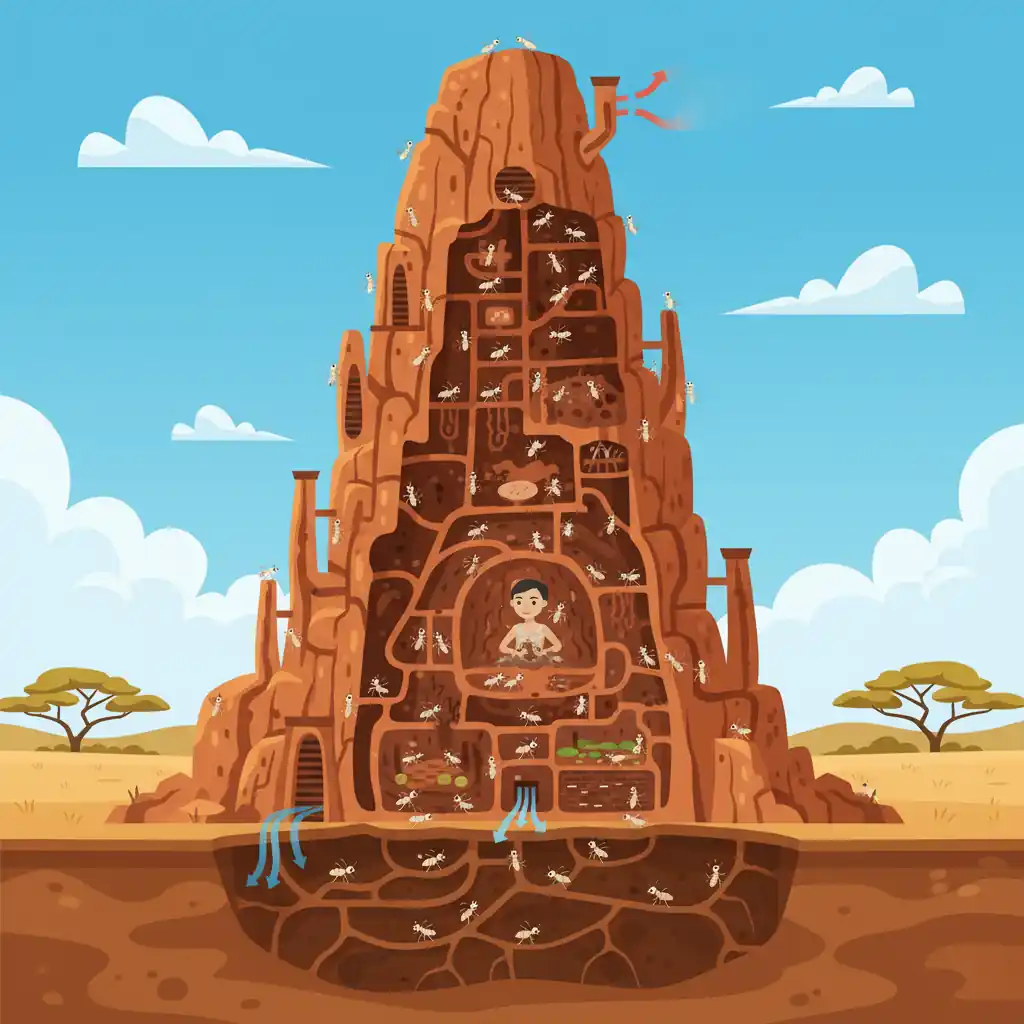
Tiny Builders, Gigantic Dreams
Imagine being no bigger than your pinky nail, yet you and your family decide to build a skyscraper that's taller than a three-story house! Sounds like a superhero movie, right? Well, for millions of tiny insects called termites, this isn't science fiction—it's their everyday life! They are the ultimate mini-engineers, constructing incredible cities right beneath our feet, or sometimes soaring high into the sky.
These amazing structures, called termite mounds, are more than just piles of dirt. They are bustling megacities, complete with natural air conditioning, farms, nurseries, and special chambers for every job! How do these little creatures, working without blueprints or big construction equipment, manage to build such complex, sturdy homes? Let's dive into the incredible world of the termite megacity!
Earth's Architectural Wonders
When you think of a city, you might picture tall buildings and busy streets. Termite mounds are just like that, but built by insects! Depending on where you are in the world, these mounds can look like giant reddish-brown sculptures, sometimes cone-shaped, sometimes like strange castles with spires and arches. They can be found in deserts, savannas, and forests, standing out like nature's own skyscrapers.
Some mounds are so tall, they can reach up to 30 feet high—that's as tall as a four-story building! If a human built a home that was 1,000 times their height, it would be over a mile high! These incredible structures are testaments to teamwork and ingenious natural engineering, designed to keep their tiny inhabitants safe and comfortable from the outside world.
The Secret Recipe: Spit and Soil
So, what's the secret ingredient for building these incredible towers? It's not cement or steel, but something much more natural: dirt and… termite spit! Worker termites collect tiny grains of soil, sand, or even plant matter. Then, they mix it with their saliva (which acts like super-strong glue) and sometimes their own poop, to create a kind of 'termite concrete'.
Each worker termite carries a tiny blob of this sticky mixture and carefully places it where it needs to go, using their jaws to mold and shape it. They work tirelessly, often in the dark, building tunnels, chambers, and walls layer by layer. When this mixture dries, it becomes incredibly hard and durable, much stronger than you'd expect from mere dirt and spit, making the mound super resistant to wind, rain, and even hungry predators.
Nature's Own Air Conditioner
One of the most mind-blowing features of a termite megacity is its built-in air conditioning system. Imagine living in a desert where the outside temperature can swing from scorching hot to freezing cold. Termites need to keep their homes at a super-stable temperature and humidity—not too hot, not too cold, and just moist enough for their special fungus farms to grow.