
Welcome to the Frozen South!
Imagine a place so cold that ice covers everything, and strong winds blow all the time. This isn't a sci-fi movie; it's Antarctica, the coldest continent on Earth! While you might shiver just thinking about it, some amazing animals call this icy wonderland home. And guess who's the superstar resident? That's right, penguins! These tuxedo-clad birds are built for cold, with thick blubber and waterproof feathers. But even with all that gear, Antarctica's winter can be truly brutal, with temperatures dropping far below freezing, sometimes even -50°F (-45°C) and winds whipping up to 100 miles per hour! How do these incredible creatures survive such icy conditions without their own cozy houses or warm blankets? They have a super special secret weapon: the penguin huddle!
Why Huddle? Brrr!
When the Antarctic winter bites its hardest, simply standing alone can be dangerous for a penguin. Their bodies lose heat to the freezing air very quickly. Losing too much body heat can make them weak, sick, and unable to hunt for food. For Emperor penguins, the stakes are even higher. They lay their eggs and raise their chicks during the coldest, darkest months of winter. While the papa penguin keeps the egg warm on his feet (a special "brood patch"), he can’t leave it, and he certainly can’t go fishing for food. He needs to conserve every tiny bit of energy. This is where the brilliant idea of huddling comes in. It’s a matter of life and warmth!
The Great Penguin Hug
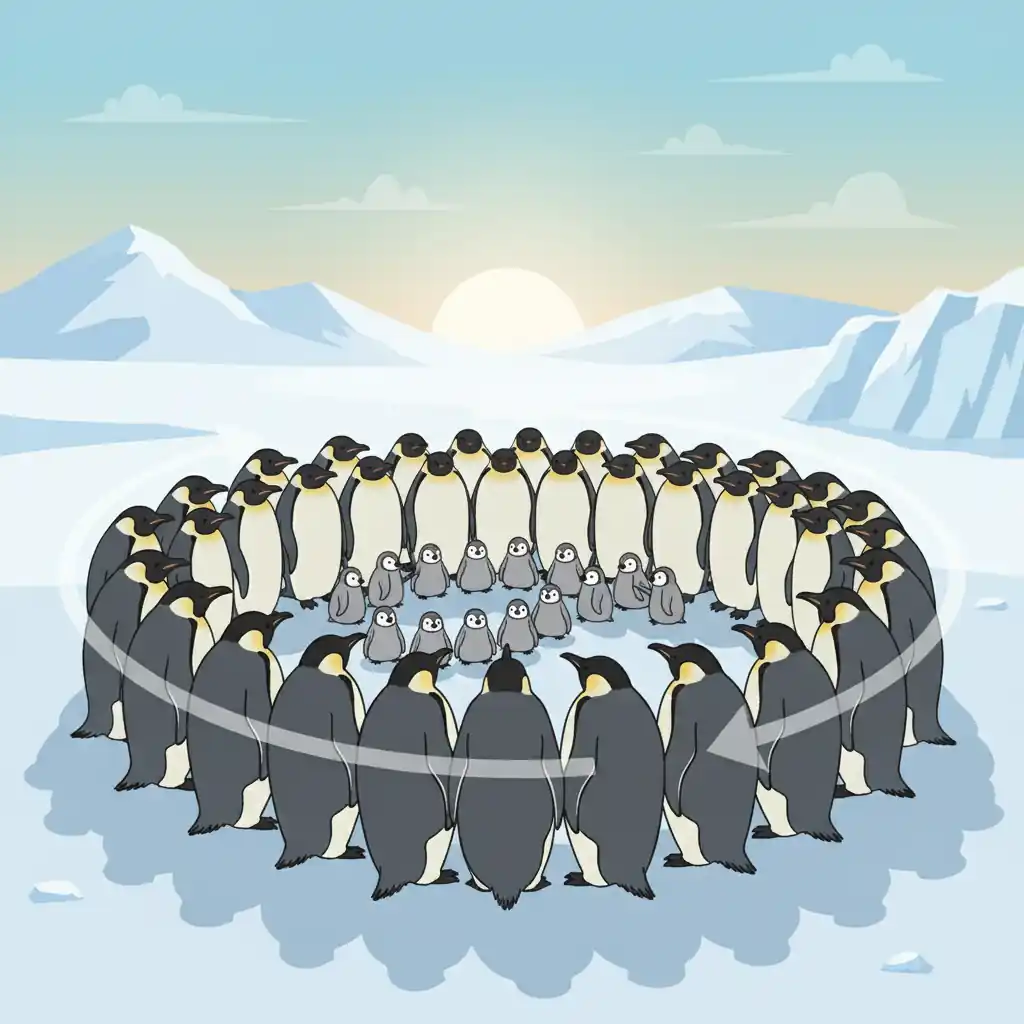
Picture this: thousands of penguins, sometimes as many as 10,000, all squished together, shoulder to shoulder, belly to back! That’s a penguin huddle. It looks like a giant, feathery, black-and-white rugby scrum. They pack themselves so tightly that it almost looks like one giant creature moving across the ice. The goal is simple: share body heat! Each penguin acts like a tiny warm radiator, and when you put thousands of radiators together, you create a powerful furnace. The outside layer of penguins brave the harsh winds, but the inside penguins are wonderfully toasty, sheltered from the icy blasts. It’s like a giant, living blanket made of feathers and friendship!
A Rotating Circle of Friends
Now, you might be thinking, "That's not fair! The penguins on the outside must be freezing while the ones in the middle are having a party!" And you'd be right, partly. The outer layer faces the brunt of the cold, but not for long. Here's the truly amazing part: penguin huddles aren't static; they move! Slowly, almost like a ripple in water, the huddle shifts. Penguins on the outer edges, who have been enduring the wind and cold, will gently waddle their way towards the warmer, protected center. As they do, penguins from the inside will naturally shift outwards, taking their turn on the colder perimeter. It’s like a giant, slow-motion dance, where every penguin knows their part. This continuous, slow rotation ensures that everyone gets a chance to warm up in the middle and take their turn facing the wind. Scientists have studied these movements and found that they are incredibly efficient, preventing any single penguin from freezing. It’s a perfect example of teamwork and sharing, where every penguin helps every other penguin survive the harshest conditions on Earth. Imagine if humans in a really cold place could organize themselves so perfectly to share warmth – it’s a truly inspiring sight!