
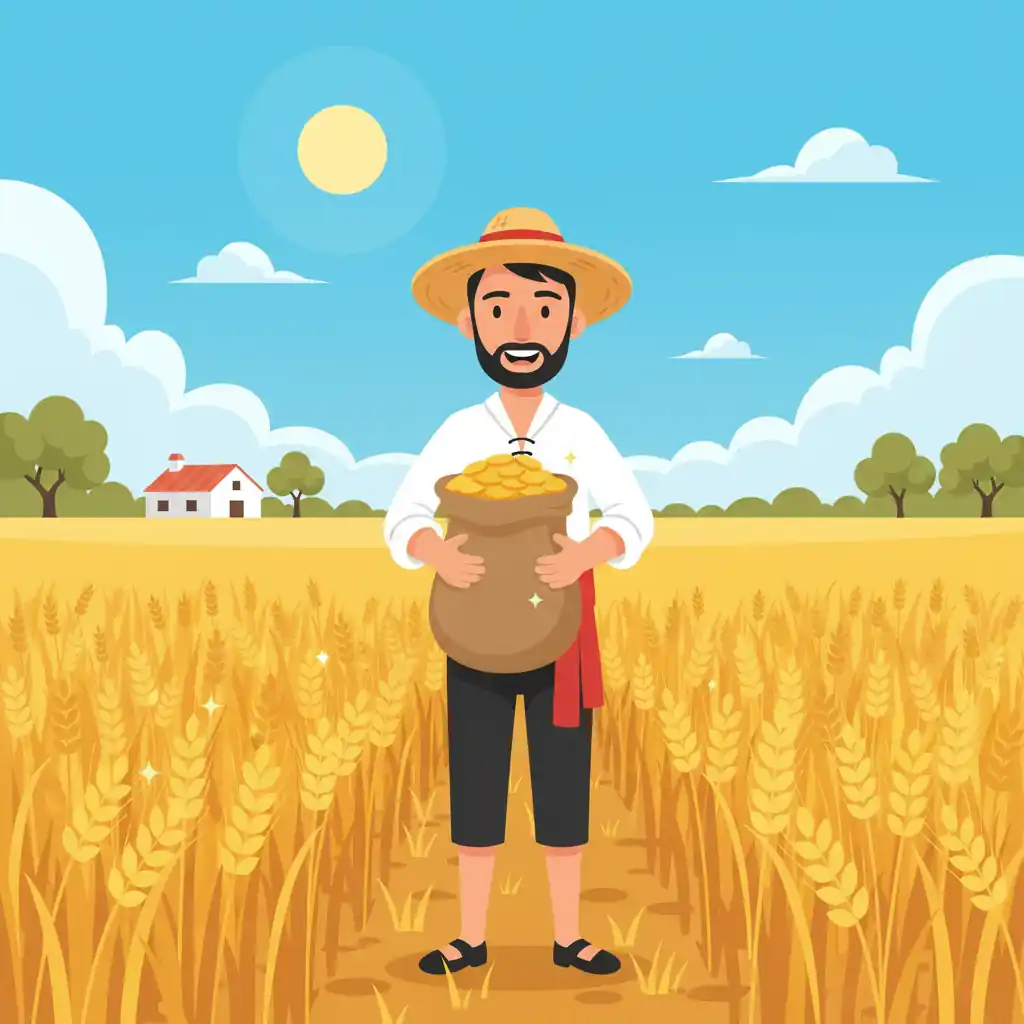
The Golden Fields of Spain
Imagine Spain, centuries ago. The sun beat down, relentless and bright. For most of the year, life was a struggle, a slow churn of small tasks and meager earnings. But then came August.
August was different. It was the month of the wheat harvest. Fields that had been green for months turned a deep, rich gold. The air filled with the rustle of dry stalks and the promise of sustenance.
This wasn't just a busy time. It was the time. Every man, woman, and child worked from dawn until dusk. They swung scythes, gathered bundles, threshed grain. Their hands grew raw, their backs ached. Sweat poured down their faces.
A good harvest in August meant everything. It meant bread on the table through the cold winter. It meant new shoes for the children. It meant a small repair to the leaking roof. It meant not going hungry.
A bad harvest? That was disaster. It meant empty bellies, cold nights, and the desperate search for other work. All year, farmers prayed for a prosperous August. Their entire financial year hinged on these few intense weeks.
The Windfall of the Harvest
When the last sheaf was stacked, when the grain filled the storage bins, a deep sigh of relief swept through the villages. The hard work was done. The wheat was safe.
Then came the sales. Farmers would load their carts and head to the nearest market town. They haggled, they weighed, they counted their coins. For a short period, money flowed.
If the harvest was bountiful, and the prices were fair, a farmer would return home with a heavy purse. This money wasn't for luxuries. It was for survival. It was the capital that would keep the family afloat until the next August.
This period of intense profit, this concentrated rush of income that secured the year, became known as 'hacer su agosto' – 'to make one's August.' It meant that, in a short burst of time and effort, you had earned enough to last.
It was the time when a man could finally breathe, knowing his family was secure. It was the reward for a year of planning and a month of back-breaking labor. The very word 'August' became synonymous with a major financial success.
Pedro, The Clever Opportunist
Centuries later, the concept spread beyond the fields. Imagine a bustling city like Seville in the mid-1800s. The summer heat was legendary, a stifling blanket that made the simplest walk an ordeal. People craved relief.
Pedro was a merchant. He didn't own land, but he owned a keen eye for opportunity. He noticed the desperate faces, the sweat-soaked clothes, the constant demand for something, anything, to cool down.
Most merchants sold what they always sold: cloth, spices, tools. But Pedro thought differently. He saw the scorching sun and envisioned profit.
He invested heavily in ice, brought down from the mountains in insulated carts, and in large earthenware jars of cool, fresh well water. While others complained about the heat, Pedro worked harder.