
The Village's Lifeline
Centuries ago, in the small, sun-drenched villages of Spain, life was hard. Especially for mothers. Childbirth was risky. Illness was common. Sometimes, a new mother simply couldn't nurse her baby.
When this happened, it was a crisis. A baby needed milk to survive. The family's only option was a wet nurse, a lactating woman who would breastfeed another's child.
Families would seek out a wet nurse from their village, or sometimes a neighboring one. They were vital. They literally sustained new life.
But a wet nurse was more than just a source of food. Villagers back then believed she also passed on something less tangible: her very essence. Her character, her moods, even her spirit.
This belief wasn't unique to Spain. Across Europe, people held similar ideas. A child, they thought, absorbed traits through the milk itself. It was a common, deeply held conviction.
Imagine the worry. What if the chosen wet nurse was not of good character? What if her spirit was, well, 'bad'?
The Grumpy Child of La Mancha
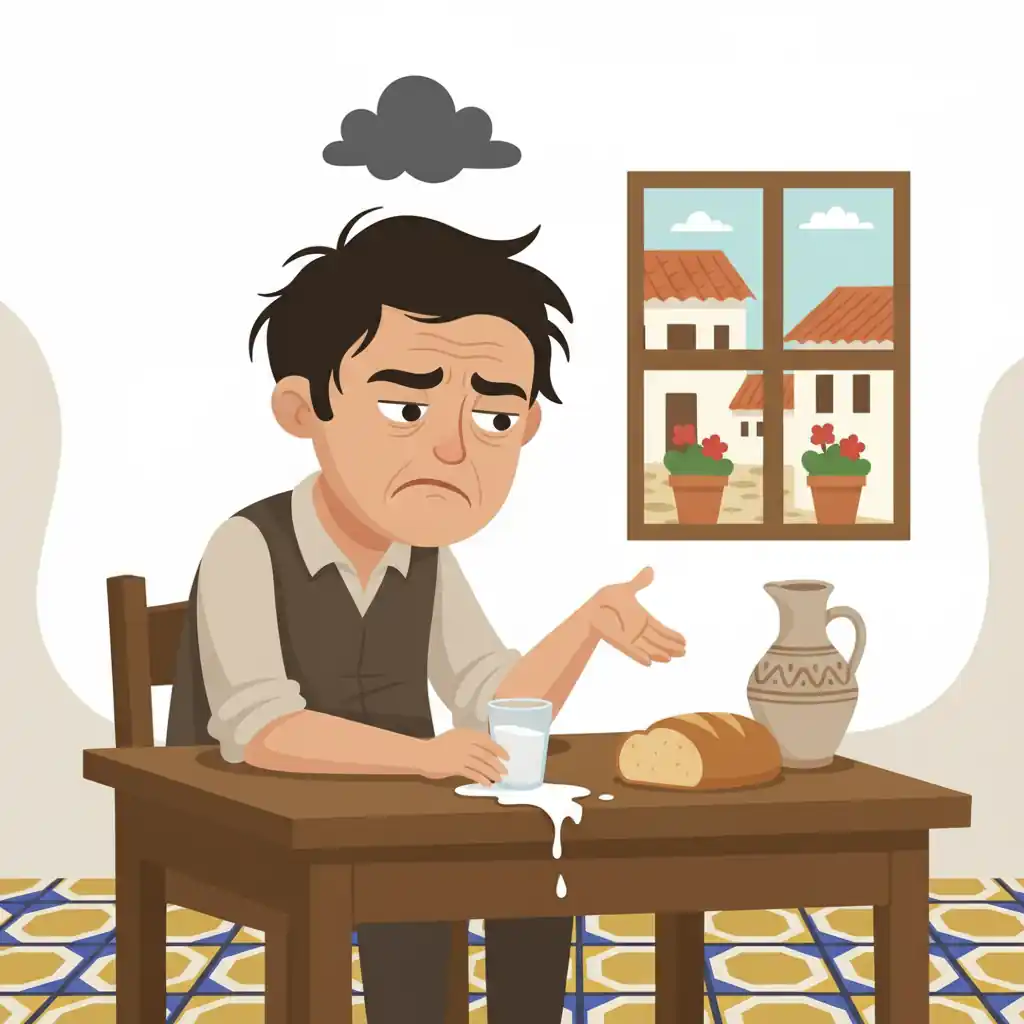
In a village near the plains of La Mancha, lived a boy named Mateo. From the moment he could speak, Mateo was known for his temper. He scowled more than he smiled. He argued more than he played. He was just generally… difficult.
His parents, devout and hardworking, couldn't understand it. They were patient. They were kind. Why was their son such a grump?
The villagers, however, had an answer. A knowing glance passed between the old women every time Mateo threw a fit.
“It’s the milk,” one would whisper. “He got it from Inés.”
Inés was the wet nurse who had fed Mateo as an infant. She was a good woman, but notoriously short-tempered. She always had a frown. Her words were sharp. Her patience was thin.
The villagers believed Inés's 'bad milk' had cursed Mateo. Not bad in a spoiled sense, but bad in a character sense. Her sour disposition had seeped into him with every feeding.
They truly thought her irritable nature had been literally transferred, drop by drop, into the innocent baby. It was a simple, yet powerful, explanation for a child’s baffling temperament.
The Logic of the Time
This wasn't just idle gossip. It was a widespread belief, a kind of folk science. People believed that food and drink carried more than just sustenance. They carried essence.
If a wet nurse was calm and sweet, her milk would make a baby docile. If she was strong and brave, the child would grow up courageous.