
The Ancient Balance
Centuries ago, before microscopes and vaccines, people had a very different understanding of human health. Doctors in places like old Spain relied on keen observation, inherited wisdom, and sometimes, a bit of guesswork.
Their most enduring theory? The concept of the Four Humors. This wasn't just folklore. It was the bedrock of medicine for over two thousand years across Europe and beyond.
Blood, phlegm, yellow bile, and black bile. These weren't just fluids in the body; they were believed to be the fundamental elements that dictated a person's physical and mental state.
A healthy person had these humors in perfect equilibrium. Too much of one, or too little, and illness would set in. A fiery temper was linked to yellow bile, while lethargy might be phlegm.
For these ancient healers, emotions played a crucial role in maintaining this delicate internal harmony. They believed that deep-seated feelings, especially powerful and negative ones, could directly impact the quality and balance of these vital fluids.
Anger, fear, and a lingering sense of injustice were seen as more than just feelings. They were potent forces capable of physically altering the very composition of a person's inner world, turning health into sickness.
Mateo's Bitter Harvest
In a sun-drenched valley of southern Spain, lived a farmer named Mateo. He was known for his steady hand and honest work. But a small incident threatened to unravel him entirely.
His neighbor, Paco, owned a small, unruly herd of goats. One scorching afternoon, the goats, finding a gap in the fence, wandered into Mateo's freshly planted vegetable patch. They made short work of a promising row of young lettuces and trampled some ripening tomatoes.
Paco, mortified, rushed over. He apologized profusely, offered to replace every plant, even offered to mend the fence himself. But Mateo's face hardened. He saw not an accident, but a deliberate act of negligence, a slight to his meticulous work.
He refused Paco’s offer, his jaw clenched tight. The incident, small as it was, ignited a slow, burning fuse inside him. He nursed his indignation like a precious, terrible secret.
Days turned into sleepless nights. Mateo would lie awake, the image of the ruined vegetables vivid in his mind. He replayed Paco’s casual apology, interpreting it as dismissive. His thoughts circled relentlessly, feeding his anger.
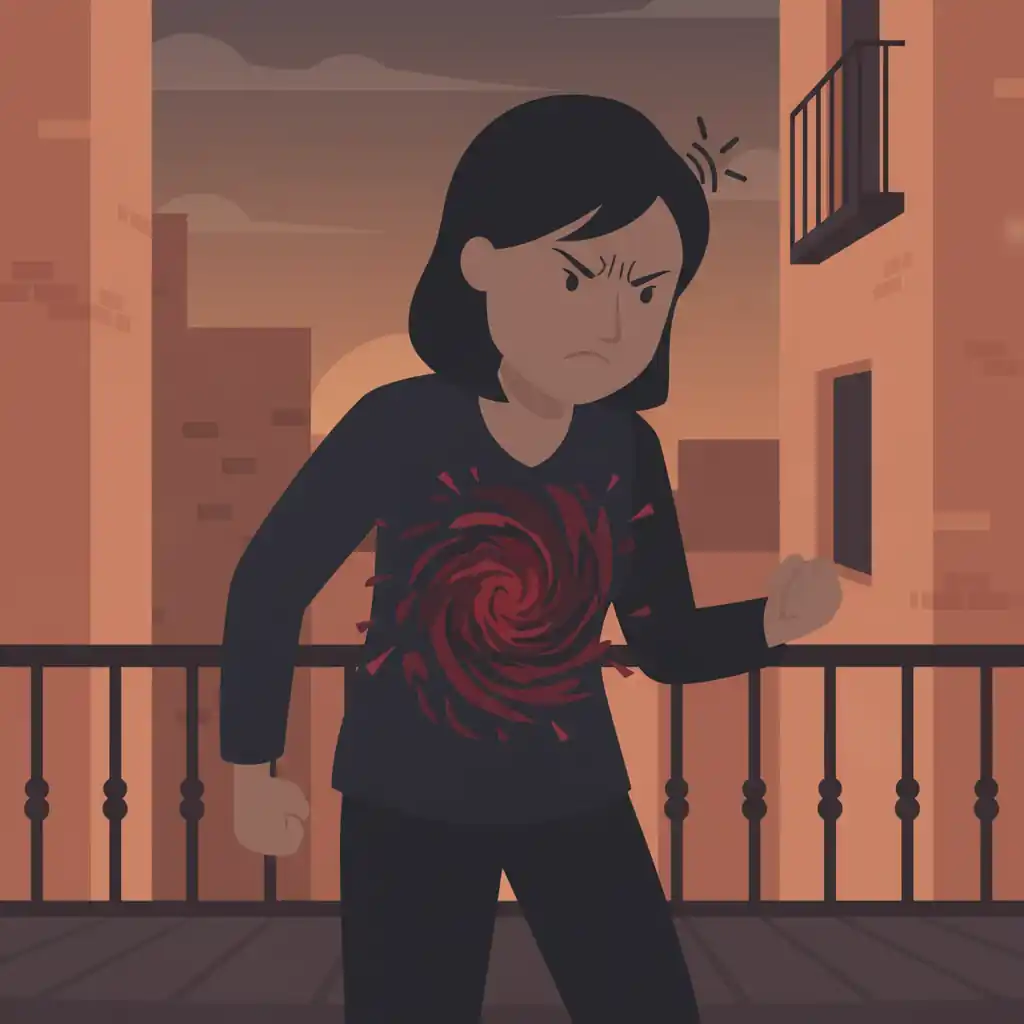
He became obsessed with the injustice. His mind filled with bitter fantasies of revenge, of arguments he would never win. His heart pounded with a constant, low thrum of indignation, a relentless internal drumbeat of rage.
The Blood Turns Sour
As weeks passed, Mateo's internal battle began to manifest externally. The robust farmer, once tanned and full of vigor, started to wither.
His skin lost its healthy glow, taking on a sallow, almost yellowish tint. His eyes, once bright and observant, became sunken and shadowed, reflecting the exhaustion of his restless nights.
He lost his appetite entirely. The rich stews and fresh bread his wife prepared tasted like dust. He pushed food around his plate, his stomach in a perpetual knot of discomfort, a dull, aching pain that never truly subsided.
His strength abandoned him. He moved slowly, his limbs heavy, his back constantly troubled. The fields, once a source of pride, became a grueling chore he could barely manage.
Alarmed by his rapid decline, Mateo’s wife finally dragged him to the village curandera, an old woman named Elena renowned for her wisdom and knowledge of remedies. Elena observed Mateo silently. She felt his clammy hands, noted his shallow breathing, and looked deep into his eyes.
Her first question wasn't about his stomach or his fatigue. "Mateo," she said, her voice like dry leaves rustling, "Tell me what weighs on your soul. What bitterness consumes your spirit?"
With a sigh, Mateo poured out his story, detailing Paco's offense, his own burning indignation, his inability to forgive.