
Madrid's Grand Vision
Imagine Madrid, not with its bustling modern streets, but two centuries ago. The year is 1729. King Philip V sat on the Spanish throne.
He loved grand projects. He dreamed of a Madrid that rivaled the great capitals of Europe. A city of wide boulevards and impressive promenades.
One such project was the Paseo de Recoletos. This was to be a magnificent avenue, stretching from the city's heart towards its quieter edges.
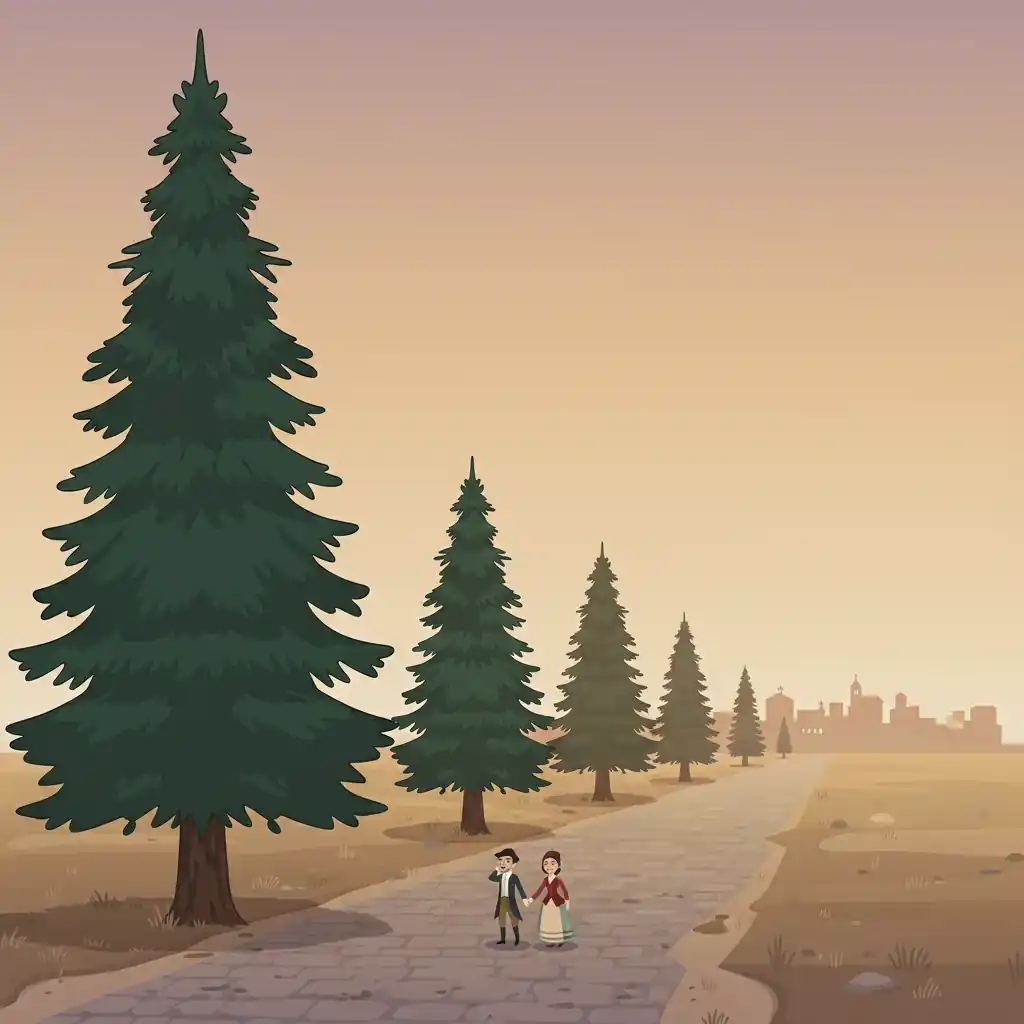
To mark its grand scale, the King ordered the planting of five prominent pine trees. Not just any pines, but large, distinctive ones, spaced out along the new promenade.
These trees served as landmarks. They were easy to spot, even from a distance. They broke up the long stretch of the avenue, making it feel less endless.
The Social Landscape of the Pines
These five pines quickly became more than just trees. They became meeting points. Each one carried a different social weight, a different level of public exposure.
The first pine, closest to the city center, was a beehive of activity. Carriages passed, merchants shouted, and gossiping ladies strolled. It was a place to see and be seen. Every conversation was public domain.
The second and third pines offered slightly less hubbub, but still felt very much within the city’s gaze. Ideal for a casual chat or a business discussion. Still, no real privacy.
The fourth pine was a step further. It was for slightly more private encounters. Perhaps a serious conversation between friends, or a quiet stroll with family, away from the loudest crowds.
Then there was the fifth pine. This one was different. It was far. Really far. It stood almost at the edge of the city, where the grand boulevard began to fade into open fields. Reaching it felt like a journey.
It was quiet out there. Secluded. Hardly anyone ventured that far without a specific reason.
A Secret Rendezvous
In 18th-century Madrid, young love was complicated. Public displays of affection were simply not done. A kiss, a whispered promise, these things demanded absolute discretion.
Young lovers, like Ana and Carlos, faced a dilemma. Where could they meet without the prying eyes of chaperones, family, or nosy neighbors?
The first few pines were out of the question. Too public. Even the fourth felt too close, too risky for anything beyond a polite greeting.
So, they would set their secret rendezvous at the fifth pine. It meant a long walk. A very long walk. Dusty shoes, tired feet, and the constant fear of being spotted on such an extended trek.