
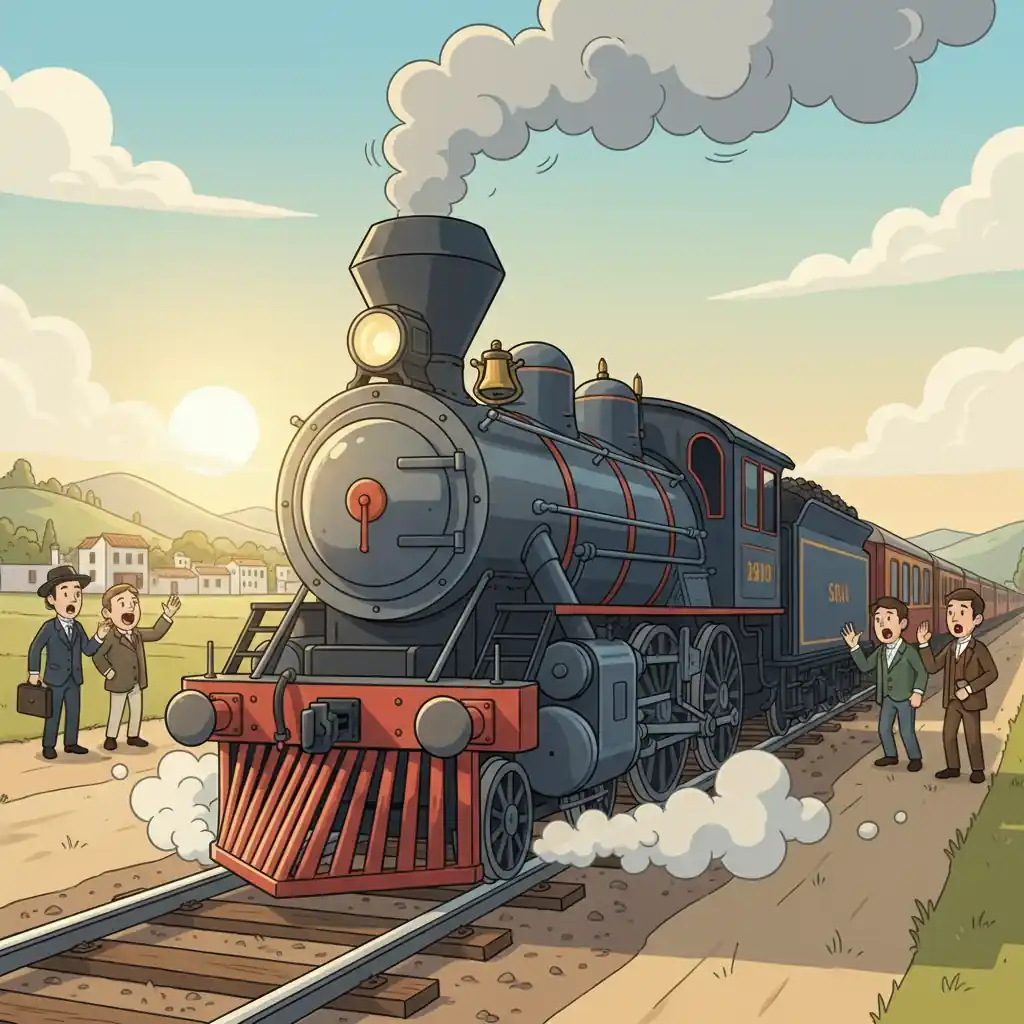
The Dawn of the Iron Horse
Spain, mid-19th century. A land steeped in history, but slow to embrace the new. Life moved at the pace of a horse-drawn cart. News traveled on foot or by letter, taking weeks. Journeying across the country was an arduous, dusty affair, reserved for the determined or the wealthy.
The world outside was churning with the Industrial Revolution, but Spain felt a step removed. Then, the first iron giants arrived. Not from ancient legends, but from factories across the sea, primarily England. These were steam engines, machines of fire and steel, designed to conquer distance. They weren't just vehicles; they were a loud, smoking declaration of a new era.
The first railway lines were tentative scars on the landscape. A short stretch from Barcelona to Mataró in 1848. Then Madrid to Aranjuez. Each new track laid was a marvel. People didn't just hear about them; they went to witness them. They queued for hours, not to ride, but just to stand and stare.
Watching a train was an event. It was a spectacle of raw, mechanical power previously unimaginable. This was not a slow boat on a river. This was not a carriage struggling up a hill. This was speed. This was force. This was the future, roaring past with smoke and steam. It captivated everyone, from the humblest farmer to the most sophisticated city dweller.
A Symphony of Steel and Speed
Imagine the sensory overload. The gleaming metal, polished and reflecting the sun like a massive, moving jewel. The intricate machinery, pistons pumping, rods turning, all in perfect, synchronized rhythm. Brass fixtures shone, smoke billowed in dramatic clouds against the blue sky, carrying the scent of coal and possibility.
The sound was immense. A deep, resonant rumble vibrated through the ground long before the train appeared. Then came the rhythmic clatter of steel wheels on steel tracks, building to a thunderous crescendo as it approached. The very air vibrated. People felt it in their chests. It was a sound that commanded silence from all other noises.
And then, the whistle. A sudden, piercing shriek that cut through the air, announcing its presence with undeniable authority. It was a sound that demanded attention, a signal of power and progress. It echoed across valleys and plains, a new voice in the Spanish landscape.
The speed was staggering. Faster than any horse, faster than any human could run. It devoured distances that once took days, reducing them to hours. This wasn't just practical; it was thrilling. It redefined what was possible.
Inside, the experience was just as impressive. Carriages were often sumptuously decorated. Plush velvet seats, large windows offering panoramic views, elegant wood paneling. Riding a train was a luxury, a symbol of status and modern living. It wasn't just transport; it was an experience. A show of human ingenuity at its peak. Trains were the undisputed kings of the new industrial age.
The Unbeatable Comparison
So, when something truly extraordinary appeared in everyday life, what did people compare it to? How do you describe an impact that leaves you breathless, a presence that fills a room? You couldn't use old metaphors. A beautiful sunset, a valiant knight, a blooming rose – these were too gentle, too common.
Spanish speakers needed something with force. Something that made a statement. Something that captured attention immediately and powerfully. And there it was: the train.
"Está como un tren." (He/She is like a train.) This wasn't a casual compliment. It was a declaration. It meant the person had immense presence. Their beauty wasn't subtle; it was undeniable, like the approach of a locomotive.
It spoke of strength and magnificence. Their attractiveness was powerful, maybe even overwhelming. It suggested a certain irresistible allure, a force of nature. They were impossible to ignore, just like a roaring train thundering through the countryside.