
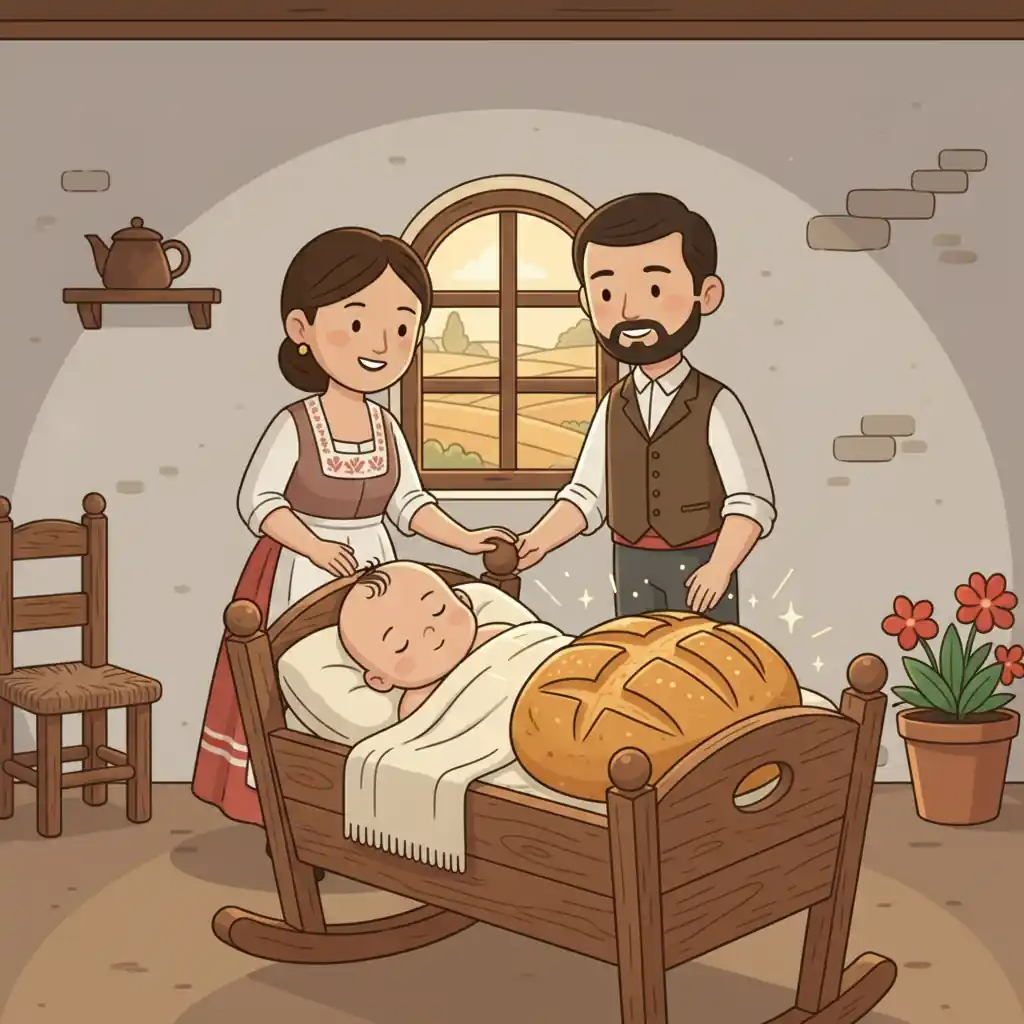
The Weight of Hope
In the sun-baked plains of old Spain, life was a constant struggle. Farmers worked from dawn until dusk. Their hands were calloused, their backs aching.
Food was never guaranteed. One bad season could mean starvation. Winter was a constant threat. Survival depended on hard work and a bit of luck.
For a family, a new child was a complex thing. Another mouth to feed, yes. But also, another pair of hands for the fields. Another future for the family name.
Children were an investment. They were the hope against a harsh world. People looked for signs. A good harvest. A healthy birth.
Any whisper of fortune was clung to tightly. Because sometimes, just sometimes, a new arrival seemed to turn the tide. A tiny hand, a loud cry, and suddenly, the world seemed a little kinder.
Mateo's Arrival
Deep in a forgotten valley lived the Rojas family. Their farm was small. The soil was stubborn. For years, bad luck had clung to them like morning mist.
The last harvest was dismal. Their pantry was nearly bare. Hunger was a familiar shadow in their small cottage.
Elena, the mother, was heavy with child. Her husband, Miguel, worried constantly. How would they feed another? The thought was a stone in his stomach.
He worked harder, but the land gave little back. The future looked bleak. Despair was a close companion.
Then, one crisp autumn morning, little Mateo arrived. He was small but strong. His cry filled their tiny home. For a moment, the worries faded. A new life. A small flicker of joy.
The very next day, something shifted. The sky, which had been clear and merciless for weeks, gathered dark clouds. Rain fell. Not a violent storm, but a gentle, steady drizzle. The parched earth drank deeply.
Miguel, astonished, went to his fields. The young wheat, almost dead, seemed to perk up. He discovered a forgotten patch of land, previously barren, now showing tiny shoots of something green and promising.
Within weeks, their luck continued. The rain was consistent, but not destructive. Their small flock of sheep, which had struggled, started producing more wool. A long-lost cousin, thought dead, sent a small sum of money.
The harvest that year was the best they had seen in a decade. The wheat grew tall. The vegetables were abundant. Their small patch of olives, usually sparse, yielded a generous press of oil.
Neighbors talked. They saw the transformation. The Rojas family, once on the brink, now had full bellies. Their clothes were mended. There was laughter in their home.
'It's the boy,' old Manolo declared in the village square. 'Little Mateo. He came with fortune in his tiny fists.' Another nodded. 'He was born with a loaf under his arm, I tell you.'
The phrase took root. It wasn't just luck. It was as if Mateo had brought the very sustenance of life with him. He had arrived, fully equipped, with prosperity for his family.
The Bread of Fortune
Why bread? In Spain, as in many ancient cultures, bread was life itself. It was the staple. The daily sustenance.
Without bread, there was no meal. No strength. No survival. It was more than food; it was a symbol of well-being.