
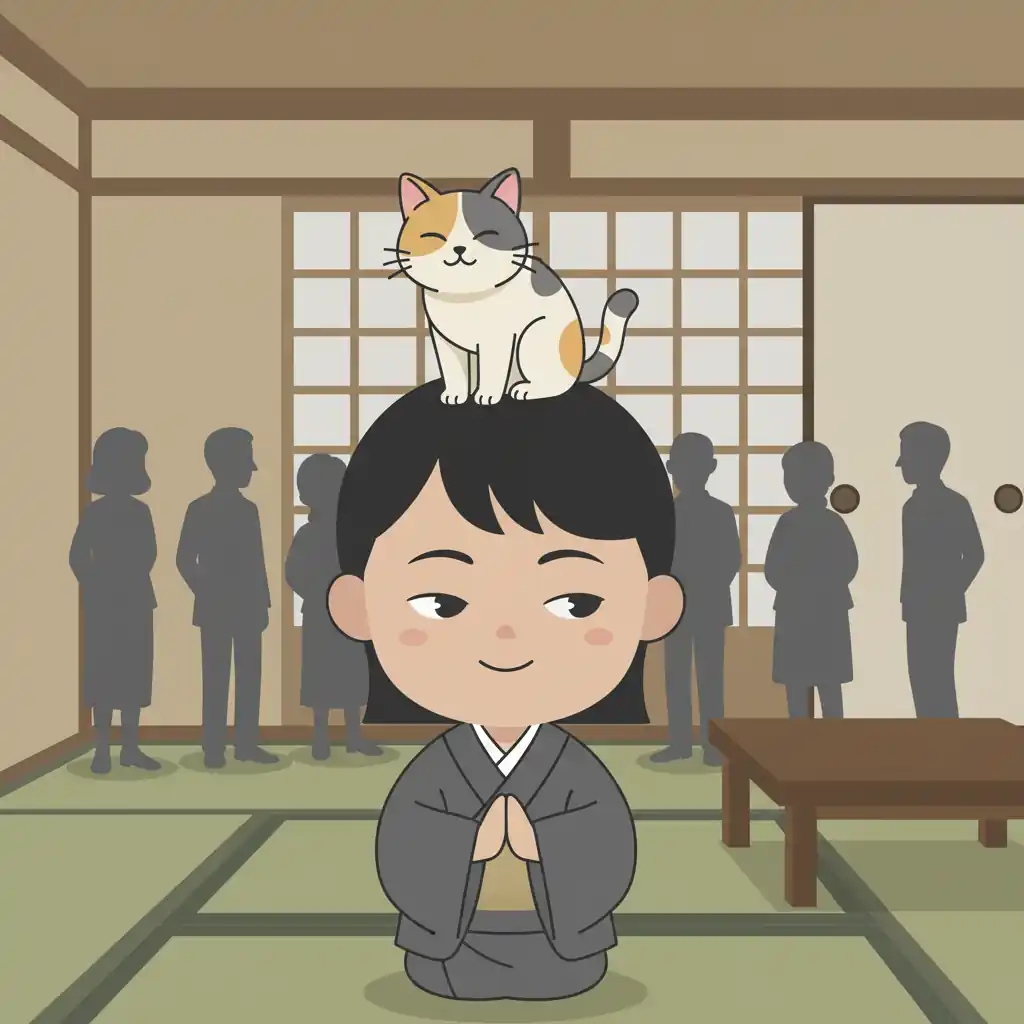
The Two Faces of Taro
In a small Japanese village, nestled by emerald rice paddies and overlooked by ancient cedars, lived a boy named Taro. He was no ordinary child. Taro harbored a curious, almost theatrical, secret.
When his grandmother's gaze, or that of any respected adult, fell upon him, Taro was a picture of perfect virtue. He bowed low, his small hands clasped respectfully. He spoke in soft, deferential tones, never raising his voice above a gentle murmur. He helped carry heavy buckets of water from the well, never complaining about the strain, or gathered firewood with quiet efficiency. His hands, usually grimy from endless hours of playing in the dirt and chasing frogs, would be impeccably clean, as if scrubbed by magic. Elders would nod approvingly, genuinely pleased by such a polite and well-behaved boy, a true credit to his family.
But the instant his grandmother's back was turned, or the adults moved out of earshot, Taro transformed. The polite bow became a mischievous sprint, his straw sandals kicking up dust. The soft voice erupted into shouts of joyous laughter, echoing through the narrow paths. He would lead his friends on daring, sugar-plum raids into local orchards, or devise elaborate schemes to splash unsuspecting villagers with water from hidden ditches. He was a whirlwind of noise, energy, and playful trouble, leaving a trail of minor chaos in his wake.
His behavior was a constant puzzle to many in the village. How could one child possess such wildly opposite natures? He seemed to shift identities with the ease of a skilled actor changing costumes, leaving adults scratching their heads and children in gleeful admiration. He was a riddle wrapped in an enigma, with a polite smile on one side and a naughty grin on the other.
Aunt Hana’s Sharp Eye
Old Aunt Hana lived just next door to Taro, her small house overlooking the main path. Her eyes, sharp and keen from years of detailed craftwork, missed absolutely nothing of the village's daily comings and goings. Each afternoon, she sat on her porch, mending fishing nets or weaving intricate bamboo baskets, quietly observing the rhythm of village life, especially the children.
One bright morning, the sun warm on her face, she watched Taro diligently helping his grandmother sweep the muddy path leading to their home. He moved with slow, deliberate grace, his broom sweeping in perfect, unhurried arcs. He looked utterly angelic, a child incapable of even a single naughty thought, his face set in an expression of pure, innocent concentration.
Then, Grandmother, momentarily distracted by a passing cart, bent down to pick up a dropped broom. In that fleeting second, a change flickered across Taro’s face. The angelic mask held for a blink. Then, a quick, almost imperceptible wink to his closest friend, Ken. He discreetly, almost accidentally, nudged a pail of freshly drawn water that sat beside the path. The pail tipped, sending a small, perfectly aimed wave splashing towards a large, usually grumpy dog napping peacefully nearby. The dog yelped, startled from its slumber, and darted away with a surprised yelp. Taro’s face, however, remained a picture of innocent concern, almost hurt by the dog's sudden departure, as if he couldn't imagine what had caused such a ruckus.
Aunt Hana simply shook her head, a knowing, weary smile playing on her lips. She knew Taro's trick all too well. Many children tried to fool their elders, of course, but Taro was a true master of the art. He slipped between his two personalities with effortless ease, like a shadow disappearing into the evening mist, leaving no trace of his true intentions. He was a master illusionist of childhood.
The Purring Facade
Later that very day, as dusk painted the sky in hues of orange and purple, Aunt Hana shared her observations with Kenji, the bustling village fishmonger. Kenji was known throughout the valley for his incredibly fresh catches and an even fresher, quick wit that often summarized complex situations with a single, memorable phrase.
“That Taro,” Aunt Hana began, a hint of genuine amusement dancing in her eyes, “he changes quicker than the morning tide. One moment, he’s as pious as a shrine acolyte, helping every elder in sight. The very next, he’s a runaway bandit, causing mayhem with his little gang.” She sighed, a small, exasperated sound.
Kenji, expertly filleting a salmon, chuckled, a deep rumble in his chest. “Ah, children will be children, Aunt Hana. We all know their tricks. But Taro, he certainly has a special talent for it, doesn't he? A real prodigy in deception, if you ask me.”
Aunt Hana paused, a thoughtful glint in her sharp eye. She thought of the cats that roamed the village. How a cat could appear so utterly docile, purring sweetly on a lap, its eyes half-closed in contentment. Only to pounce on a hapless mouse with fierce, predatory abandon moments later, its true nature revealed in a flash. “It’s as if,” she mused aloud, tapping her chin with a bony finger, “he’s wearing a cat.”