
French Nuclear Testing Escalates
France begins an extensive program of nuclear weapons testing at Mururoa Atoll in the South Pacific, drawing international criticism.
Mitterrand's Election, Testing Continues
François Mitterrand is elected President of France. Despite his socialist platform, nuclear testing policy remains unchanged, leading to increased protest.
Greenpeace Plans Flotilla
Greenpeace announces its intention to send a protest flotilla, led by the *Rainbow Warrior*, to Mururoa Atoll to disrupt French nuclear tests.
Operation Satanique Launched
The French DGSE initiates 'Operation Satanique,' a covert mission to neutralize the *Rainbow Warrior* in Auckland Harbour, New Zealand.
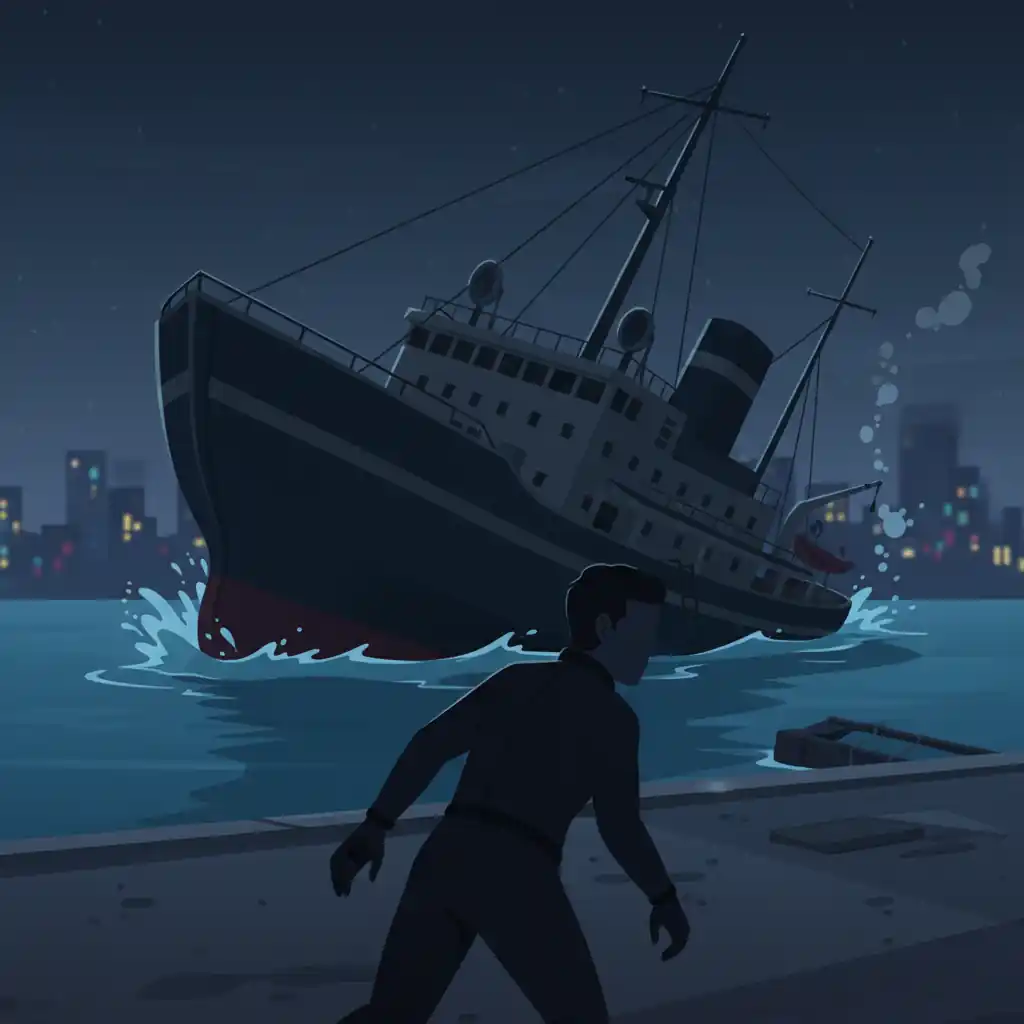
Rainbow Warrior Bombed
Two limpet mines are detonated on the *Rainbow Warrior* in Auckland. The ship sinks, and Greenpeace photographer Fernando Pereira is killed.
Agents Arrested
French agents 'Sophie Turenge' (Dominique Prieur) and 'Alain Mafart' are arrested by New Zealand police, significantly compromising the operation.
Leaked Report Exposes DGSE
French newspaper *Le Monde* publishes a leaked report, reportedly from within the French government, detailing the DGSE's direct involvement in the bombing.
Minister Resigns, DGSE Chief Fired
French Minister of Defence Charles Hernu resigns and DGSE director Admiral Pierre Lacoste is fired following the mounting evidence and public pressure.
Agents Plead Guilty
Mafart and Prieur plead guilty to manslaughter and willful damage, receiving ten-year prison sentences in New Zealand.
France Pays Compensation
Following international arbitration, France agrees to pay NZ$13 million (US$6.5 million) in compensation to New Zealand and Greenpeace.
PROLOGUE: THE MURUROA MYSTERY
This story draws on historical investigations, journalism, and academic research. Some events described were the subject of public controversy or legal investigation. Allegations and interpretations are presented as reported claims rather than definitive conclusions. The 'Rainbow Warrior Affair' stands as a chilling testament to the lengths to which a sovereign state would go to protect its strategic interests, even if it meant a covert act of sabotage on the territory of a friendly nation.
In the mid-1980s, the Cold War raged, but a different kind of conflict was simmering in the azure waters of the South Pacific. France, a proud nuclear power, conducted underground atomic tests at Mururoa Atoll, far from the metropole but deeply unsettling to its Pacific neighbors and a growing global environmental movement. This remote testing ground became a flashpoint, drawing the attention of activists who saw the detonations as an ecological threat and a colonial affront. At the forefront of this protest was a ship, a symbol of defiance, named the Rainbow Warrior.
It was a story that would unravel from a quiet New Zealand harbor to the highest echelons of French power, exposing a conspiracy of unprecedented scale. A single act of sabotage, intended to silence dissent, instead ignited an international scandal, claiming a life and forever altering the landscape of state-sponsored covert operations.
ACT I: THE ACTIVISTS AND THE ATOLL
The Rainbow Warrior, a former trawler affectionately refitted, was more than just a ship; it was a floating emblem of environmental activism. Operated by Greenpeace, its mission was audacious: to sail into the French nuclear test zone around Mururoa Atoll, disrupting detonations and drawing global attention to a practice many considered dangerous and immoral. By 1985, the ship had become a veteran of protest, having confronted whaling fleets, seal hunters, and nuclear waste dumpers. Its presence alone was a potent PR weapon.
French nuclear testing in the Pacific had been a point of contention for decades. While the tests were moved underground in 1975, concerns persisted about radioactive leakage and the precedent set by a major power conducting such activities in a vulnerable region. For France, however, the force de frappe—its independent nuclear deterrent—was a non-negotiable pillar of national sovereignty and global standing, particularly in the tense geopolitical climate of the Cold War. Any challenge to this was perceived as a direct threat to national security.
As the Rainbow Warrior prepared for its voyage from Auckland, New Zealand, to Mururoa in the summer of 1985, French officials reportedly grew increasingly agitated. Previous Greenpeace campaigns had proved effective at generating unwanted publicity, and the prospect of their flagship disrupting crucial tests was seen as intolerable. The ship, packed with activists, journalists, and a substantial cargo of medical supplies for the Marshall Islanders affected by earlier nuclear fallout, was a very visible and very effective protest platform.
The planned direct action at Mururoa threatened to escalate an already sensitive diplomatic issue, potentially embarrassing President François Mitterrand's government on the international stage. According to later investigations and journalistic reports, this perceived threat ultimately triggered a decision at the highest levels of the French defense establishment to take extraordinary measures to neutralize the Rainbow Warrior before it could reach the test zone.
ACT II: OPERATION SATANIQUE – THE PLOT UNMASKS
The directive to eliminate the Rainbow Warrior reportedly originated from the French Ministry of Defence and was delegated to the Direction Générale de la Sécurité Extérieure (DGSE), France's foreign intelligence agency. The DGSE, accustomed to operating in the shadows of global espionage, was tasked with a covert operation that was unprecedented in its audacity: a state-sponsored act of sabotage against a civilian vessel in the sovereign territory of a friendly nation. The operation was codenamed 'Satanique,' a name that would later prove disturbingly apt.
Planning for Operation Satanique involved multiple teams of DGSE agents. One team, operating under false identities, reportedly established a cover as a newlywed couple, 'Sophie Turenge' and 'Alain Mafart,' posing as Swiss tourists. Their mission was to conduct reconnaissance of Auckland Harbour and the Rainbow Warrior itself. Another team, consisting of French navy combat divers, was allegedly responsible for planting the explosives. These divers were reportedly deployed from the Ouvéa, a French submarine tender, which transported them close to New Zealand waters.
The rationale behind targeting the ship in port, rather than at sea, was reportedly logistical. A covert operation in a busy harbor allowed for precision and a lower risk of detection at sea. Furthermore, the goal, according to official French accounts after the scandal broke, was to disable the ship, not to cause casualties. This distinction, however, would be tragically undermined by the events that unfolded.
As the Rainbow Warrior lay docked in Auckland, preparing for its Pacific voyage, the DGSE agents finalized their plans. The operation, while conceived at the highest levels, relied on the meticulous execution of operatives trained in deception and clandestine warfare. The stage was set for a night that would become a defining moment in both environmental activism and international relations, exposing the covert machinations of state power.
The 'Swiss couple' (Dominique Prieur and Alain Mafart) reportedly rented a camper van to tour New Zealand, allowing them to blend in with tourists while conducting surveillance. They even reportedly posed for a picture with a local policeman, a detail that would later become a stark irony.
ACT III: THE NIGHT OF THE BOMBS
On the night of July 10, 1985, Auckland Harbour was calm, shrouded in the usual winter darkness. The Rainbow Warrior was moored at Marsden Wharf, its crew resting before their journey to Mururoa. Around midnight, two French combat divers, reportedly from the DGSE, approached the vessel using inflatable boats. Their mission: to attach two limpet mines to the ship's hull. The first mine was reportedly placed near the propeller shaft, the second closer to the engine room, designed to rupture the hull and disable the ship permanently.
At 11:38 PM, the first explosion ripped through the Rainbow Warrior. The initial blast created a gaping hole in the hull, flooding the engine room. Most of the crew, startled from sleep, immediately began to evacuate. However, Fernando Pereira, a 35-year-old Portuguese-Dutch photographer and crew member, returned to his cabin below deck to retrieve his cameras, reportedly believing the ship was simply damaged and salvageable. He was trapped as water rushed in.