
Young Klaus and the Frost
In a small Bavarian village nestled beside a restless river, lived a young man named Klaus. He was an apprentice to Master Heinrich, the village’s only stonemason. Klaus was strong, but still learning.
One brutal winter, an urgent message arrived from Baron von Hagen. The old bridge leading to the castle had cracked. It needed immediate repair. The Baron demanded Master Heinrich’s best work, and fast.
Master Heinrich, a man with hands like granite and a spirit just as hard, picked his tools. “Klaus,” he grunted, “you come too. Time you learned what real work means.”
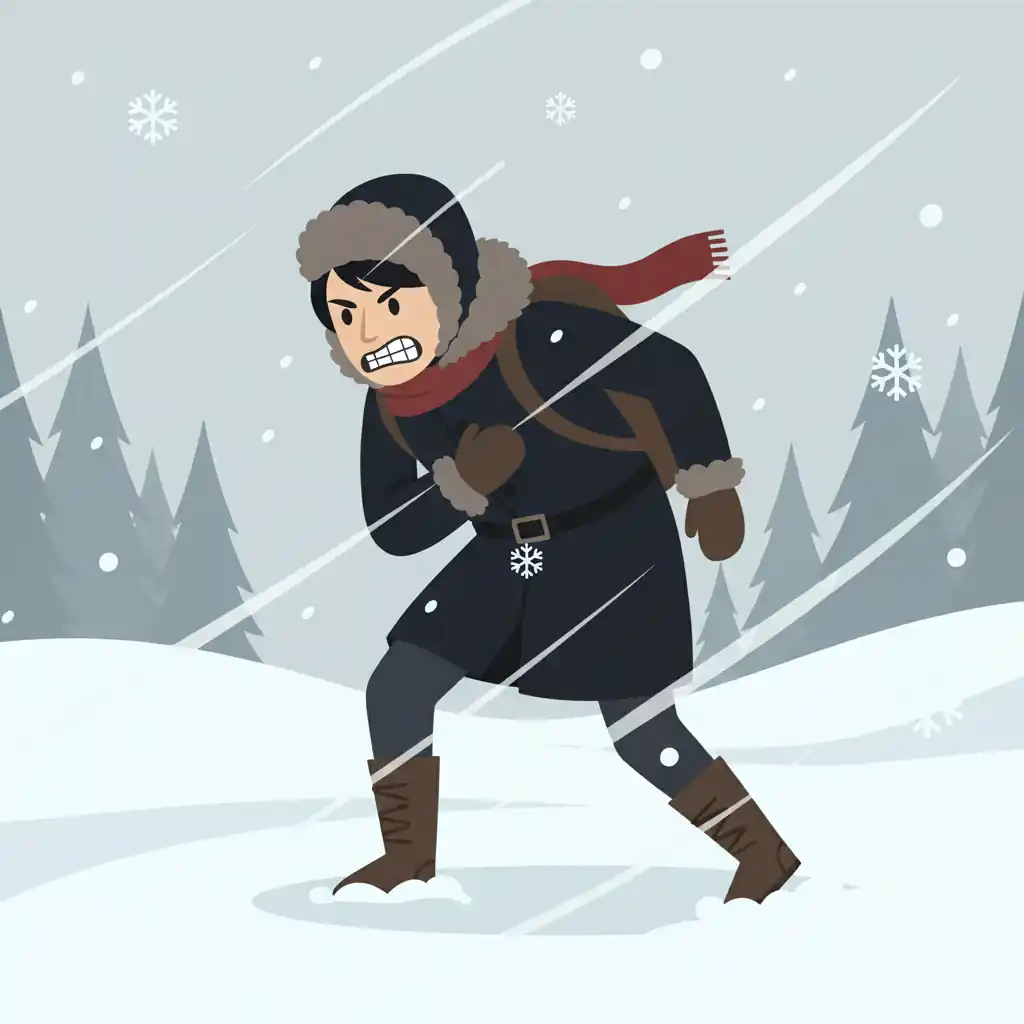
The journey to the castle was not far, but the weather made it a torment. Snow fell in thick sheets. The wind howled like a hungry wolf. Every step was a battle against the elements.
They reached the bridge. It truly was in bad shape. A large section of the main support stone had split. Repairing it meant hours of freezing work, chiseling and fitting new stone.
Klaus, despite his strength, felt the cold deep in his bones. His fingers, even in thick gloves, began to ache. The heavy chisel felt heavier with each swing. He shivered constantly.
Master Heinrich worked without a sound, his face grim. He paused only to spit, a puff of steam in the icy air. Klaus watched him, trying to mimic his relentless pace.
But the pain grew. His back stiffened. His arms burned. The cold seemed to seep into his very soul. He felt a wave of despair. He wanted to stop. He wanted to collapse in the snow and wait for warmth.
The Master's Gaze
Klaus missed a stroke with his hammer. The chisel slipped, scraping his knuckles. A sharp jolt of pain shot up his arm. He cried out, a small, involuntary gasp.
Master Heinrich turned slowly. His eyes, usually sharp, were now piercing. He looked at Klaus, not with anger, but with a deep, silent challenge. There was no pity.
Klaus knew what that look meant. Giving up was not an option. Not for a stonemason. Not in a crisis. He felt shame rise, hotter than the cold. He had to keep going.
He gripped the hammer tighter. He stared at the stubborn stone. His jaw tightened without him even realizing it. He bit down, hard, clenching his teeth together until his jaw ached even more.
The physical act of clenching his teeth somehow sharpened his focus. It was a small, defiant gesture against the cold, against the pain, against his own weakness. It was a silent promise to himself: I will not break.
He raised the hammer again. This time, the blow landed true. Stone chips flew. He worked on, focusing only on the rhythm of his breathing and the strike of the tools.
Hours passed. The sun began its slow descent, painting the snow in shades of orange and purple. The new stone was finally set. The bridge was strong again.