
The Winter's Fury
Many years ago, in the small German village of Kirchberg, life moved with the rhythm of the seasons. Winters were long and cold. But one particular winter, a storm struck like a fist.
It began quietly one evening. Flakes drifted down, soft and gentle. By morning, the world had vanished under a blanket of white. It was a snowstorm unlike any other.
Roads disappeared. Houses huddled under drifts, their windows half-buried. The forest became a silent, white wall. Villagers were trapped inside, watching the continuous fall.
The main concern quickly surfaced: the weekly supply cart. It brought essential goods from the city—flour, salt, medicine, and letters from loved ones. Without it, life in Kirchberg would grind to a halt.
The snow was no longer beautiful. It was a problem. A massive, white, silent problem that threatened to isolate them completely.
The Great Worry
The day after the storm, the snow continued. Every conversation in Kirchberg revolved around one thing: the snow. How deep it was. How long it would last. When the cart might arrive.
Old Frau Schmidt wrung her hands. Her heart medicine was running low. Young Jakob fretted about his grandmother, who lived alone on the other side of the valley, her path now impassable.
Master Müller, the baker, worried about his flour supply. If the cart didn't come, his ovens would sit cold. The village would have no fresh bread.
At the village inn, worried faces gathered. Men debated how to clear the main road. Women whispered about dwindling supplies. The snow had become an enemy. A formidable, white obstacle.
“This snow will be the end of us,” groaned one farmer, staring out at the unending white landscape. It felt like the world had stopped, all because of the snow.
A Sudden Change
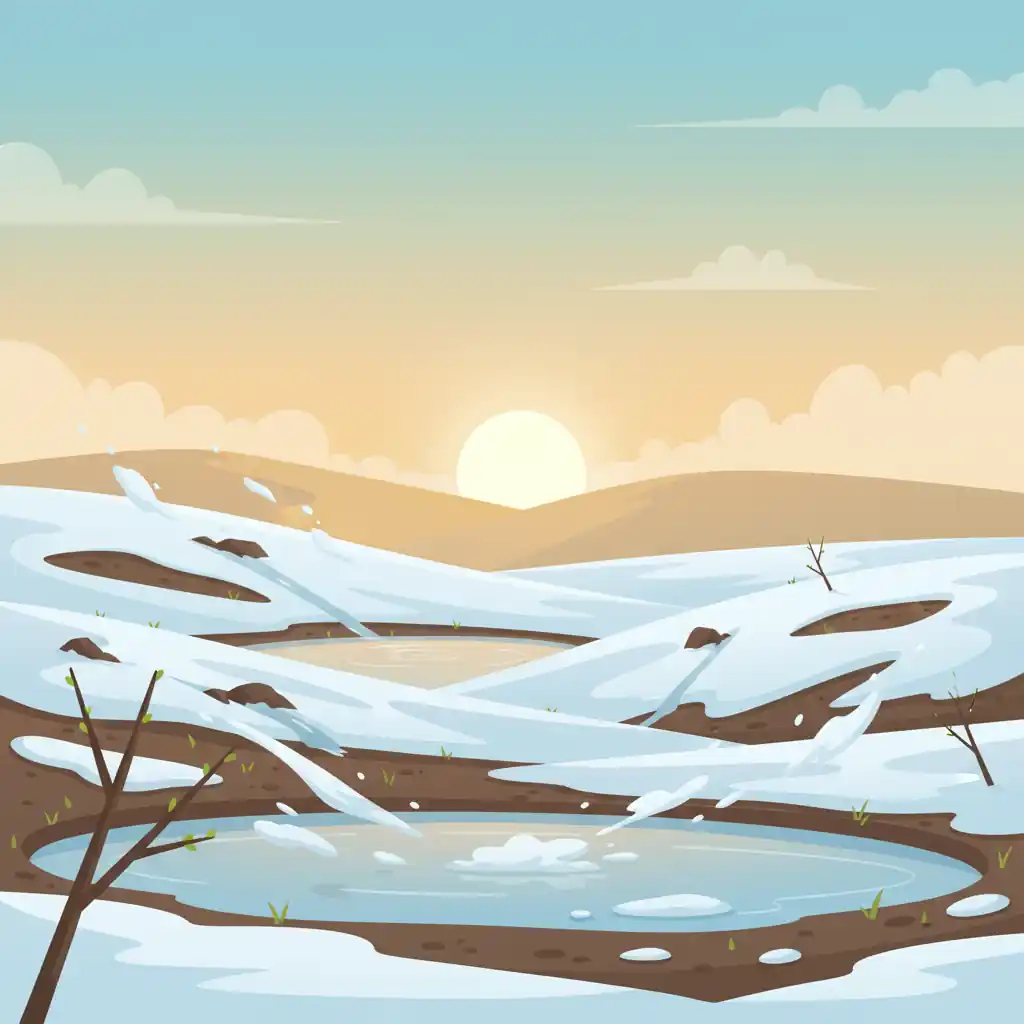
Then, a miracle. On the second morning, the sky was a dazzling, cloudless blue. The sun, bright and insistent, burst over the eastern hills. Its rays hit the snow, and the entire village sparkled.
The air felt different. A gentle warmth had replaced the biting cold. Drips began to fall from rooftops, forming steady rhythms. Puddles appeared where only unbroken white had been.
The world seemed to exhale. The heavy blanket of snow began to lighten, to shrink. It was still everywhere, but its power was broken. Its reign was ending.
And then, another sound. Not the crunch of snow, but the clear, joyous peal of the church bells, ringing far louder than usual. A messenger from the city had arrived, somehow navigating the still-heavy roads.
He brought news that swept through Kirchberg faster than the melting snow: The Duke himself was visiting the village in just two days. A grand event! A rare honor for humble Kirchberg!
Suddenly, all fear vanished. Excitement buzzed in the air. The village sprang to life. There was so much to do! Banners to hang. Streets to clear (not just of snow, but of everyday mess). Food to prepare.