
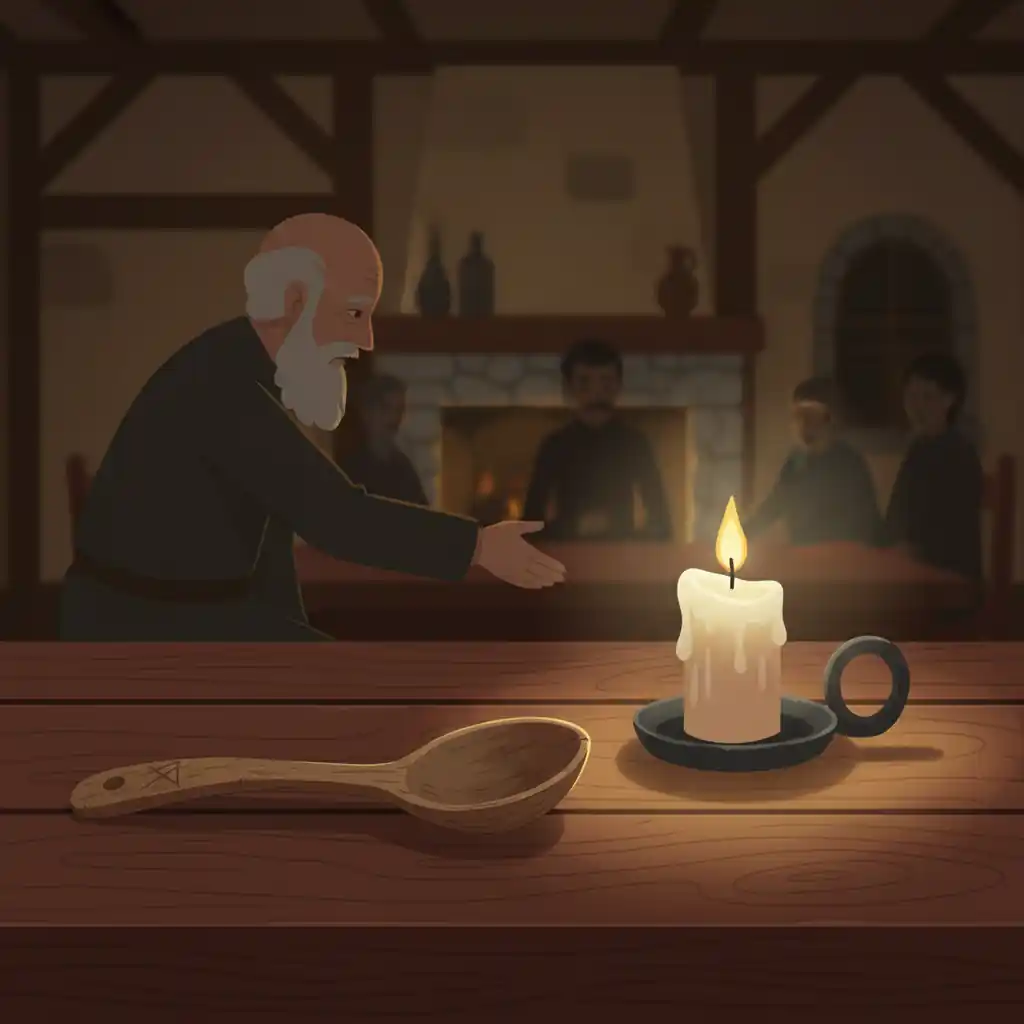
A Spoon for Life
In ancient Germany, and for many centuries that followed, a spoon was more than just a utensil. It was a personal possession. A valuable one. Especially for common folk.
Families, particularly the poor, owned very few things. And what they owned, they treasured. A spoon, often carved from wood, was something you got as a child. It was yours for life.
Think about it. There were no plastic forks or cheap metal cutlery. Every spoon was a small investment. It was carried, used daily, and kept safe. It was a tool for survival, for eating every meager meal.
Imagine a communal kitchen, perhaps in a monastery, a large farmstead, or even a poor village. Everyone had their own bowl, their own cup, and crucially, their own spoon.
These weren't interchangeable items. You knew your spoon. It might have a scratch, a unique carving, or a slight bend. It was an extension of your hand, a constant companion at meal times.
The spoon was with you through thick and thin. Through lean years and good harvests. It scraped the bottom of many a gruel bowl and scooped countless spoonfuls of stew.
It represented your place at the table. Your daily sustenance. Your very existence in the cycle of eating and living.
The Last Supper, Without the Spoon
Now, consider the end of a person's life. When someone lay on their deathbed, their final hours approaching, what would happen to their most personal belongings?
Their clothes might be given away. Their meager tools passed on to an heir. But what about that wooden spoon?
A dying person no longer needed to eat. Their earthly needs were fading. The spoon, once so vital, became redundant.
In many households, especially those struggling, the spoon would be 'abgegeben' – handed over. It wasn't thrown away. That would be wasteful.