
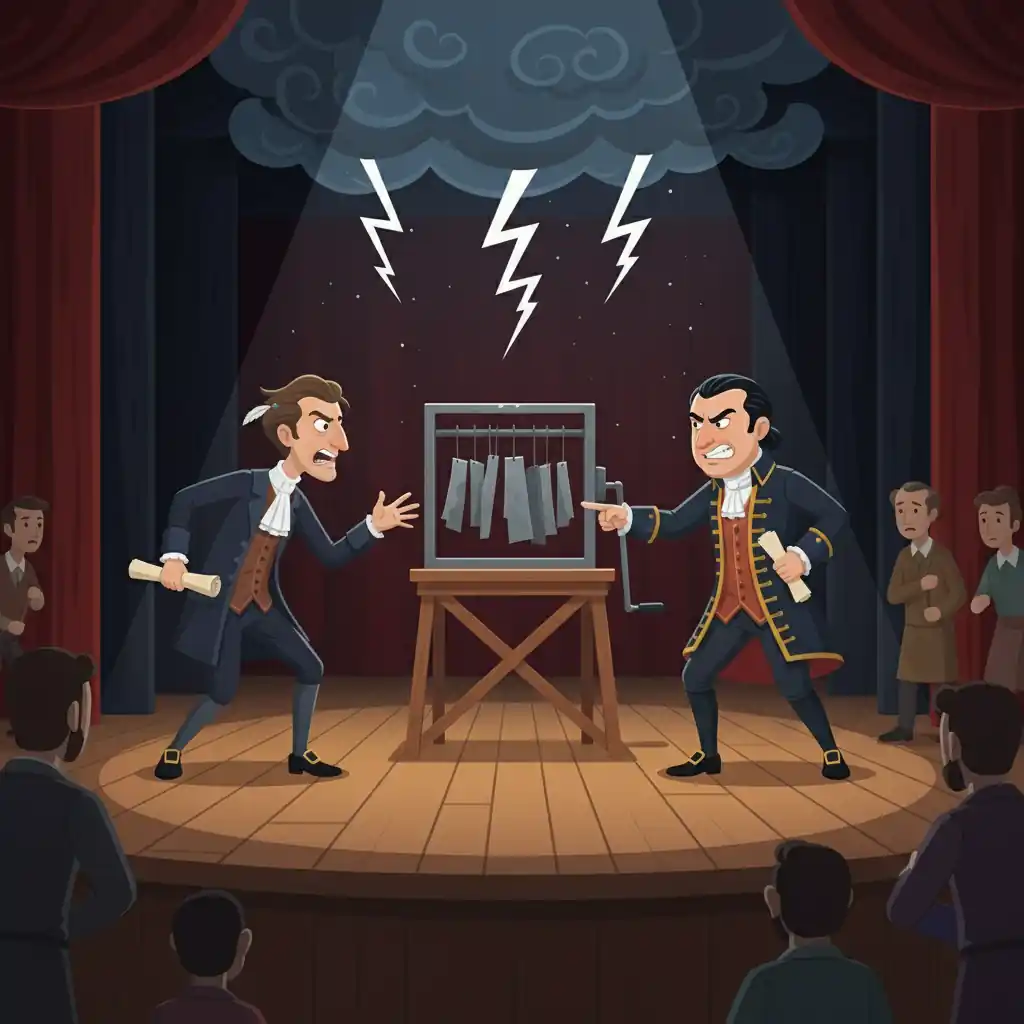
The Playwright's Predicament
In the early 18th century, London’s theaters were a lively, cutthroat world. Audiences loved drama, and playwrights fought for attention. One such playwright was John Dennis.
Dennis was a man of big ideas, though not always big successes. He was passionate, often angry, and deeply proud of his work. He was writing a new tragedy called 'Appius and Virginia'.
This play featured a powerful storm scene. It was crucial. The drama of the moment depended on the audience truly feeling the wrath of the heavens. But stage thunder in those days was, well, pathetic.
The common method was to roll a cannonball around a wooden trough. It sounded more like someone moving furniture than a clap of thunder. Dennis knew his play needed something better, something truly revolutionary.
A Stroke of Genius
John Dennis spent weeks experimenting. He tried different materials, different techniques. He was obsessed. He needed a sound that would make people jump, a sound that felt real.
Finally, he had a breakthrough. He discovered that a large, thin sheet of metal, shaken vigorously, created a booming, rattling sound that was incredibly convincing. It was loud. It was dramatic. It was perfect.
He tested it during a rehearsal for 'Appius and Virginia'. The actors onstage flinched. The stagehands gasped. It was unlike anything they had ever heard in a theater. Dennis swelled with pride.
This was his invention. This was his moment. He had found a way to bring the raw power of nature to the stage. His play, with its groundbreaking thunder, was set to premiere, promising a sensation.
The Stolen Roar
The theater world was small. News, even secrets, traveled fast. The buzz about Dennis's incredible new thunder effect began to spread backstage, from one theater to another.
Before 'Appius and Virginia' could even open, a rival theater manager, Mr. Rich of the Drury Lane Theatre, heard about Dennis's innovation. Rich was known for his shrewdness and his willingness to adapt.