
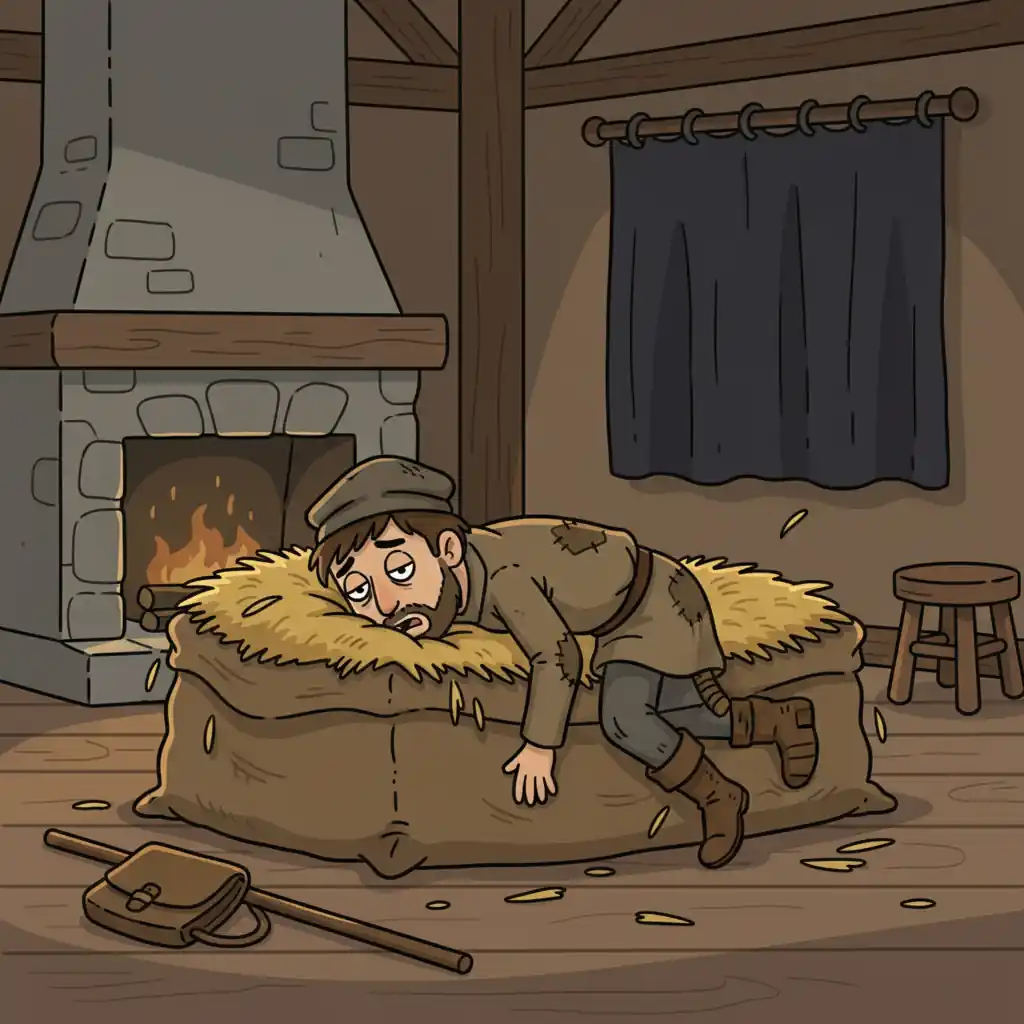
The Humble Mattress
In old England, most people didn't sleep on soft, springy beds with layers of comfort. Forget modern memory foam or luxurious feather mattresses.
For the vast majority, luxury was a concept far removed from their daily lives. Common folk, from laborers to humble artisans, slept on whatever they could afford or fashion themselves.
Often, that meant a large, sturdy cloth bag—a "sack"—filled with dry straw, hay, or even chaff, which are the husks of grain. These were the simple mattresses of their time.
These straw sacks were practical. They were cheap to make, easy to replace when the filling became worn or infested, and offered a crucial barrier from the cold, hard ground or stone floors.
But they were far from comfortable. They rustled with every movement, flattened quickly, and grew lumpy. They needed constant fluffing and refilling to stay remotely usable.
Despite their rough nature, after a long, arduous day of work, even a lumpy, noisy straw sack felt like an incredible luxury. It was a promise of rest.
Elias the Plowman's Day
Meet Elias, a strong plowman from a small, unnamed village in the 1600s. His life was dictated by the sun, starting well before dawn and ending long after sunset.
He spent his days in the fields, working the stubborn earth. It was back-breaking, relentless labor that never seemed to truly end.
Plowing wasn't just walking. It meant wrestling with a heavy wooden plow, guiding slow, powerful oxen, and trudging for miles across muddy, uneven ground. Hour after hour, day in and day out.
His hands were permanently calloused and cracked, his back a constant ache. Every single muscle in his body screamed in protest by the time evening prayers were said.
After a simple supper—a thick slice of bread, a bowl of thin stew, sometimes a bit of hard cheese—Elias had only one thought dominating his mind. A singular, overwhelming need.
Sleep. Deep, absolute, dreamless sleep was the only thing that could truly quiet the exhaustion buzzing in his bones.
The Daily Drop and the Sack
Elias would stumble through the door of his small, one-room cottage. The fire in the hearth would usually be reduced to a few glowing embers, casting long, dancing shadows.
His "bed" lay in the corner: a large, coarse linen sack, freshly plumped with sweet-smelling straw that week. It was his haven.