
The Royal Game
Centuries ago, long before sleek rackets and neon balls, a game evolved from monastic courtyards into royal palaces. It was a sport of strategy, skill, and swift movement: tennis, or 'real tennis' as it was known then.
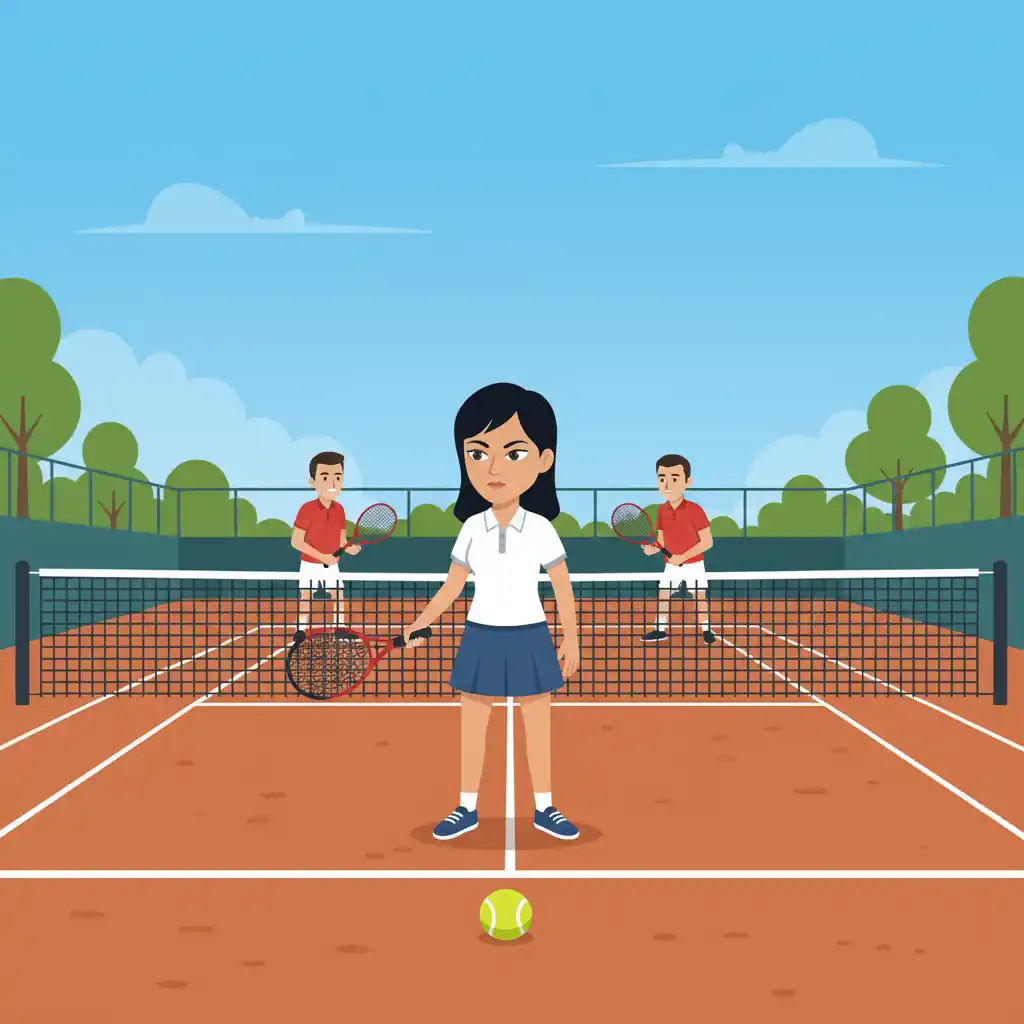
The court was divided by a net. Simple. Clear. One side was yours. The other belonged to your opponent. The game's fundamental rule was this: you hit the ball over the net, into their court, and then you waited.
You watched. You prepared. But your immediate action was done. The next move, the response, was entirely up to them. The ball's location dictated everything.
This wasn't just about hitting a ball. It was about pressure, anticipation, and the clear transfer of responsibility with every volley.
A Decisive Serve
Imagine a particularly tense match. The year is perhaps 1780. Two players, Sir Reginald and Lord Beaumont, are locked in a fierce duel on a grand estate court. The score is tight. The air is thick with expectation.
Sir Reginald, known for his powerful serve, strikes the ball with precision. It flies over the net, a blur of white against the green court.
The ball lands deep in Lord Beaumont's court. A perfect, unreturnable serve. It bounces once, then settles, just out of reach.
Sir Reginald watches. His part in that specific exchange is over. He has made his play. He has set the stage. He cannot do anything more until Lord Beaumont reacts.
The Weight of the Next Move
Lord Beaumont stares at the ball. It sits there, undeniably, on his side of the court. His shot. His decision. His problem, if you will.
The ball isn't just a piece of felt and rubber. In that moment, it represents an impending action. A choice. A response that only he can deliver.