
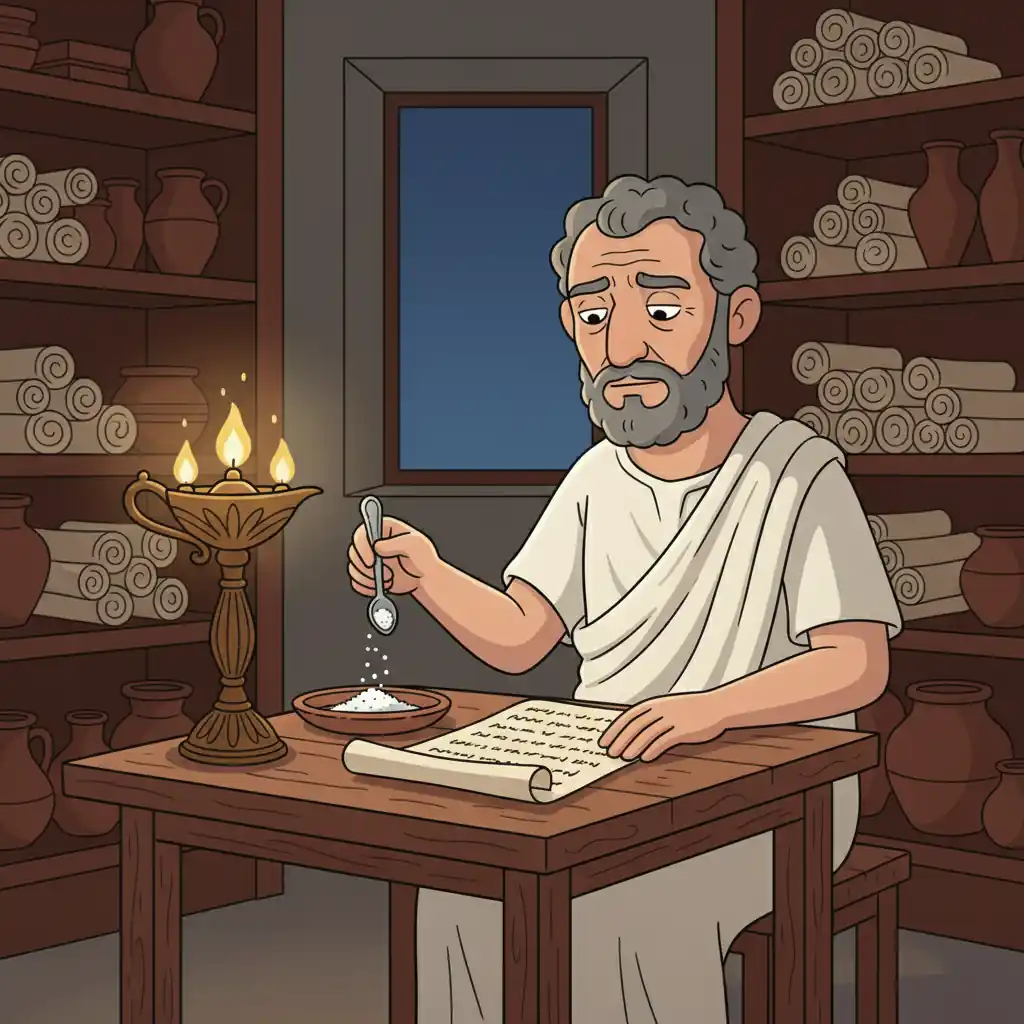
The Roman Scholar's Dilemma
In the bustling heart of ancient Rome, amidst columns of papyrus and the quiet rustle of parchment, lived a meticulous scholar named Gaius Lucius.
Gaius was a man of logic and order. He loved truth. His days were spent poring over scrolls, translating texts, and recording history. He understood the power of words, both to enlighten and to mislead.
One sweltering afternoon, a new scroll arrived at the library. It was a travelogue, supposedly from a daring explorer who claimed to have ventured to the farthest reaches of the known world.
Gaius unrolled it carefully. The script was elegant, the ink fresh. But the content? It was... remarkable. Too remarkable, perhaps.
The explorer detailed encounters with men whose heads grew beneath their shoulders. He described rivers that flowed with wine, and golden birds the size of chariots.
Gaius read on, his brow furrowed. He appreciated a good story as much as the next Roman. But this wasn't presented as fiction. It was written as absolute, undeniable fact.
His inner sense of accuracy rebelled. He knew the world held wonders, but golden chariots and headless men seemed designed to impress, not inform.
A Simple Meal, A Profound Thought
The midday sun streamed through the library's windows. Gaius decided to take a short break. His slave brought a modest meal: a piece of hard bread, some olives, and a bowl of simple lentil stew.
Next to his plate sat a small, ornate salt cellar. Salt was precious in Rome. It was used not just for flavoring food, but for preserving it. It was a commodity, even a form of payment.
Gaius picked up a pinch of the coarse white crystals. He sprinkled it over his stew, watching the grains disappear into the thick liquid. The action was automatic, a daily ritual.
As he ate, his mind returned to the fantastical scroll. He chewed slowly, considering the explorer's wild tales. They were like a dish too rich, too intense, difficult to digest in their raw form.
Then, a thought struck him. A spark of connection between the salt on his food and the stories in his mind.