
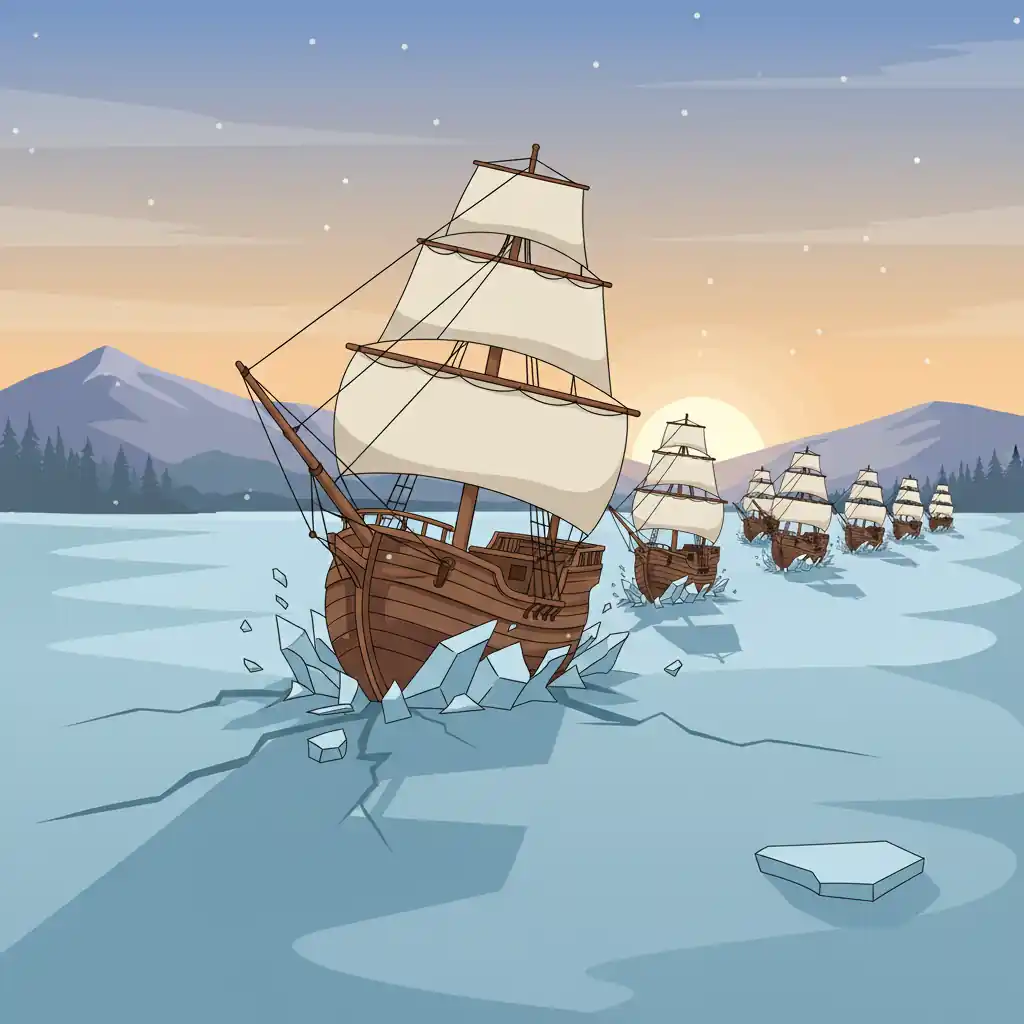
Winter's Cold Embrace
For centuries, across northern lands, winter was more than just a season. It was a powerful, silent enemy.
When the bitter cold winds blew for weeks, rivers and harbors would freeze solid. Thick sheets of ice, sometimes many feet deep, covered the water.
For towns and cities that relied on trade by sea or river, this was a disaster. Ships were their lifeline. They brought food, goods, and news from afar.
But when the water turned to glass, the ships became trapped. They sat like giant, helpless birds, their sails furled, their purpose forgotten.
Harbors, usually bustling with activity, fell silent. Only the crunch of snow underfoot broke the quiet. Supplies dwindled, and people grew anxious. It was a long wait until spring.
The Standoff at the Docks
Imagine a fleet of merchant ships, laden with goods, waiting impatiently. Or perhaps a city desperate for incoming supplies.
The problem wasn't just the cold. It was the ice itself. Pushing a wooden ship through a frozen layer of water was incredibly risky.
Sharp edges of ice could splinter the hull. Powerful chunks could crack the keel. A damaged ship meant huge repair costs, or worse, sinking.
No captain wanted to be the first to try. The risk was too great. Each one looked at the others, hoping someone else would take the plunge.
A 'waiting game' would begin. Days would turn into weeks, and the ice would only grow thicker. The tension among the crews and the townspeople would build.
Everyone knew someone had to make a move. But who would be brave enough to volunteer their vessel for such a dangerous task?
The Valiant Pioneer
Eventually, the need would become too great. A particular captain, perhaps one known for their courage or their stubbornness, would make a decision.
The crew would prepare the ship. They might reinforce the bow with extra timbers or even metal. They would clear the decks and make ready for a violent, jarring ride.