
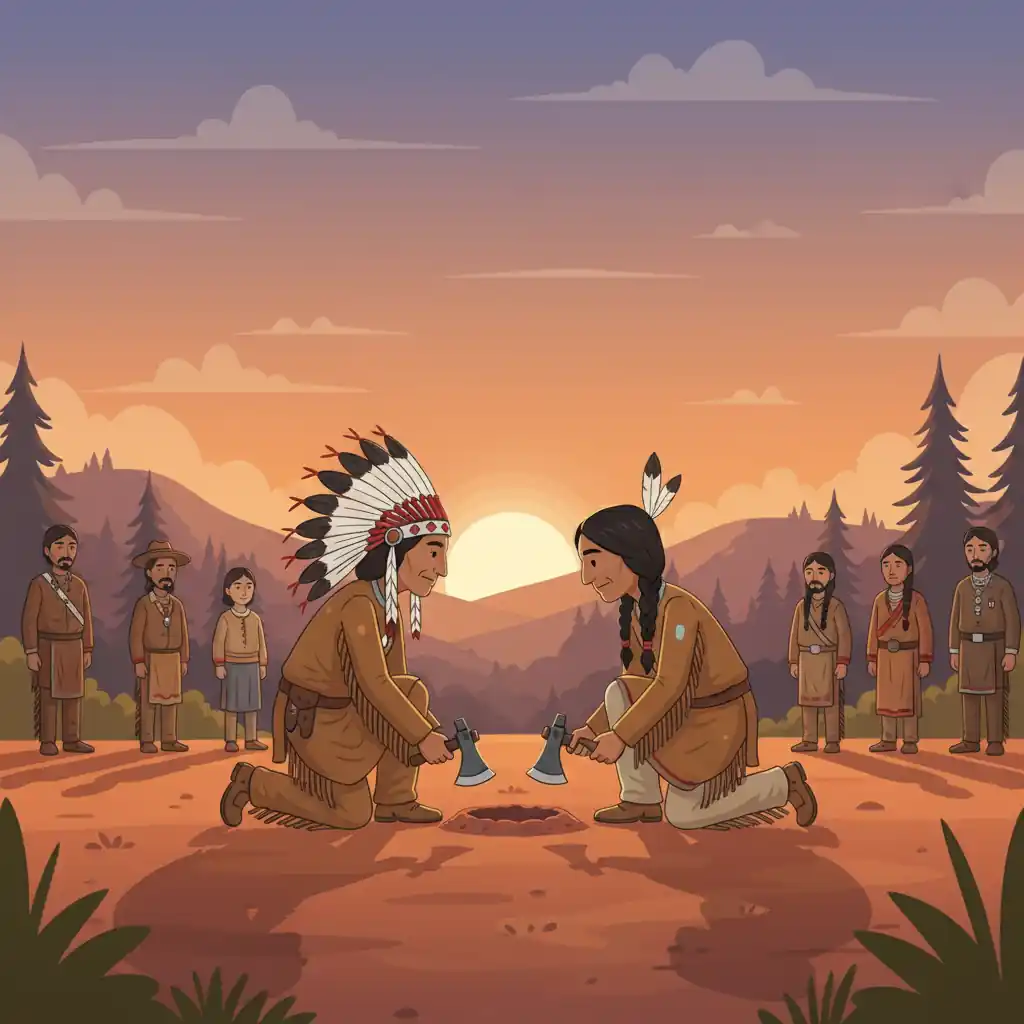
The Echo of War
For generations, the River Stones and the Whispering Pines were bitter enemies. Their lands bordered each other, separated by a winding river and an invisible line of old grudges. Each tribe believed the other had stolen hunting grounds, broken ancient promises, or dishonored their ancestors.
The cycle of conflict was constant. Raids happened under the cover of night. Skirmishes erupted over a deer track or a fishing spot. Young men grew up learning to hold a spear and a grudge, their minds filled with stories of past battles and the need for revenge.
The air between the two villages always felt heavy, thick with suspicion and the memory of losses. Children played, but their games often mimicked the war their fathers fought. Peace felt like a distant dream, a forgotten language.
Both tribes paid a heavy price. Their numbers dwindled. Food was often scarce because hunting parties risked ambushes. The joy of celebrations was always shadowed by the fear of the next attack. The lands they fought over began to suffer too, neglected by hands too busy with war.
Weariness Sets In
Chief Grey Wolf of the Whispering Pines was old. His face was a roadmap of wrinkles, each line telling a story of hardship and leadership. He had fought in many battles. He had seen too many of his people fall.
Across the river, Chief Strong Bear of the River Stones felt the same weariness. His shoulders, once broad and powerful, now carried the weight of endless conflict. He looked at the young men, eager for war, and saw only future losses.
A long, brutal winter had just passed. Snow had buried the forests deep, and the river had frozen solid. Both tribes had struggled. Many, especially the very young and the very old, had not survived. The war had only made the winter worse, preventing either tribe from fully preparing.
The chiefs, in their separate lodges, began to ask themselves the same question: What was the point? The victories felt hollow. The losses were too great. This wasn't about honor anymore; it was about survival.
A Council of Hope
A neutral elder, a wise woman known for her fair judgment, traveled between the two chiefs. She spoke of the suffering, of the shared winter, and of a future where both tribes might simply cease to exist if the fighting continued. She proposed a peace council.
It was a bold idea. Many warriors scoffed, but the chiefs were tired. They agreed. A sacred clearing, untouched by either tribe for generations, was chosen. The day arrived, heavy with tension and unspoken history.