
The Republic's Uneasy Peace
Rome was a powerful place. It stretched across vast lands. But its heart, the Republic, was always fighting itself. Powerful men struggled for control.
One of the most powerful was Gaius Julius Caesar. He was a general, brilliant and ambitious. For years, he had been away in Gaul, conquering new territories. He brought immense wealth and glory back to Rome.
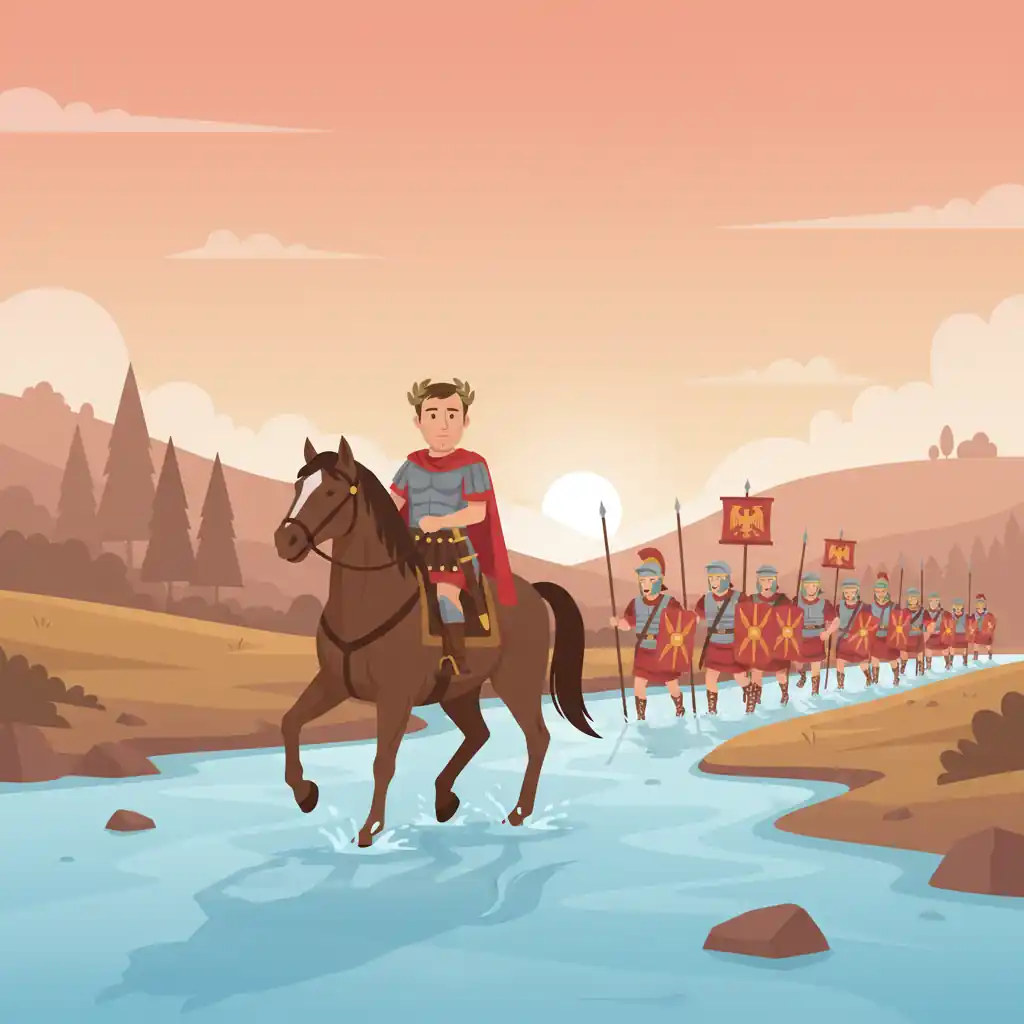
Caesar's legions, his soldiers, were fiercely loyal to him. They had fought and won many battles under his command. They would follow him anywhere.
This made the Roman Senate nervous. Very nervous. They saw Caesar's popularity and his army as a threat to their own power. They feared he would become too strong, too much like a king.
There was a crucial law. No general was allowed to bring his army into Italy without the Senate's permission. To do so was an act of war against Rome itself.
The line was drawn. A small, winding river marked the forbidden border.
The Edge of Decision
Caesar's time in Gaul was ending. The Senate, led by his old friend-turned-rival Pompey, demanded he give up his command. They wanted him to return to Rome as a private citizen.
Alone, without his army, Caesar would be vulnerable. His enemies planned to prosecute him. They would strip him of his wealth, his influence, perhaps even his life.
He had two terrible choices. He could obey the Senate, abandon his loyal troops, and face almost certain ruin. Or, he could defy them. He could march his army into Italy.
To defy the Senate meant civil war. It meant turning Romans against Romans. It meant a fight for the very future of the Republic.
His army camped on the northern bank of the Rubicon River. This river was tiny. In summer, it was barely a stream. It hardly seemed like a formidable barrier.
But it was. It was the legal boundary, the invisible line between provincial command and the heart of Rome. Crossing it meant breaking the law and starting a revolution. The stakes could not have been higher.